Big rains had just hammered parts of Utah and Colorado last September, and I was calling from Minnesota to the remote Hans Flat Ranger Station in Canyonlands National Park. I wanted to know the status of the route to Horseshoe Canyon.
A 32-mile dirt road, whose quality varies with the mile and the season, leads to what on the map is a little chip of land northwest of and unconnected to the main park in southeastern Utah.
Mention the beauty of southern Utah and most people think quickly of the rock spires and canyons of Zion and Bryce Canyon. And lots of people have visited Arches National Park and the desert of Canyonlands, where the Colorado and Green rivers meet in the wilderness.
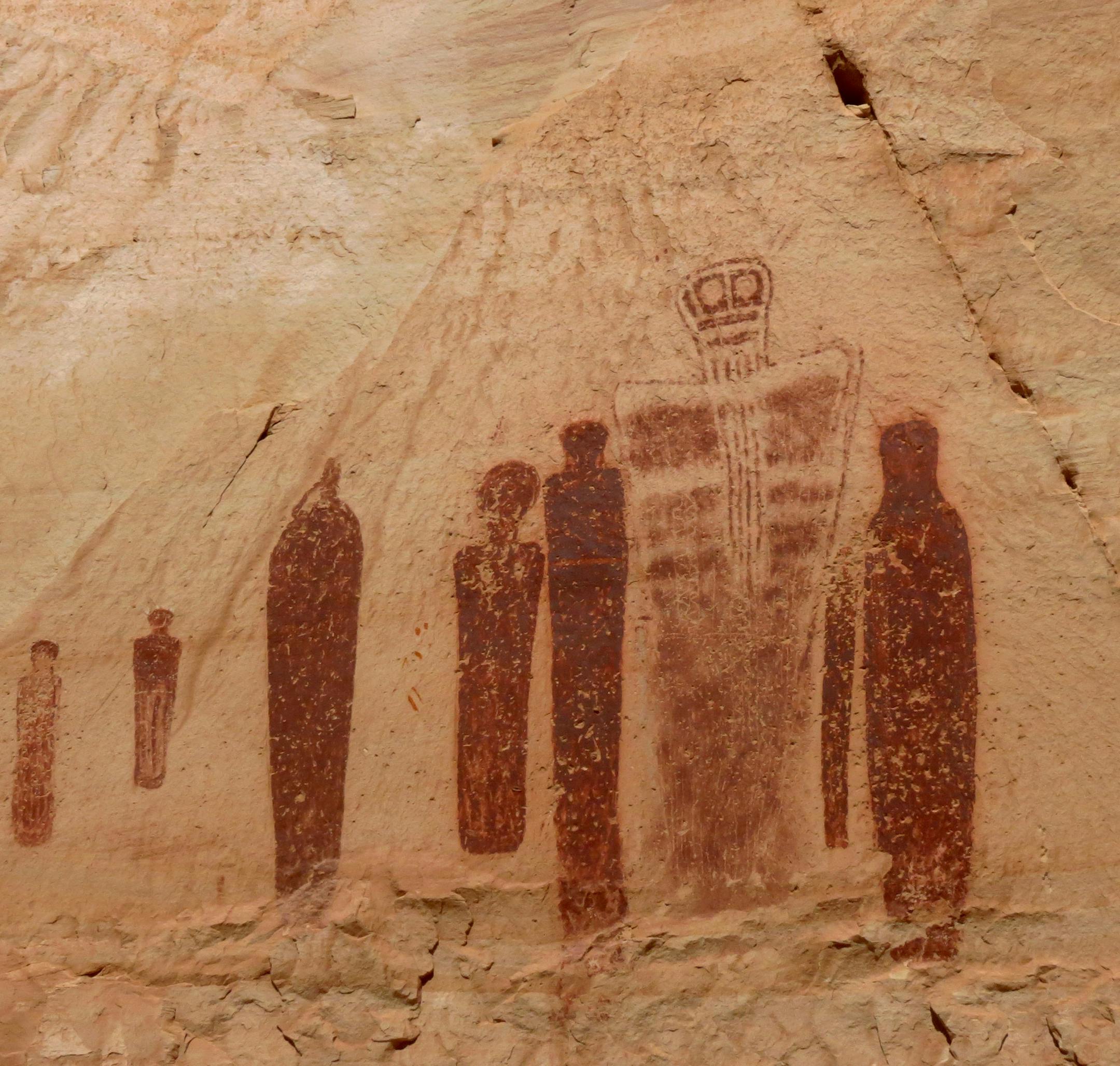
But not many get to Horseshoe Canyon, site of one of the most impressive examples of rock art in the United States.
If you time it right and have a little determination, you can stand by yourself in front of the Great Gallery, a collection of giant, ghostly images — painted onto sandstone walls thousands of years ago — that still have the power to send shivers up your back. I was planning a trip to Utah and wanted to spend an extra day exploring it, but it didn't look like I was going to time it right.
"The road is covered with mud. We're not advising that anybody go in there," the voice from the ranger station said.
I tried again a few days later.
"Good to go if you have four-wheel drive. Look out for the quicksand."