

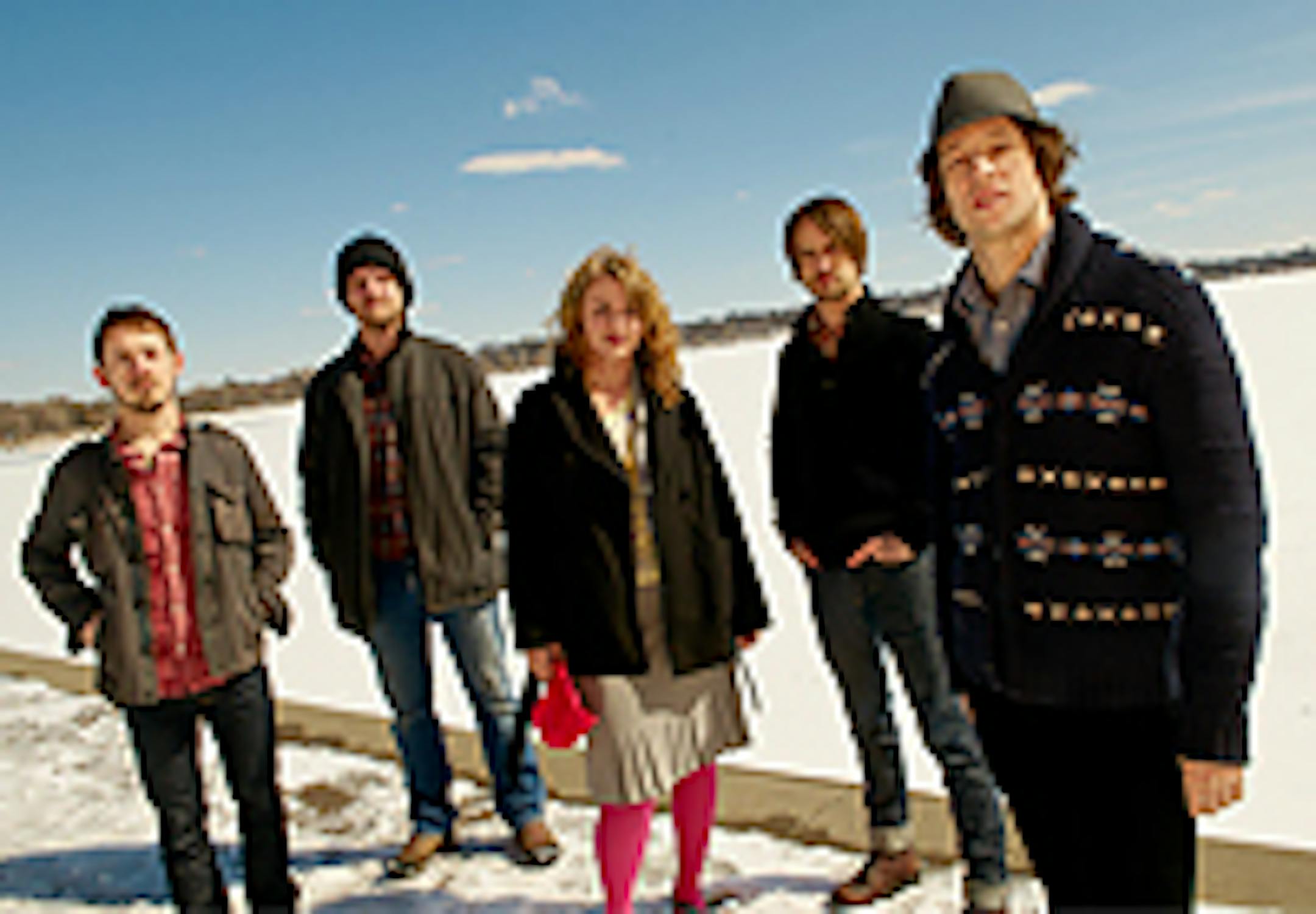
In perfect harmony with the flurry of activity inside St. Paul's Fuzzy Slippers Studio, snow fell on the day when Rogue Valley passed the halfway mark on its fourth album in one year.
Minnesota's bitter, soul-sucking winter of 2010-11 actually might have been the final cosmic blessing for one of the more ambitious projects ever undertaken by a Twin Cities rock band. Rogue Valley's seasonal recording marathon winds down with this week's release of the "winter" album, "False Floors."
"If it had started warming up come February, I probably would've lost my steam," admitted Rogue Valley frontman Chris Koza.
When Rogue Valley takes the stage Friday at the Varsity Theater for the last in a series of four CD release parties, it genuinely deserves to take a bow. It's not all that hard to make one album every three months, but it is difficult to make albums like the ones Rogue Valley has delivered, each well crafted, thematically tied and consistently enjoyable.
The project started with the bright-eyed spring release "Crater Lake" last April. In between, the band issued the rawer, rockier, feistier summer collection, "The Bookseller's House," and fall's somber and serene "Geese in the Flyway." Is Koza ready for this four-album cycle to be over?
"Yes!" he quickly replied, but then tempered his answer. "But I probably won't know what to do with myself for a while."
Koza planted the seeds for this escapade in 2007. A native of Portland, Ore., he got swept up in the scenery of the Pacific Northwest. New bassist and backup singer Linnea Mohn joined guitarist Peter Sieve and drummer Luke Anderson in Koza's namesake band, and the musicians started to bond. The idea for the seasonal albums went hand-in-hand with the name change to Rogue Valley. "I got tired of saying, 'Hi, I'm Chris Koza, and this is the Chris Koza Band,'" Koza said. Once renamed, he said, "I just wanted to do something different to set us apart. I'm not some crazy guitar player or a very unique vocalist. What I could do is create a lot of something."
Some of the most oft-used images over the course of the four discs include cities and gardens, bodies of water and, most prominently, the moon. Koza actually printed up a "glossary" of the repeated themes. "You can get pretty geeky with these albums, if you want," he said. "If someone is crazy enough to sit down and listen to all four albums together as one, that's certainly the ideal situation. But I'm not egotistical enough to think anyone will do that. So we made sure each album can stand up on its own just fine."


