1:56
1:56Michael Gardos Reid hasn't gotten a decent night's sleep since 1999.
For the 59-year-old Minneapolis man who suffers from obstructive sleep apnea, every night is the same: When he falls asleep, his tongue and throat muscles relax so much that his airway essentially collapses, cutting off oxygen. After several seconds, he wakes, startled and choking, his body tense with adrenaline.
"It's like a four-alarm fire for your cardiovascular system," says Dr. Kathy Gromer, a sleep specialist with the Minnesota Sleep Institute. "When it happens over and over, you can develop a lifetime of health problems. It's incredibly stressful on the heart to do this all night, every night, for years."
Unlike many of the estimated 20 million Americans who have sleep apnea, Gardos Reid isn't using the most common treatment -- being hooked up to a CPAP machine, which pumps air through the nose, at night.
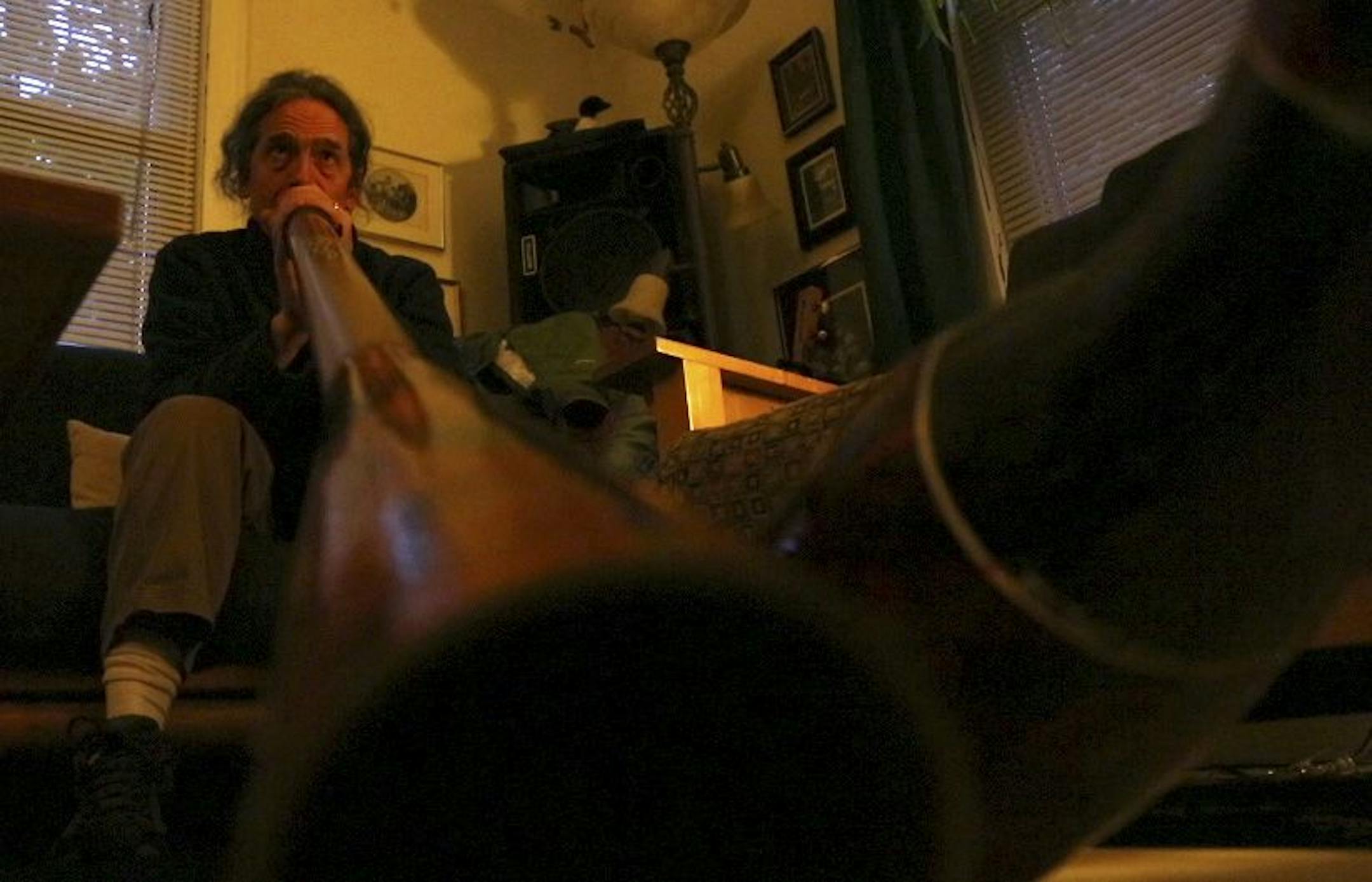
Instead, he wears a nighttime mouth guard, and he's spent the past year learning to play an ancient Australian instrument -- a simple, 6-foot-long wooden trumpet called a didgeridoo.
"I'm a person who likes to be involved with my health care, so here is something I can do," he said. "I like it," he said of the didgeridoo, which produces a distinctive foghorn-like sound. "It seems to be helping."
'Whatever works'
Interest in using the didgeridoo (pronounced DID-jury-doo) to lessen the effects of snoring, apnea and other sleep ailments has been growing since 2006.