

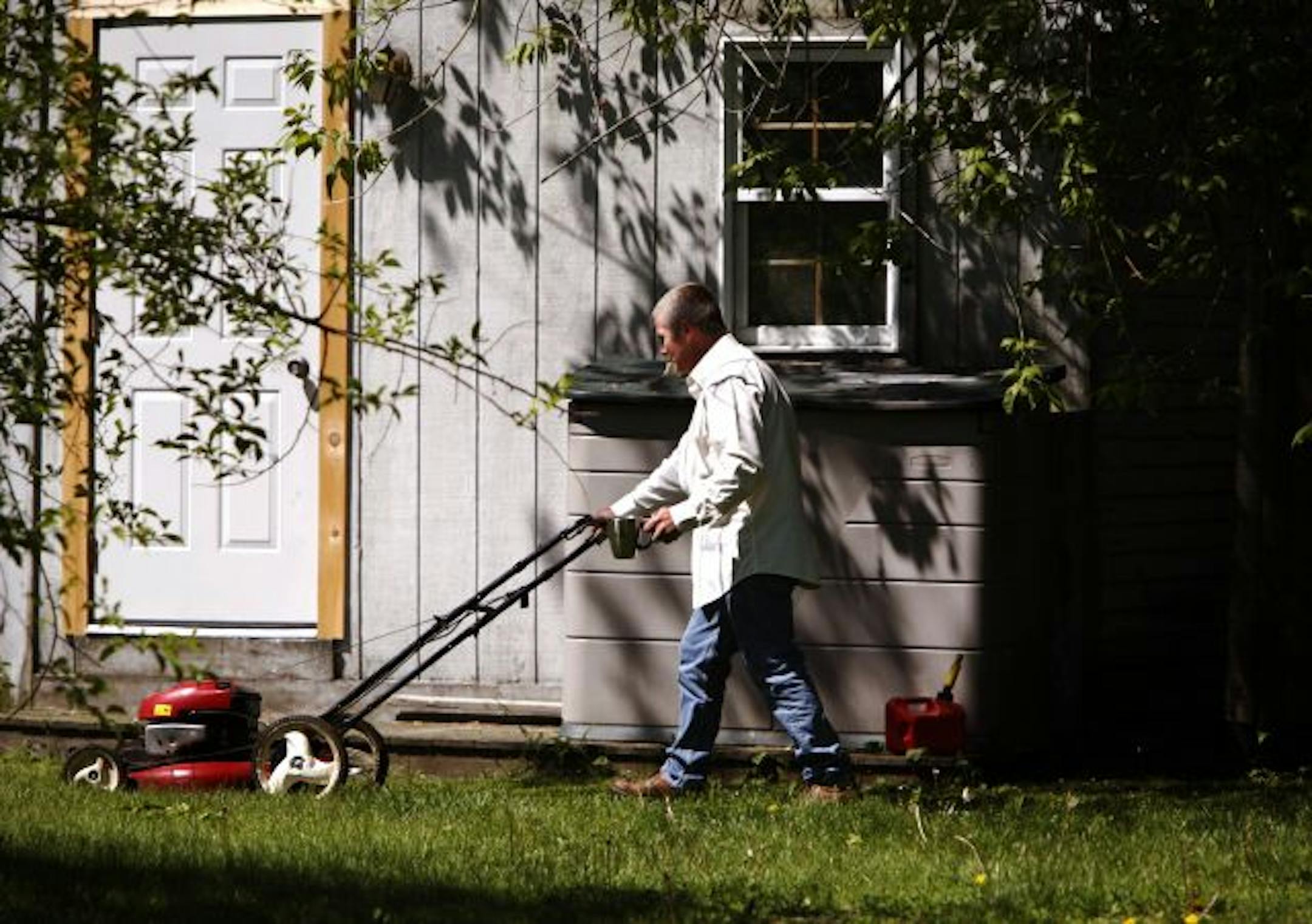
On any Saturday morning, America starts its engines for that weekly ritual of mowing. As the symphony of engines roars to a start, breaking the peaceful silence, an estimated 54 million lawns are cut -- every week during the spring and summer.
Mowing at my house awakens no neighbor. My lawn is small enough to mow with a new version of an old classic, the reel mower. Modern technology combined with classic style and functionality creates the best of both worlds.
Whatever your tool of choice, here are some pointers on how to mow for a healthier lawn and environment:
First off, make sure your blade is sharp. Tearing with a dull blade, as opposed to shearing with a sharp blade, makes a night-and-day difference. Tearing creates jagged edges, makes for longer recovery time and allows more opportunities for pests and diseases to move in.
Minimize the trauma to grass blades. Cut no more than one-third of the blade's length. We "prune" our lawns, so taking off more than a third in one cutting may cause more stress than the plant has ability to fully recover. Such stress can take its toll, especially during hot and dry -- or even persistently damp -- conditions.
Another reason to mow high is that the taller the blade, the deeper the roots, and the deeper the roots, the more drought-tolerant your lawn is.
Need another reason? Taller grass shades out competing weeds that need bright sunlight to establish and thrive. Although certain weeds may sprout, they may not become as prominent if they can't get the required sunlight. And during the high heat of summer, raise the mower even higher to help the grass conserve water and overcome heat stress.
If possible, don't mow wet grass. Mowing grass when it's wet will cause uneven shearing and leave behind wet clumps, which can become matted, and suffocate other areas of your lawn, leaving dead patches. Even worse, wet grass can more easily spread disease.


