
Moving mountains

Daniel Pink looks into what motivates people beyond fame and money -- and comes up with some surprising answers.

For the Minnesota Star Tribune
January 17, 2010 at 3:26AM
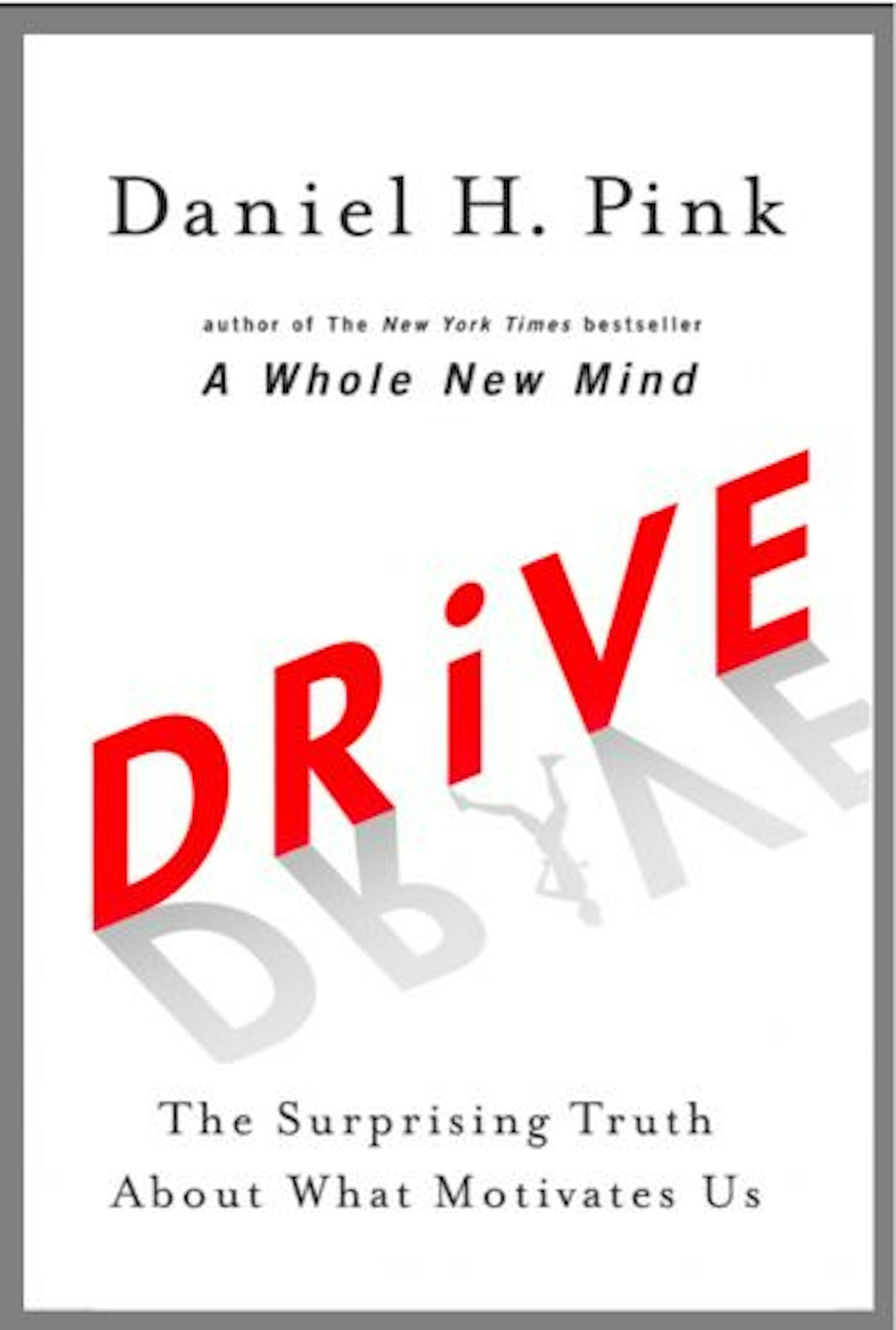
Drive: The Surprising Truth About What Motivates Us by Daniel H. Pink
Drive: The Surprising Truth About What Motivates Us by Daniel H. Pink (Star Tribune/The Minnesota Star Tribune)

As I read though Daniel Pink's new book, "Drive: The Surprising Truth About What Motivates Us," I started to wonder why I was writing this review.

It certainly wasn't for the money (no one, to my knowledge, has gotten rich writing book reviews). And it definitely wasn't for the fame (although, while I'm at it, "Hi, Grandma Maude!")

So there must be something else. Why then? Why, in fact, do we do anything? That's the question at the heart of Pink's new book, for which he has some, yes, surprising answers.

The book builds on Pink's previous book, "A Whole New Mind," which essentially argued that the economy will be driven by creative, empathetic right-brained individuals, because so many left-brained, logical professions are on a death march toward automation. The book became a runaway best seller, largely because it gave hope to an entire generation of English majors.

But for his new book, Pink delves into the question of what exactly motivates right-brainers, and concludes that it's not money, or promotion or the threat of punishment.

Those "carrots and sticks" are all part of what Pink deems "Motivation 2.0," which came out of classical economic theory, and which actually isn't bad for logical, routine tasks.

But for those of us who can't run a spreadsheet or punch a word of code (but keep those poems coming!), carrots and sticks simply don't work. They are what Pink calls "extrinsic" motivators, and research shows when used at work they actually have the opposite effect: crushing creativity, reducing productivity and killing innovation and growth. (No bonus for this book review, thank you!)

Rather, we are operating on a different kind of software, which Pink calls "Motivation 3.0." Despite the corny coinage, Pink does make some important points. He looks to the research on self-determination and finds that there are essentially three factors that contribute to motivation among the non-accountants of the world.

First is "autonomy," or the feeling of not being controlled by someone above you. Micromanagement, in other words, is a recipe for mediocrity. Second is "mastery," or the urge to do something as well as possible -- along with the latitude to do so. And third is "purpose," or the sense of how what you're doing fits into some larger picture.

Companies that get this "freedom, challenge, purpose" trifecta will be the ones that succeed in the new economy, according to Pink. Already companies like Best Buy, Google, 3M and others have incorporated a "creative work" day from which things like Google News, Gmail and Post-it Notes have emerged.

As a book, "Drive" feels a little rushed and thin compared to "A Whole New Mind," but for those of us who wonder not only why we do things (and how to get ourselves to do more), it is definitely a worthwhile read. It reminds us that those of us on the right side of the brain are driven furthest and fastest in pursuit of what we love.

In my case, that would be stories, ideas and the occasional book that changes how I see the world. So hold the six-figure payout and give me a little purpose, a lot of leeway, some enlightenment and a dash of fulfillment, and I (and those like me) will be driven very far indeed.

Frank Bures (frankbures.com) is a writer based in Minneapolis.

about the writer

about the writer

More from Minnesota Star Tribune

See More
card image
J. SCOTT APPLEWHITE, ASSOCIATED PRESS/The Minnesota Star Tribune

The "winners" have all been Turkeys, no matter the honor's name.

In this photo taken Monday, March 6, 2017, in San Francisco, released confidential files by The University of California of a sexual misconduct case, like this one against UC Santa Cruz Latin Studies professor Hector Perla is shown. Perla was accused of raping a student during a wine-tasting outing in June 2015. Some of the files are so heavily redacted that on many pages no words are visible. Perla is one of 113 UC employees found to have violated the system's sexual misconduct policies in rece