

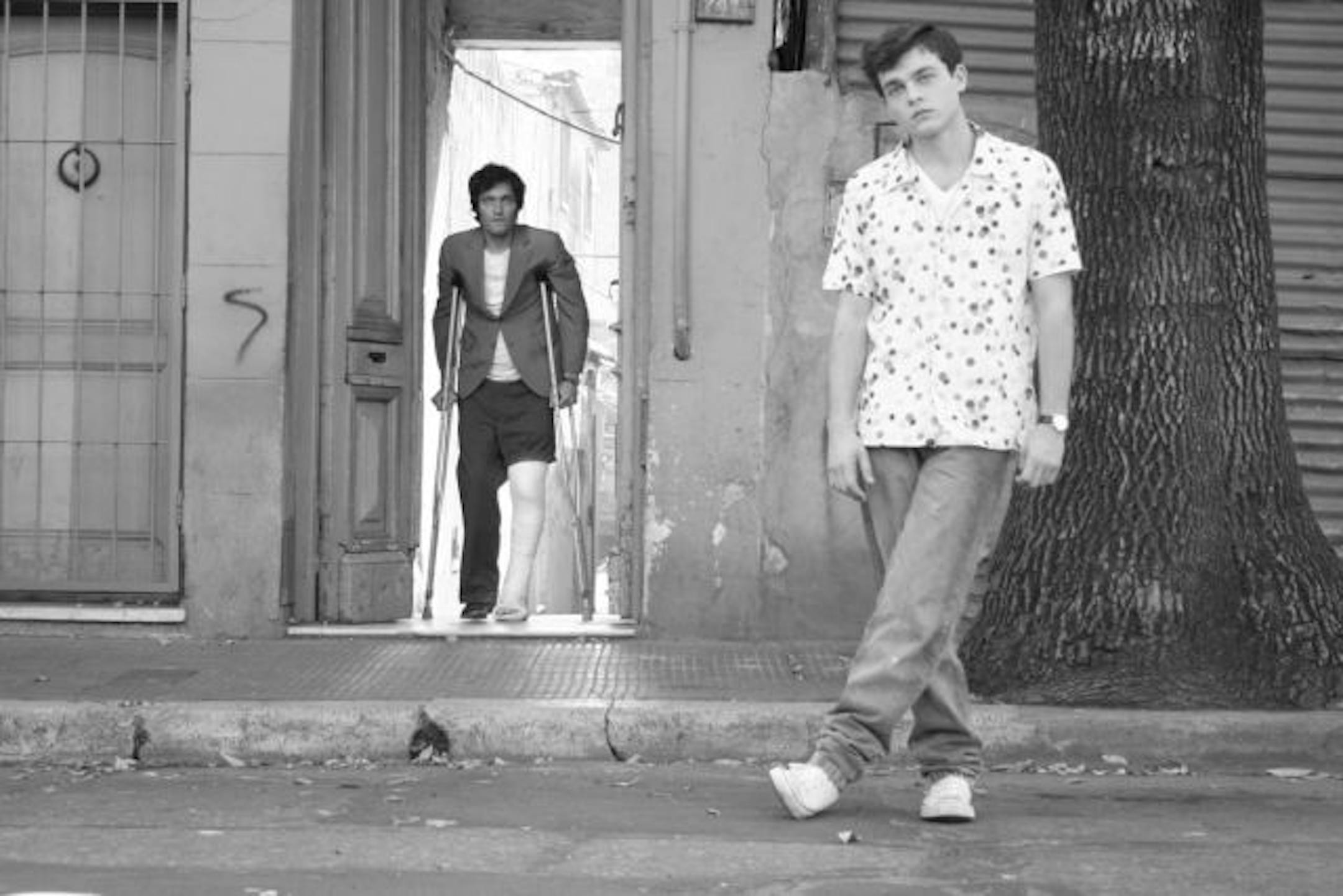
Angelo Tetrocini wants to be called Tetro. He's a burned-out writer who fled his domineering father, a world-famous orchestra conductor. His new alias is a rejection of his past ("Angelo's dead," he declares) and an apt self-description.
In Italian, Tetro means melancholy, and he has plenty to brood about, as Francis Coppola's ambitious, impressive family drama makes clear. The story explores the ways that families destroy us and save us, a springboard for the most entertaining work Coppola has produced in years.
Tetro exiled himself in Argentina, but never delivered the masterpiece he expected to produce. When his much younger brother Bennie arrives at his doorstep, he's welcomed warmly by Tetro's indulgent lover, Miranda. Testy Tetro keeps Bennie at arm's length, evading his questions about their murky family history.
Bennie discovers Tetro's notebooks, filled with mirror-writing and code words. Translating it, he realizes that Tetro's abandoned novel is his autobiography, studded with hints about the unhealed rift that continues to trouble the family. The more we learn about Tetro's father, Carlo, a ruthless genius seen in jarring color flashbacks, the better we understand Tetro's desire to distance himself. Carlo's fame and wealth deranged him and everyone in his artistically inclined clan, a theme the Coppolas, with their filmmakers, actors and composers, must understand well. The film repeatedly likens the spotlight of celebrity to automobile headlights rushing toward a collision.
Coppola exalts his actors. As Tetro, Vincent Gallo (independent cinema's Mr. Intensity) still tends to give his fellow actors the evil eye, but he's more believable and human here than ever before. Newcomer Alden Ehrenreich is honest and easygoing as Bennie; he could make a career of roles that Leonardo DiCaprio has outgrown. Girlfriends, neighbors, walk-on players -- you can't list the first-rate performances without name-checking the entire cast. The only grating moments come when Klaus Maria Brandauer, who plays tyrannical Carlo as well as his meek older brother, appears in old-age makeup: he resembles a sculpture made from chewing gum.
Directing his first original script since "The Conversation," Coppola works complex material with serene confidence. The images are striking, gorgeously lit black-and-white, with brassy color vignettes. Coppola plots the film like a classic mystery, shot through with "Godfather"-like themes of Oedipal resentment. He's not a slave to the technique; there are unexpected flourishes, bold changes of style and pace, when "Tetro's" melodrama yields to snippets of opera and ballet.
The film sidesteps the cerebral artiness that cursed Coppola's turgid "Youth Without Youth." "Tetro" percolates with energy and bawdy knockabout humor. Tetro works with the local theater troupe on a burlesque version of "Faust" that degenerates into a silly striptease act, and two actresses decide to relieve Bennie of his virginity in a hot-tub scene of raucous vulgarity. This is a new Coppola, one who can laugh at himself.
The closing lines may seem like a sentimental pat on the back, but listen closely and you'll feel the scorpion sting of irony. When one character tells another, "It'll be all right, we're a family," I couldn't help thinking of Michael Corleone assuring his naïve fiancée, "That's my family, Kay. It's not me."


