

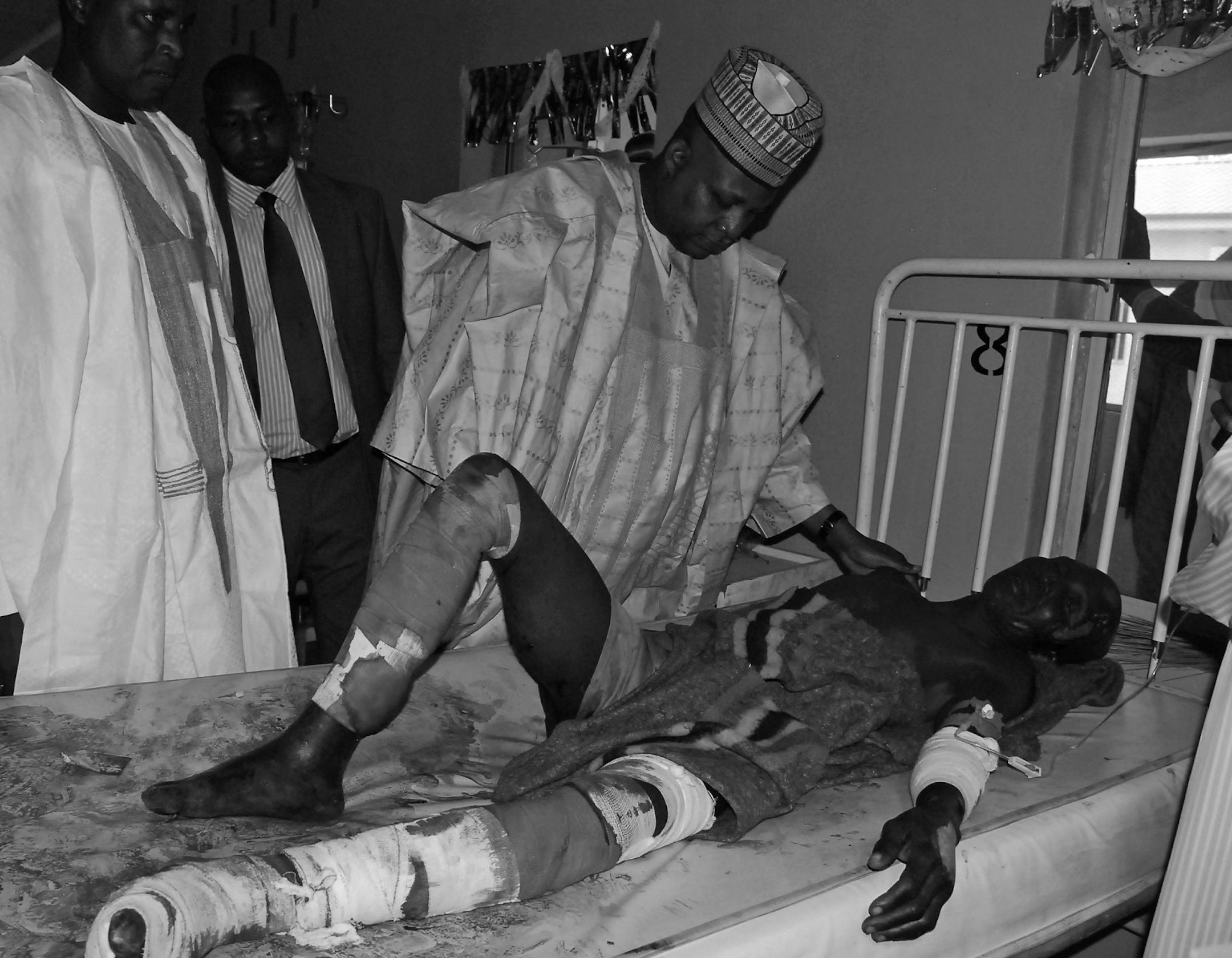
BAUCHI, Nigeria — The teenage girls entered the busy marketplace separately Tuesday, their vests of explosives hidden beneath their full hijabs.
The first detonated her bomb, killing three women. As rescuers rushed in, the second girl screamed and set off her explosives, killing dozens more, according to witnesses and authorities.
More than 40 people died in the double suicide bombing in Maiduguri, a provincial capital in northeastern Nigeria, according to Haruna Issa, a hospital volunteer in the city.
Suspicion immediately fell on the insurgents from the Islamic militant group Boko Haram, which controls a large part of northeastern Nigeria and is blamed for the deaths this year of at least 1,500 people in Africa's most populous country.
In its campaign of violence, Boko Haram has used car bombs and men wearing vests of explosives. It also has begun using women who can cover the explosives with their hijabs, and the recruits appear to have gotten younger, with several instances of teenage attackers earlier this year.
The militants attracted international attention with their April kidnapping of more than 200 schoolgirls from Chibok, about 125 kilometers (78 miles) southwest of Maiduguri. The schoolgirls are still missing and their plight has aroused international concern and prompted the #BringBackOurGirls social media campaign.
On Oct. 17, the parents of the schoolgirls were encouraged when the Nigerian military announced a cease-fire with Boko Haram and said negotiations had begun for the release of the captives.
Those hopes were quickly dashed when Boko Haram fighters continued attacks and seized several cities and towns across the northeast. In a video statement, Boko Haram leader Abubakar Shekau denied the cease-fire and scoffed at claims of negotiations to release the schoolgirls.


