

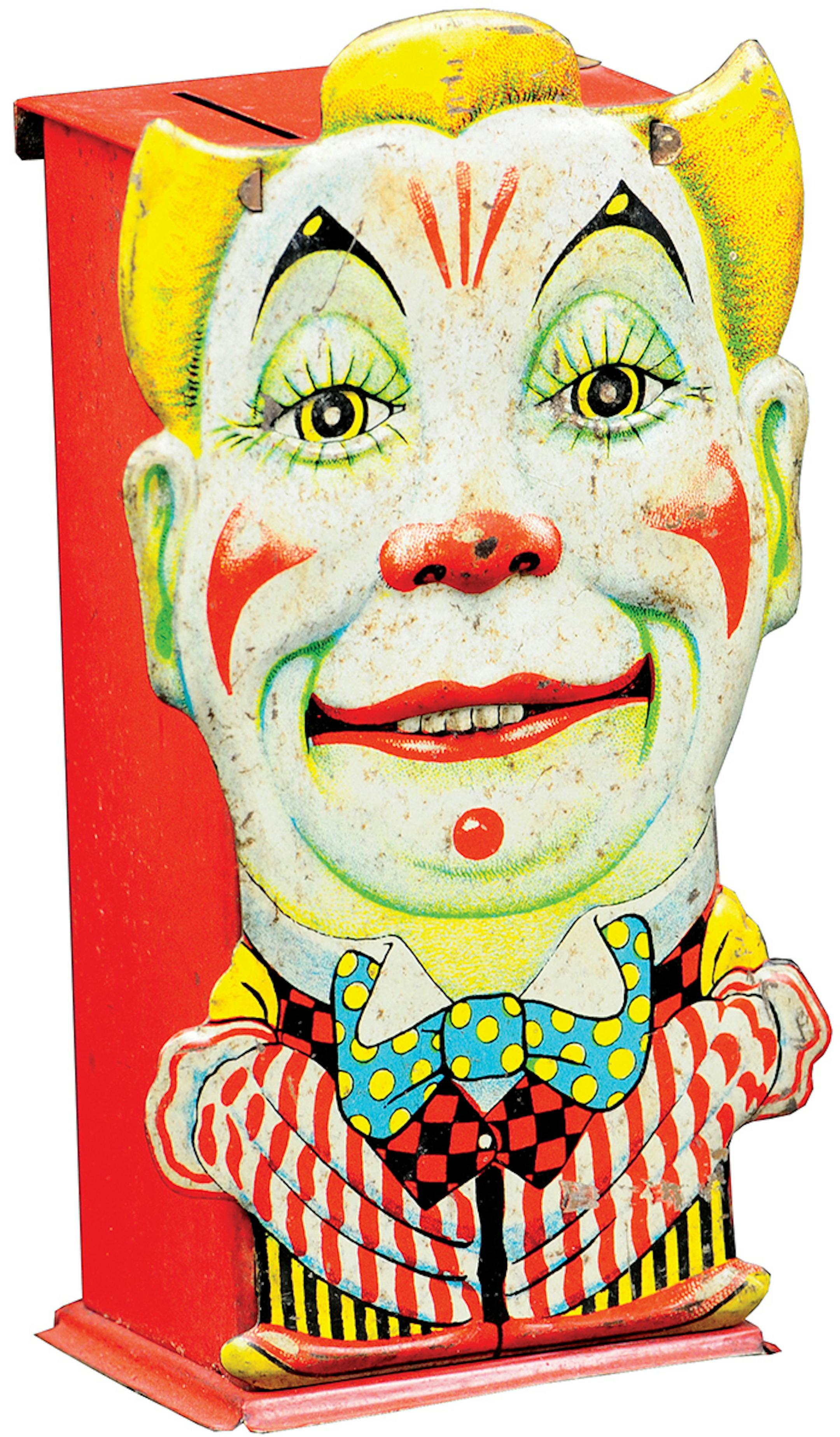
Vintage and antique banks of all kinds are selling well in shops and auctions.
Saalheimer & Strauss, a German company, was started in 1911. It made toys, writing goods and eventually toy banks, cars, motorcycles, airplanes, Disney characters, penny toys and other tin toys.
They sold the products internationally. In 1936, the company's ownership went to Philipp Nidermeier, who continued making tin banks. The Strauss family immigrated to New York.
Collectors can recognize their toys from the trademark, a circle or oval with the overlapping letters "SS" in the center. The colorful lithographed toys are popular with collectors.
A British Clown bank sold at auction in Vineland, N.J., for $1,920 in March. It is 5½ inches high.
Commode chair
Q: My elaborately carved wooden chair with a high back, no arms, and a circular hole carved out in the center of the seat puzzles me. Can you tell me how this type of chair was used?
A: This is a potty chair or commode. Before indoor toilets became available in the late 19th century, people used a chamber pot or "thunder mug" in their bedroom. A chamber pot was put in the hole and held by the rim of the pot. After use, it was removed and the contents emptied into a slop jar.
After indoor plumbing became common, some potty chairs eventually were altered for use as traditional chairs and the hole in the seat was covered with a board or cushion. Sometimes the back was altered and the frame tipped back to make the chair more comfortable to sit in. Only a well-to-do family would have had an ornately carved potty chair. Fancy potty chairs can sell for several hundred dollars or more, but the hole lowers the value by as much as 50 percent.


