Mojave Desert mating rituals can be grisly. Loggerhead shrikes advertise their desirability by impaling prey on razor-sharp cactus spines; female scorpions and tarantulas often kill and devour their short-lived suitors. It's a tough place for romance, and for survival. Yet there I was, in Joshua Tree National Park, to celebrate both.
My husband of 15 years had planned a surprise 40th-birthday getaway for me. We stayed in a rented ranch house, with our 9- and 7-year-old sons, just outside the northwest entrance to the park. Our nearly weeklong January visit was filled with blood-pumping boulder-climbing, quiet star-gazing and revelatory hikes over alien hills and plains.
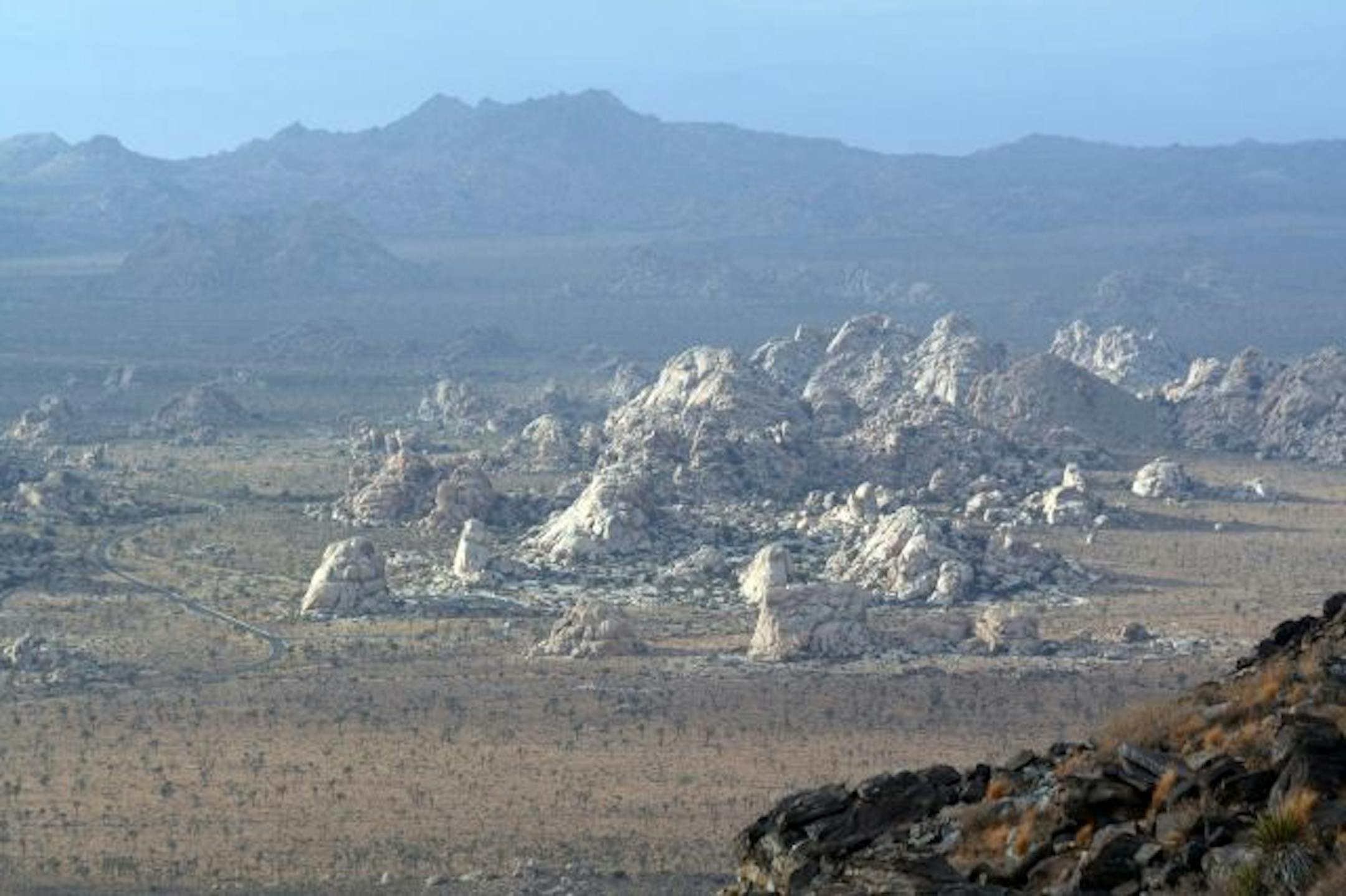
The 1,236-square-mile park actually straddles two deserts: the Mojave to the north and west, and the Colorado to the south and east. The former, where we spent most of our time, is mostly "high desert," from 3,000 to 5,000 feet above sea level. Winter nights can be bitingly cold, and on our walks we often found patches of snow in shady crevices. The fireplace in our house was appreciated.
My sister-in-law and her partner met up with us on the trip; they stayed in a bed-and-breakfast near the house we rented. The innkeeper told them one morning that "People come to the desert to make major decisions." That wasn't true for any of us; the entire week, our biggest decision was which trail to take. But Joshua Tree does foster reflection, and lessons about resilience -- making do, even prospering, with what's at hand.
Curious namesake
Only in the Mojave can one encounter the scraggy, peculiar plant with swordlike leaves for which the park is named. The Joshua Tree isn't really a tree; it's a relative of the lily family and a member of the agave family, and it is utterly dependent on the tiny yucca moth for pollination. This symbiotic arrangement gives the moths, in turn, a home and food for their offspring.
The plant was a source of food and fiber for American Indians; they used its leaves for baskets and sandals, roasted and ate its seeds and flower buds, and made dye from its roots. Its present name came from Mormon colonists, who saw in it the biblical prophet Joshua, beckoning them west.
I learned a new vocabulary word in the national park: mutualism. Embodied by the yucca moth and the Joshua tree, mutualism is a relationship between two species in which both derive benefit. At the start of a new year, it seemed a fitting concept. (It's also rather applicable to marriage.)