
Minnesota's new poet laureate ponders next move

She may have no staff and no budget, but Joyce Sutphen is determined to spread the beauty of poetry.

August 27, 2011 at 7:47PM
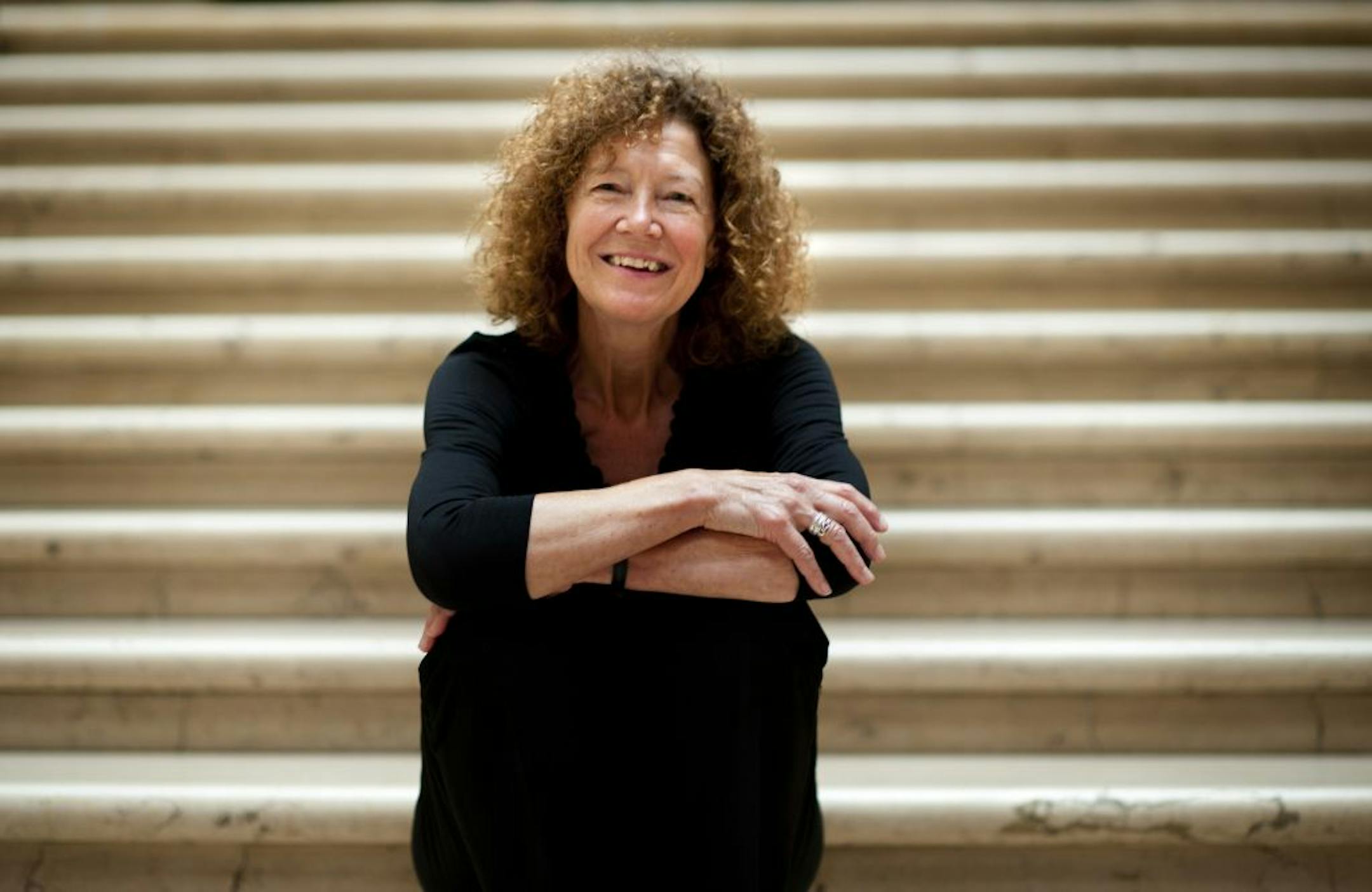
Governor Mark Dayton appointed Joyce Sutphen as the Poet Laureate for Minnesota. She grew up on a farm near St. Joseph and currently lives in Chaska and teaches literature and creative writing at Gustavus Adolphus College in St. Peter. She is the second poet laureate replacing Robert Bly who was appointed in 2007. Tuesday August 22, 2011
Joyce Sutphen (Dml - Star Tribune/The Minnesota Star Tribune)

When Joyce Sutphen found out she was about to be named Minnesota's second poet laureate, succeeding the venerable Robert Bly, her first, second and third thoughts were "Why me?"

But those who know her, or know her sharply observed, award-winning poetry, had no such questions.

Twitter and Facebook lit up with the news. "A wonderful choice! There is no one like Joyce!" wrote one commenter. "Brava!" wrote another.

Sutphen, 62, grew up on a farm in St. Joseph and now lives in Chaska and teaches at Gustavus Adolphus College in St. Peter. She has written four books of poetry. Her first, "Straight Out of View," won the Barnard New Women Poets Prize in 1995, and "Naming the Stars" won a Minnesota Book Award in 2004.

The poet laureate appointment -- an honorary, unpaid position, with no budget but with high expectations -- came on Tuesday. In an interview the next morning, she talked about what she hopes to accomplish during her tenure, and why poetry is important in these difficult times.

Q: What was your reaction when you heard?

A: Why me? There are so many incredible poets who have done so many more things and who are so amazing and organize things and have published more and are more eloquent, and what? What the heck? But then I think, well, it's a world of contrasts. You have the incredibly accomplished Robert Bly, and then you have me. I also think I'm pretty Minnesotan, too. That could have been it.

Q: The job comes with no pay, no budget, no staff. Where do you begin?

A: I'm going to ask so many friends -- Connie [Wanek] and Tim Nolan and everybody, Patricia Kirkpatrick, so many people who I know and love. [Poet] Phebe Hanson called this morning. I think I'll just go on a phase where I listen to everybody. I was trying to think of what poems to read yesterday ... and I read one from my last book, called "How to Listen." It was like, "Oh yeah, that's what I'm supposed to be doing now. I'm supposed to be listening." I really do want to hear from everybody.

Q: Do you have any ideas of what you'd like to accomplish as laureate?

A: You know that poetry is not something most Americans read. And if I could do something to make it possible for more Minnesotans to read poems, or read a poem -- if, somehow, at the end of the year there would be more Minnesotans who would think, "I want to read a poem today" or "I want to write a poem today," that would be fantastic.

Q: People are struggling with the economy, some can't find work, many worry about the future. Where does poetry fit in crisis times like this?

A: It completely fits. It fits in even more in this world. When there are funding cuts for art and music and poetry and drama and dance, people just go ahead and do these things anyway -- because it's absolutely necessary. People who love these things know how vital they are. I mean, humanly. And they won't stop, no matter what.

You know that quote by William Carlos Williams, "You don't get the news from poetry, but people die every day for the lack of what is found there." I think that, more than ever, it's important.

about the writer

about the writer

Laurie Hertzel

Senior Editor

Freelance writer and former Star Tribune books editor Laurie Hertzel is at lauriehertzel@gmail.com.

See Moreicon

More from Minnesota Star Tribune

See More
card image
J. SCOTT APPLEWHITE, ASSOCIATED PRESS/The Minnesota Star Tribune

The "winners" have all been Turkeys, no matter the honor's name.

In this photo taken Monday, March 6, 2017, in San Francisco, released confidential files by The University of California of a sexual misconduct case, like this one against UC Santa Cruz Latin Studies professor Hector Perla is shown. Perla was accused of raping a student during a wine-tasting outing in June 2015. Some of the files are so heavily redacted that on many pages no words are visible. Perla is one of 113 UC employees found to have violated the system's sexual misconduct policies in rece