

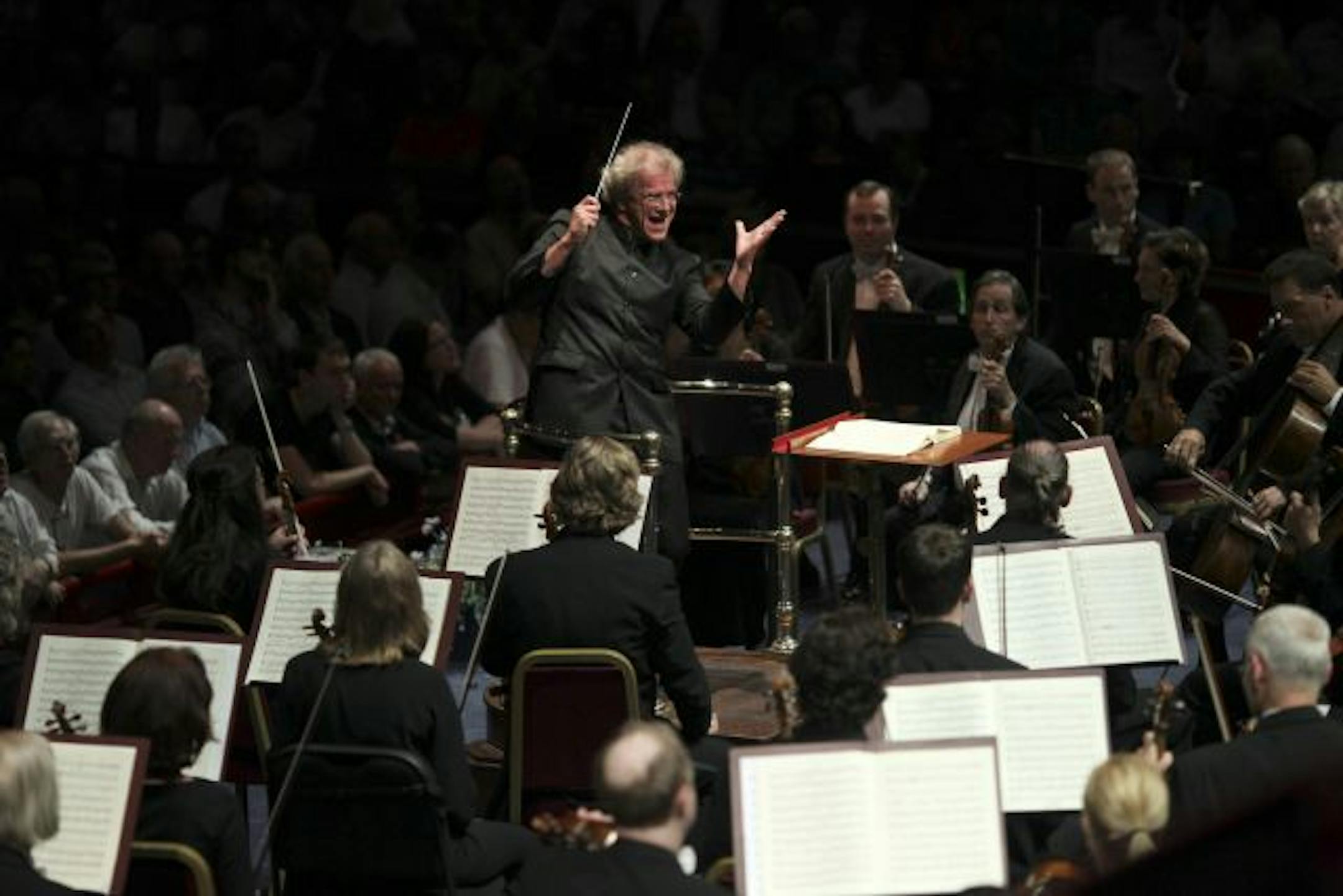
Osmo Vänskä looked tired as he spoke to supporters of the Minnesota Orchestra at a reception after the band's two London concerts. But by all evidence it was a good tired, as he related how BBC Proms director Roger Wright had greeted him, emotionally overwhelmed, after the Aug. 28 performance of Beethoven's Ninth.
"It is such a privilege to be a conductor when you are standing in front of the Minnesota Orchestra," Vänskä said.
There were no speeches the following night in Edinburgh, but audience and critical response at Usher Hall felt even stronger than in London. One review called Minnesota's performance the best in Edinburgh's International Festival.
Throughout the three-city tour, an air of accomplishment accompanied the orchestra. Soloists Alisa Weilerstein and Gil Shaham won the hearts of concertgoers in the program's first half, and then Vänskä sealed the deal with passionate accounts of Beethoven.
So thorough was the orchestra's success that in the cool morning of analysis, questions turn to the next chapter. It would seem that Michael Henson, CEO and president, need only ring up Wright and ask when it should return for a victory lap.
"I wouldn't say that," Henson said Thursday. "You have the greatest orchestras in the world wanting to get into the Proms. You need the right concert at the right time, and now we have to work on making it the most attractive proposition for the BBC."
More distant challenges
Henson's caution notwithstanding, the Proms success makes Royal Albert Hall seem almost like a home field. Vänskä is popular in England; Henson has a 20-year association with the BBC, and critics are universal in their awareness. Should the next tour push the orchestra out of its comfort zone, perhaps into Central Europe, the fabled heart of Western classical music?


