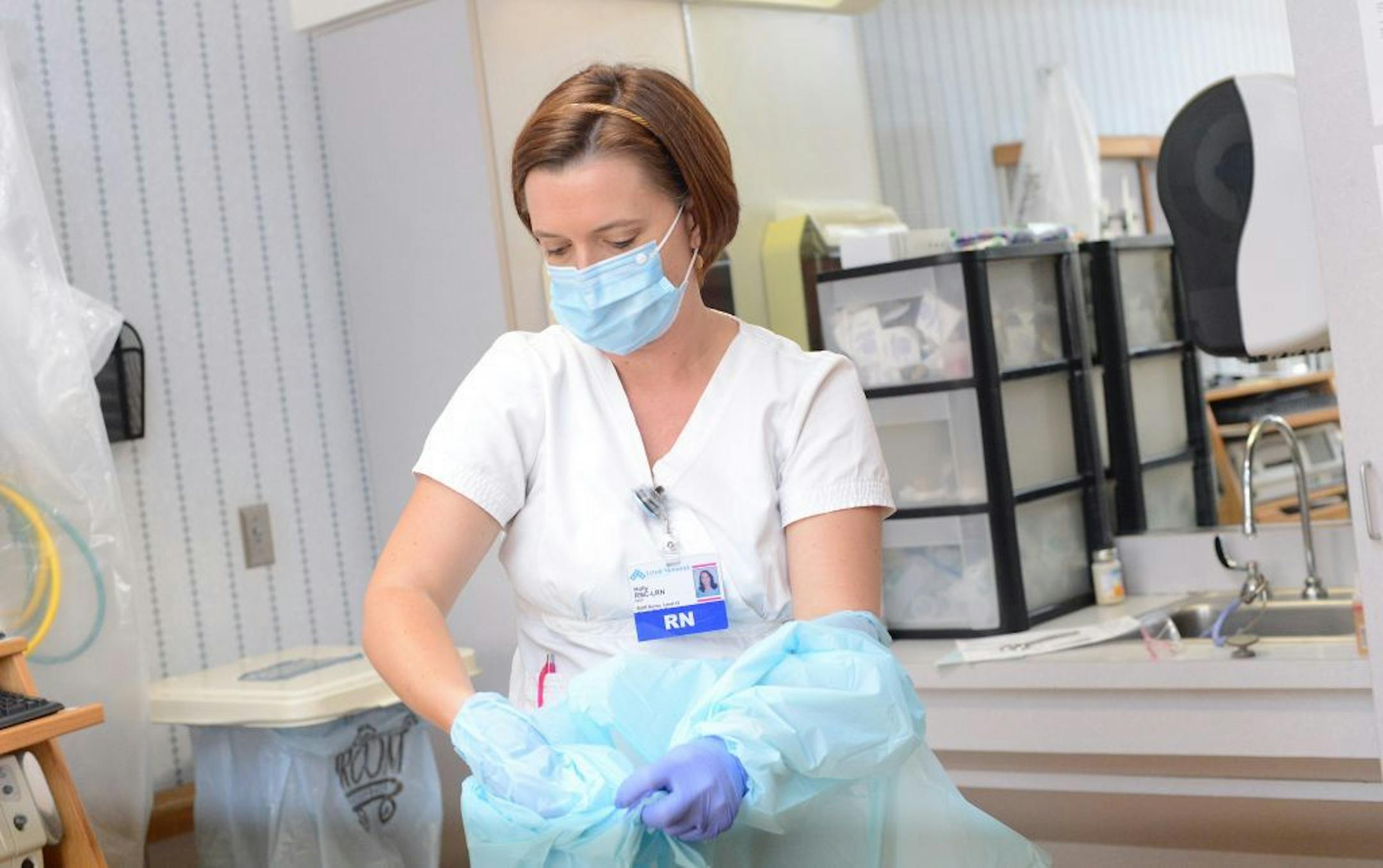
The Minnesota Nurses Association called on hospitals to provide "the highest level of protective equipment, such as hazardous material suits," for staff treating Ebola patients — the latest symptom of anxiety and second-guessing among hospital workers after a Texas nurse became infected while treating a patient with the deadly virus.
"We go into the community, into the grocery stores," said Linda Hamilton, president of the nurses' union. "If we get sick, people are going to get it from us." Full-body hazmat suits with respirators would be a substantial step beyond the gowns, gloves, masks and face shields currently stocked by Twin Cities hospitals and recommended by federal authorities. The resolution received a unanimous vote at the association's annual meeting, after an informal survey found only two of the 150 nurses on hand felt adequately trained and prepared to treat Ebola patients.
The worst Ebola outbreak on record has afflicted more than 8,000 people in west Africa and caused more than 4,000 deaths. Five Americans infected while in Africa have been treated in biocontainment facilities at Emory Healthcare in Atlanta and Nebraska Medical Center in Omaha.
Another American was diagnosed with the infection — and died last week — after returning from Africa to Dallas, and one of his nurses was infected despite wearing the federally recommended protective gear.
The nation's top disease-fighting agency acknowledged Tuesday that federal health experts failed to do all they should have done to protect the nurse from the Ebola virus.
Agency Director Tom Frieden outlined a series of steps designed to stop the spread of the disease in the U.S., including increased training for health care workers and changes at the Texas hospital where the virus was diagnosed to minimize the risk of more infections.
A total of 76 people at the hospital might have had exposure to Thomas Eric Duncan, and all of them are being monitored for fever and other symptoms daily, Frieden said.
Also Tuesday, doctors from Emory and Nebraska conducted a teleconference with more than 5,500 hospital and health care leaders, discussing everything from the conditions set by trash haulers who remove potentially Ebola-contaminated debris to the restrictions from water quality officials before flushing an infected patient's urine. Such measures are somewhat extreme, considering that the Ebola virus doesn't survive well outside the body, said Dr. Bruce Ribner, director of Emory's Serious Communicable Disease Unit. "This is not a very hardy virus."