
Minnesota nears deal to sell 80,000 acres of Boundary Waters land to Forest Service

The state has held on to the BWCA land for decades, hoping to trade with the Feds for timberland.

The Minnesota Star Tribune
November 23, 2025 at 12:00PM
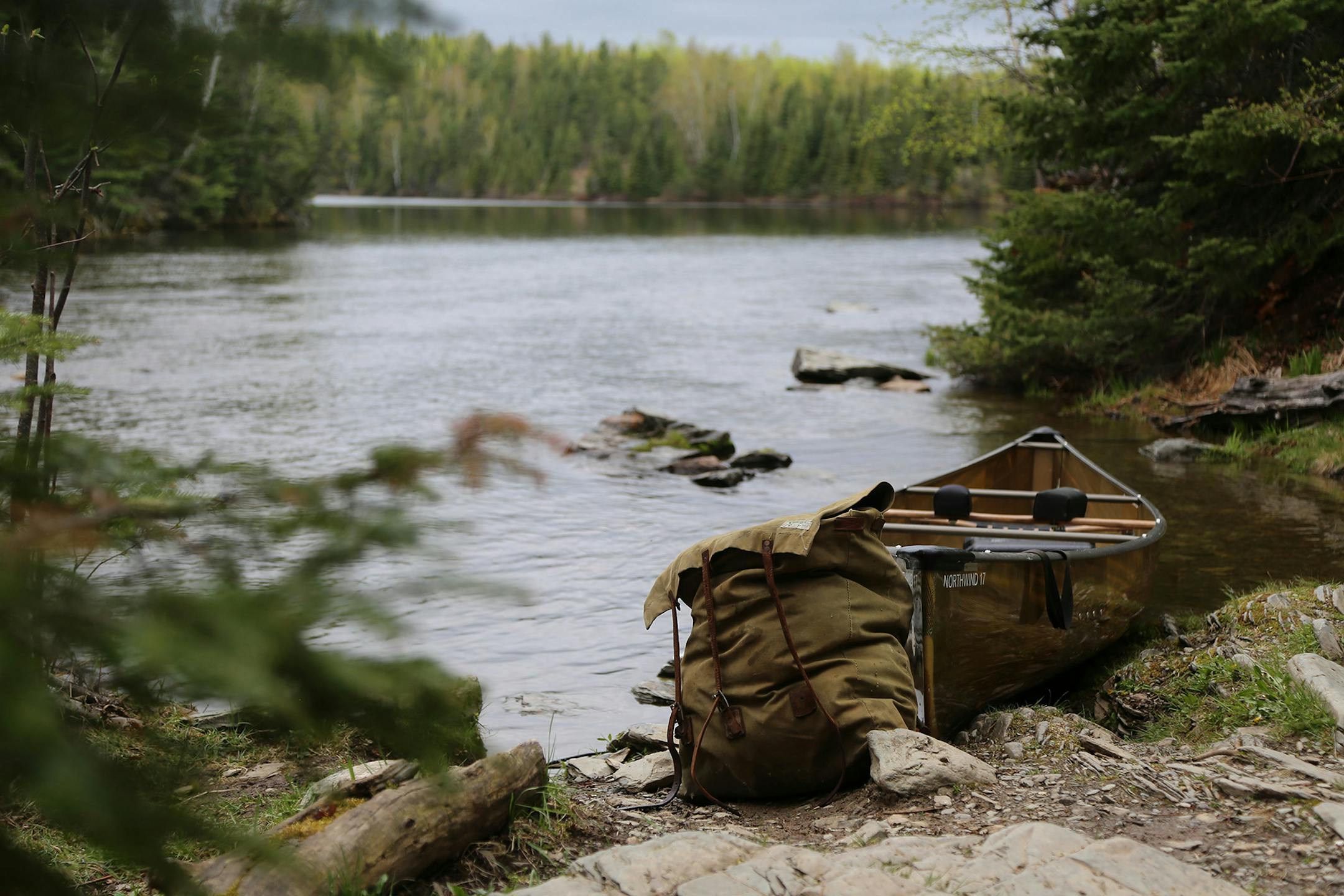
The state will sell 80,000 acres of School Trust lands to the U.S. Forest Service inside the Boundary Waters Canoe Area Wilderness, here in a file image, on Saturday, July 27, 2019. (Dennis Anderson/The Minnesota Star Tribune)

Nearly 50 years after the creation of the Boundary Waters Canoe Area Wilderness, the state of Minnesota will sell more than 80,000 acres it owns inside the wilderness area to the U.S. Forest Service.

The sale will at last resolve a congressional order from the 1978 act establishing the Boundary Waters to compensate the state for the loss of access to its land. It also ends any hope, however faint, Iron Range lawmakers had for trading the state’s Boundary Waters land for federal land that could one day support a new taconite mine. Lawmakers tried as recently as February to block the sale.

The money from the sale, expected to fall somewhere between $20 million to $40 million, will go to the state’s Permanent School Trust, a fund created at statehood that sends cash each year to every school district in the state.

“This will provide benefits for today’s students, for students in 150 years, and then 150 years after that,” said Aaron Vande Linde, Minnesota’s School Trust Lands director.

The 80,000 acres were given by the federal government to Minnesota in 1858, when Minnesota first became a state. It’s divided into dozens of parcels, each one square-mile in size, spread from one end of the Boundary Waters to the other.

At statehood, Congress set aside sections 16 and 36 of every township in the state “for the use of schools.” The vast majority of those lands in southern and central Minnesota were quickly sold to farmers and loggers and the money was used to build the state’s first public schools. But very little of Minnesota’s school trust land in eight northern counties was ever sold.

By the early 1900s, state lawmakers decided that it would be wiser to keep as much of that land as possible so they could lease them for mining and logging. The state still owns 2.5 million acres of school trust lands.

Those lands have built up a trust that is now worth $2.2 billion, and issues nearly $60 million a year to public and charter schools across Minnesota.

The vast majority of the royalties that make up the trust, more than 75% of the historical contributions, come from one place: the Minntac iron mine in Mountain Iron.

Minntac, Minnesota’s largest iron-taconite mine, was partially built on school trust lands. The company pays the trust tens of millions of dollars in royalties every year for the right to mine.

In the mid-1990s, nearly 20 years after the creation of the Boundary Waters, Minnesota’s congressional delegation tried to order the Forest Service to buy out the trust land inside the wilderness. State lawmakers balked at the proposal, saying they wanted to trade it for federal land they could turn into a mine or lease to loggers rather than selling it.

Royalties from a mine or timber operation, they argued in news reports at the time, wouldn’t just help the local economy but would be far better for the trust than a one-time land sale.

But the federal government had no interest in trading mineral rights for the Boundary Waters land. And the state constitution prohibits Minnesota from trading or selling its mineral rights. That means if the state were to trade the Boundary Waters land with the Forest Service, the trade would only involve surface rights — for timber harvesting.

In that case, even if a mining operation as profitable as Minntac opened, any royalties for those minerals wouldn’t go to Minnesota’s School Trust but to the U.S. Department of the Interior.

“This point gets lost on a lot of people,” Vande Linde said. “We cannot exchange our mineral interest in the Boundary Waters and so the federal government, in turn, cannot convey their mineral interest to us. Any trade would only be surface rights for surface rights.”

For decades, lawmakers, the Minnesota Department of Natural Resources (DNR) and the Forest Service bargained over potential land swaps for the 80,000 acres. Starting in the 2010s, they tried pursuing a “hybrid” model where the feds would buy some of the land and trade for about 30,000 acres.

No deal was ever reached. Last year, the DNR and Forest Service abandoned the idea of a land swap.

The DNR ultimately decides how to manage school trust lands. The state constitution requires the agency to secure the “maximum long-term economic return” while using “sound natural resource conservation and management principles.”

Royalties from any timber operation would be worth far less to the School Trust than a land sale, DNR advisers found.

The state typically issues logging companies 50-year leases to log an aspen stand, and earns about $28 per cord cut. If the state were to trade the School Trust land and find a willing logger, it could expect to earn just under $5 million on the land it would receive from the Forest Service over the life of a 50-year lease, Vande Linde said.

But if the state were to sell the 80,000 acres to the Forest Service for $30 million and invest it in the trust, that money would swell to well over $850 million over that same 50 years, if the trust were to continue to average the same returns it has over the last decade.

“The return on investment is exponentially greater by investing than by managing for timber,” Vande Linde said.

Still, in late 2024, lawmakers on a school trust advisory committee asked the DNR to not sell the land, and keep it in the hopes it could be traded.

The math that says the School Trust would only earn $5 million from leasing timber rights on any traded land understates how increased logging helps local economies, Sen. Robert Farnsworth, R-Hibbing, said at the time.

“That’s not considering the livelihood of the thousands of loggers that benefit from the use of that land,” he said. “The federal government is notorious for being bad at managing land. If we don’t trade for it, it’s not going to be accessible to loggers in any real way.”

State Sen. Grant Hauschild, DFL-Hermantown, introduced a bill in February that would prohibit the DNR from selling the land. The bill died in committee.

DNR officials said they are pushing forward with the sale because they are obligated to get the best economic return for the trust that they can on the 80,000 acres.

The agency expects to begin the lengthy process of condemning the land out of the school trust sometime in early 2026. The land sale is expected to be complete in 2027.

about the writer

about the writer

Greg Stanley

Reporter

Greg Stanley is an environmental reporter for the Minnesota Star Tribune. He has previously covered water issues, development and politics in Florida's Everglades and in northern Illinois.

See Moreicon

More from Environment

See More
card image
Alex Kormann, Star Tribune/The Minnesota Star Tribune

Dakota County and the Metropolitan Council, worried about effects on local parks, are asking for more information before the project moves forward.

card image