

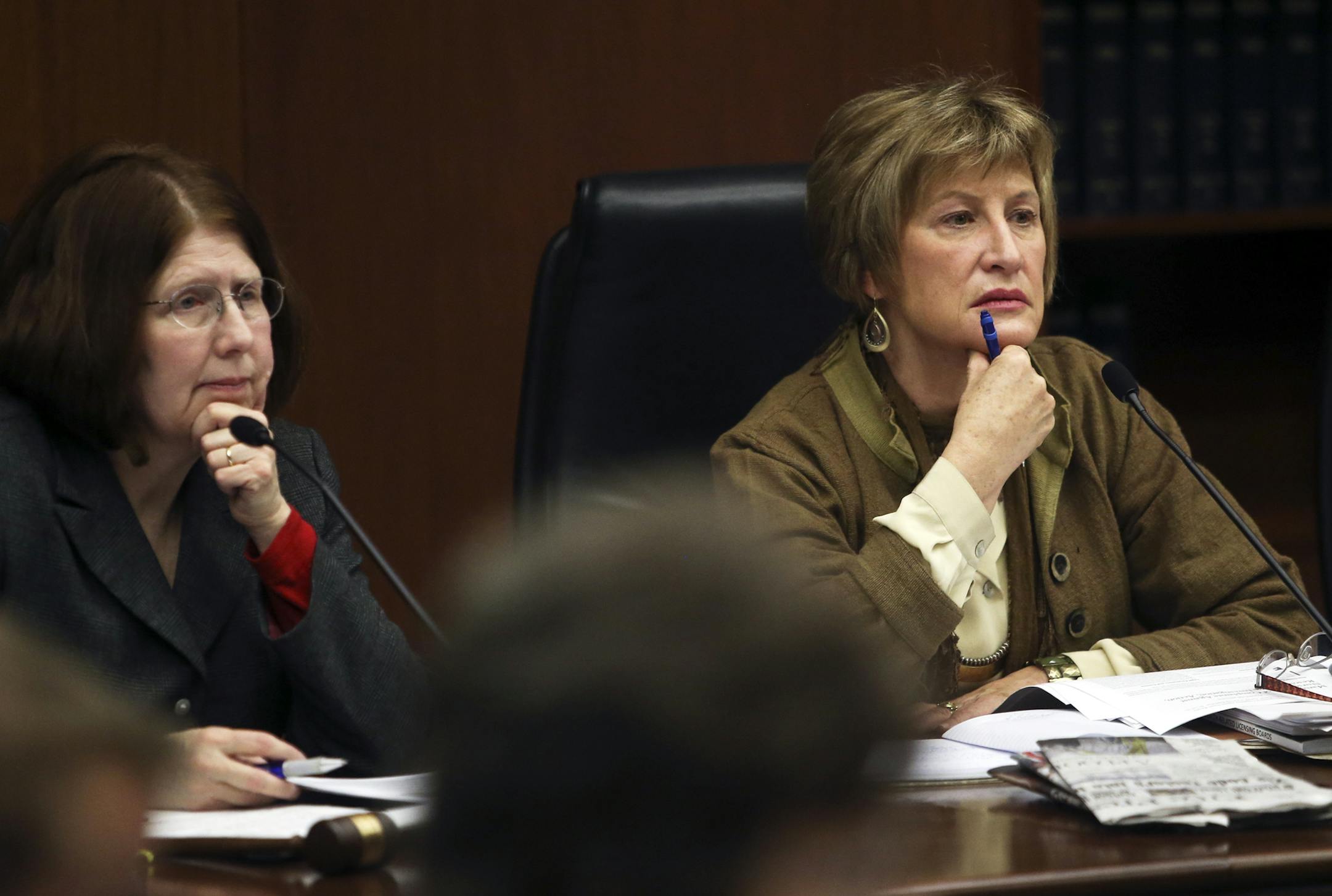
Lawmakers in the House and Senate overwhelmingly support reforms to allow the Minnesota Board of Nursing to take more stringent action against problem nurses. But disagreements about the scope of reforms could stop them from becoming law.
The House version of the reforms approved Monday night by an 86-46 vote will require the board to suspend nurses who fail a state drug and mental health monitoring program unless they can prove they are not an imminent risk of harm to the public.
The House bill would also restructure the monitoring program in an attempt to make it more independent, said Rep. Tina Liebling, DFL-Rochester, who sponsored the bill.
The Senate bill, which passed 49-9, does not change the monitoring program. It also gives the Nursing Board more discretion on whether to suspend a nurse discharged from monitoring.
The Senate will have to pass another version of the bill before it can go to a conference committee with members from both chambers.
"It's possible we don't get anywhere," said Sen. Kathy Sheran, DFL-Mankato, who sponsored the Senate version of the bill. "That we can't get enough votes to accept our language, that they can't get enough votes to accept their language, and so we have no language referencing the Board of Nursing."
Last fall, Liebling and Sheran held a joint legislative hearing to determine what laws could better protect the public from troubled nurses. That followed a Star Tribune series that found the Nursing Board allowed nurses to continue to practice despite their histories of drug thefts and patient harm, criminal convictions or failed participation in state drug monitoring.
Since their hearing, Liebling and Sheran have taken different paths on the disciplinary reforms. Sheran said her bill initially started out as stronger, but "was whittled away not by me, but by members of the [Minnesota] Nurses Association and members of the Legislature."


