

 1:28
1:28A patient checked into Unity Hospital's emergency room with a fever this summer and then said five ominous words: I just returned from Liberia.
The Fridley hospital immediately enacted a public health protocol — isolating the patient, restricting access to caregivers wearing protective garb, and notifying specialists at its parent organization, Allina Health, and the Minnesota Department of Health.
A doctor soon discovered the patient had malaria, not Ebola, but the incident signaled the heightened state of readiness at Minnesota hospitals as they prepare for the deadly virus that has devastated parts of West Africa.
"Everybody is on the watch," said Dr. Wendy Slattery, medical director of infection control for Allina Health, who said the episode gave her confidence that her hospitals are prepared for a real Ebola case.
Long before the first U.S. Ebola case was confirmed in Dallas on Tuesday, Minnesota hospitals were preparing rooms and equipment. Given that more than 30,000 people of Liberian descent live in the north suburbs, the local risk can't be measured by one case in Texas, said Patsy Stinchfield, director of infection prevention and control at Children's Hospitals and Clinics of Minnesota.
"The potential of it being a plane ride away is very real," she said.
Despite Ebola's terrifying reputation, stopping it in a hospital is easier than containing seasonal influenza, which can aerosolize and spread through coughs or sneezes. Ebola doesn't spread through the air, but rather through contact with bodily fluids of infected patients such as blood, vomit or saliva.
But given the mystery and high fatality rate associated with Ebola — the World Health Organization predicted that 70 percent of infected Africans would die in this outbreak — hospital officials acknowledged the need for greater precautions.
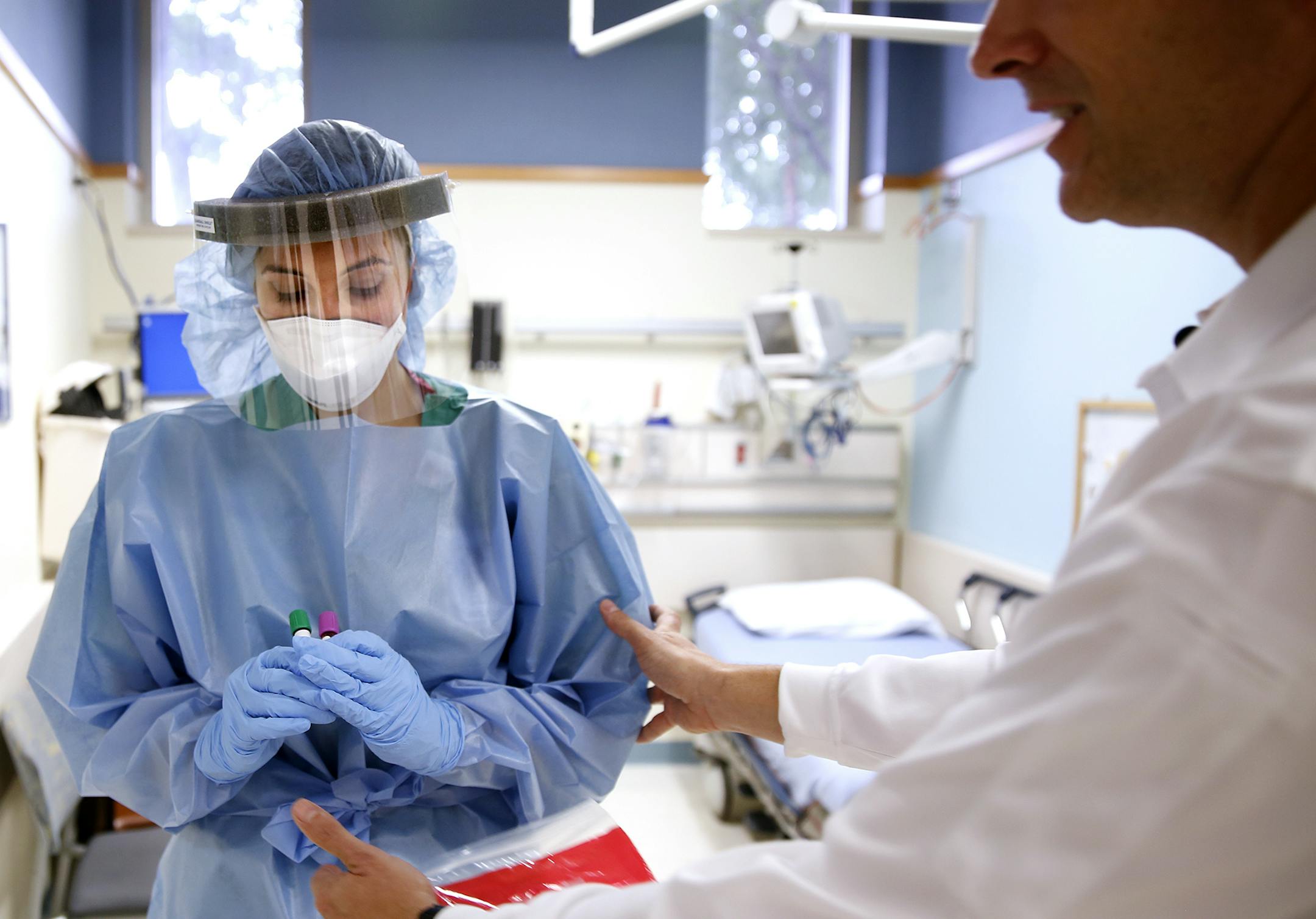
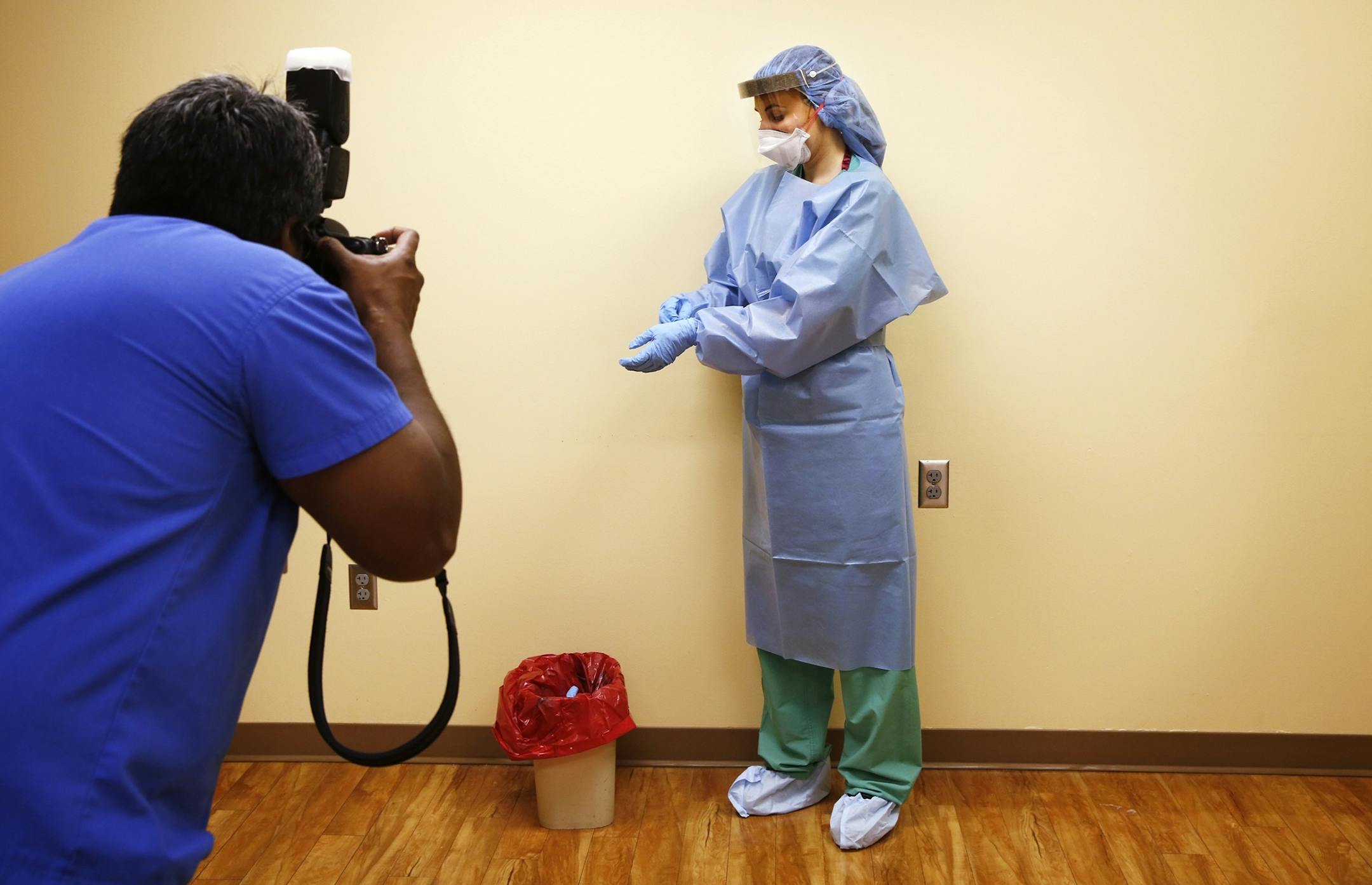
![Dr. Rochelle Zarzar, a first year resident at the Hennepin County Medical Center emergency department, wears the Personal Protective Equipment (PPE) that would be used in care for patients with Ebola symptoms at the Hennepin County Medical Center during a press conference. ] LEILA NAVIDI leila.navidi@startribune.com / BACKGROUND INFO: Friday, October 3, 2014. Just hours before the first case of Ebola was diagnosed in the United States, staff at HCMC conducted a comprehensive, 4-hour exercise to](https://arc.stimg.co/startribunemedia/AIKUGM234NOFQWYRFAVWXWCISM.jpg?&w=1080)


