Minnesota family spends summers salmon fishing in Alaska

The Rogotzke family brings Alaskan salmon home to Minnesota.

For the Minnesota Star Tribune
September 25, 2020 at 9:47PM
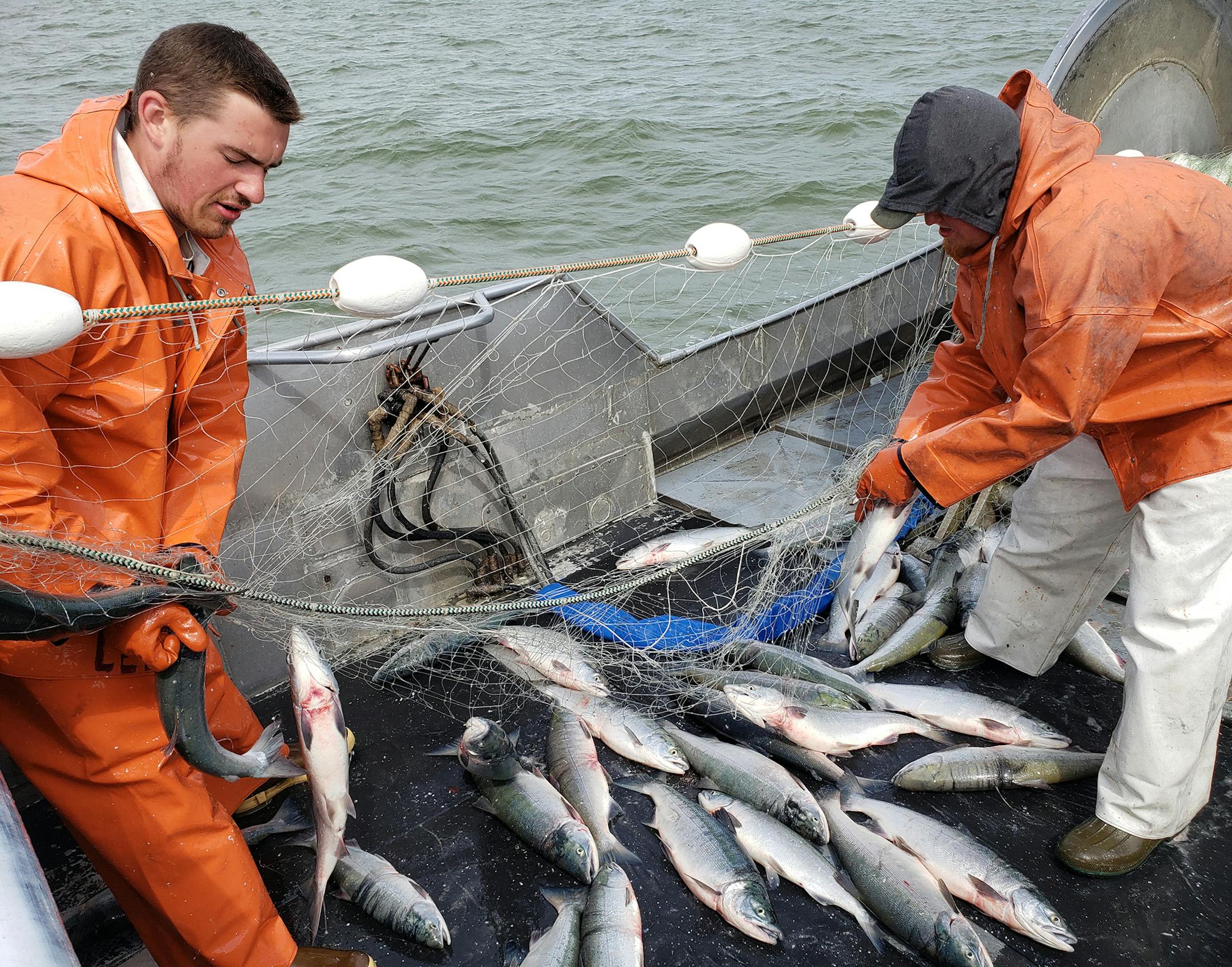
Provided by Tom Rogotzke Jay Rogotzke picks fish from the nets.
All in the family: Jay Rogotzke helps pick salmon from nets aboard the Katie Blu. Roger Rogot-zke paved the way for sons Jay, left, and Tom to fish in Bristol Bay. Roger at the helm of the Karen Anne. (The Minnesota Star Tribune)

When people hear that the Rogotzkes spend summers fishing on Alaska's Bering Sea, they might imagine them wading the shores of remote rivers, lazily casting a fly.

Not quite.

"To explain it to people back home, one of the first things I tell them is that this isn't with a fishing rod," said Jay Rogotzke, 28, the youngest of the Rogotzke fishermen. "We're dragging three football fields worth of net behind us."

The Rogotzkes — brothers Jay and Tom, dad Roger and uncle Dave — all run their own boats in Bristol Bay, home to the world's largest sockeye salmon run.

Sitting at the northern base of the Aleutian Islands, the Bristol Bay region encompasses roughly 40 million acres of tundra dotted with lakes and cut by endless rivers. It is home to grizzlies, beluga whales, 190 kinds of birds and 40 species of fish, but none more important to the Rogotzkes than sockeye salmon, which flood up rivers by the millions every summer to spawn in their natal streams. Depending on where the fish are running, the Rogotzkes might find themselves fishing shallow freshwater just feet from the green tundra, or drifting in the deep blue waters of the bay, out of sight of land.

A competitive, taxing job

The Rogotzkes fish in 32-foot aluminum boats that drift freely, even with 900 feet of net trailing.

Both the net — which can trap thousands of sockeye at a time — and boat are subject to ripping river currents that clash with some of the world's biggest tides. The weather can be abysmal, and summer storms often send 40 mile-per-hour winds ripping across the region.

"It can get pretty adventurous," said Jay, who also teaches sixth grade in Lester Prairie, Minn. "And I don't think people understand how competitive it is."
Bristol Bay is a frenetic derby fishery: Boats are often packed together in tight scrums as fishermen jockey for their share of the sockeye that surge up the rivers in dense schools. This season, the fleet of around 1,500 boats caught nearly 40 million salmon, most over a three-week span in July.

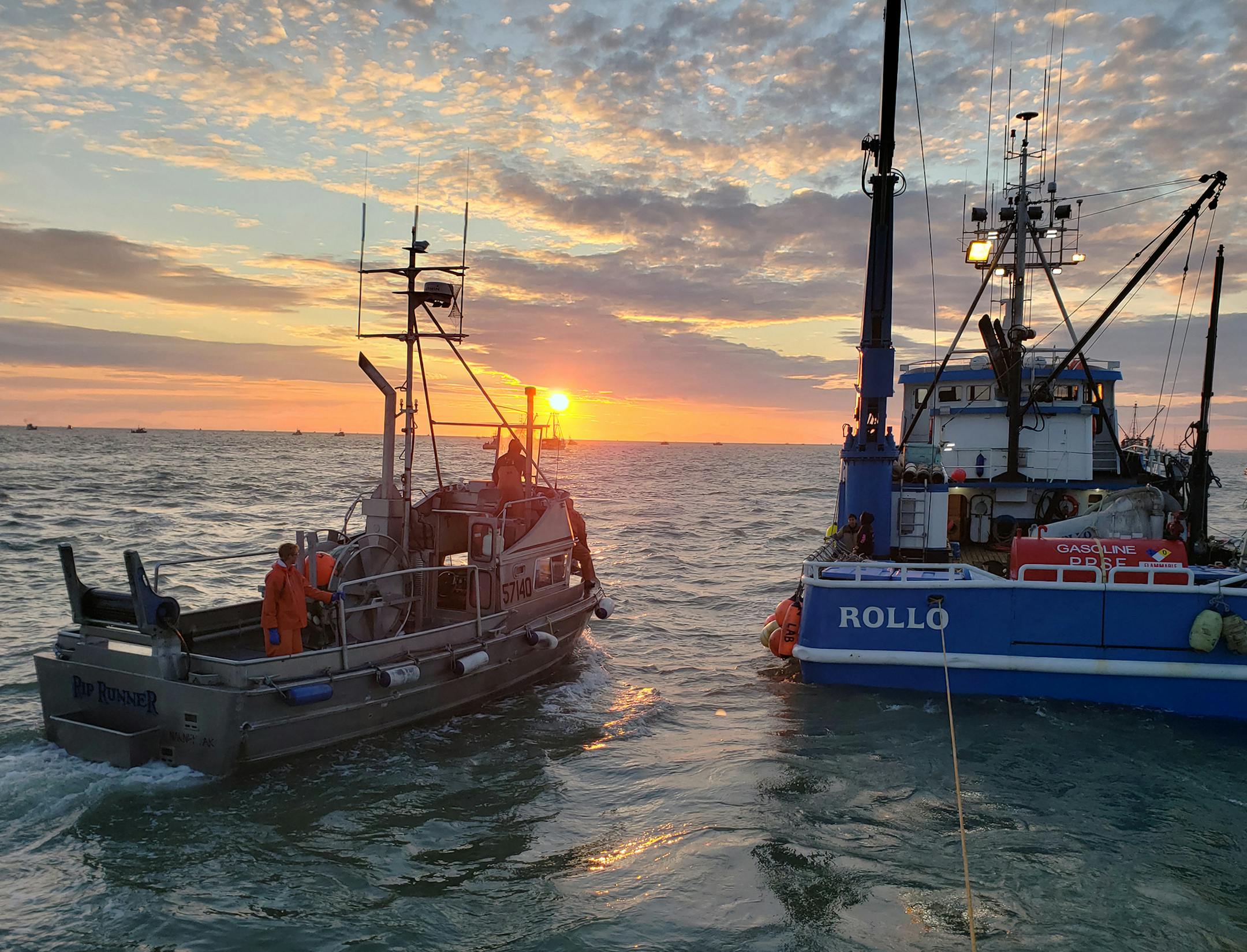
The Rogotzkes cast their long nets, which hang 10 feet into the water, over a roller on the back of their boats. Sockeye rushing up the rivers swim into the nets, which are then hoisted on board by a large hydraulic drum. Each boat has two or three deckhands that pick the fish out of the nets and toss them into holds filled with cold water. Every eight hours or so, the fishing boats pull up to larger boats anchored in the area called tenders, which run the fish upriver to plants for processing. Canned salmon was once the main end product, but now most are cut into bright red fillets, frozen and shipped to the domestic market.

During the peak of the run, the Rogotzkes often fish around the clock. They can stay on the water for weeks at a time, deprived of comforts like solid ground, showers and sleep.

"When I hire new deckhands from Minnesota, I tell them it's like camping," said Tom, 33, who lives in Hutchinson, Minn., with his wife, Amy, and also works at a local farm. "You're cooking on a little stove and have a tiny bed that's not really a bed at all. I mention they shouldn't mind standing all day and never sleeping, and also that their hands are going to hurt really bad."

The Rogotzkes say they love the work, but it is a sometimes dangerous job that taxes people like few others. Tom recalls logging just 30 minutes of sleep a day for a week at the peak of the run. Roger's boat, the Karen Anne, is the only one with a shower, but tight space means it is used for storage.

"We just really need the space for other things. My shower is always full of duffel bags and gear," Roger said.

A leap of faith

It was Roger who got the family started in the unlikely profession more than 40 years ago. Back in college in 1980, Roger — a special education teacher in Winthrop, Minn., who also runs an elk farm in Sleepy Eye during the offseason — read about Bristol Bay in a magazine. Intrigued, he bought himself a plane ticket north the next summer.

Two years later, in what the Rogotzkes now recognize as an astounding act of faith, Roger's dad, Bob, mortgaged the family farm in Minnesota to buy his son a fishing boat and permit. That investment paid off, and two years later Bob did the same thing for his other son, Dave.

"We really just owe everything to him," Roger said. That makes this season bittersweet: Bob died in May, just before the four fishermen headed north.

Tom got his start in 2000 at age 12 as a deckhand on Roger's first boat, a fiberglass number called the Ratso. He learned the ropes while working with his dad for nine seasons and bought his own boat, the Katie Blu, in 2009. That same year his younger brother, Jay, took over the Ratso, which he ran until buying his own boat, the Rip Runner, two years ago.

The family fleet of four fishes side by side and communicates by radio to help each other stay on the fish and provide support through the grind of the season.

Rogotzke Fish Co. was born out of a downturn in the fishing industry. In the early 2000s, the availability of farmed fish brought down wild salmon prices, and there were a several years of lean runs. To recover costs, Roger and Dave started buying back fish from their processor and taking it home to sell to friends and family.

They found receptive consumers in Minnesota, and the business grew organically with almost no advertising, Tom said.

This year, the Rogotzkes set up a website (rogotzkefishco.com) to process online orders throughout the year. Each spring Rogotzke Fish Co. takes preseason orders for sockeye and king salmon, which they fulfill when the fish arrives in September. In the fall, they open up for new orders. They deliver all orders in the southern half of the state — including the Twin Cities — as supply allows.

Hagenbuch is a Seattle-based freelance writer and commercial fisherman.


Provided by Tom Rogotzke Jay Rogotzke's boat, Rip Runner, pulls up to a tender boat, which carries supplies to fishing boats or helps them unload their catch.
Jay Rogotzke’s boat, the Rip Runner, pulls up to a tender boat, which carries supplies to fishing boats and helps them unload their catch. (The Minnesota Star Tribune)
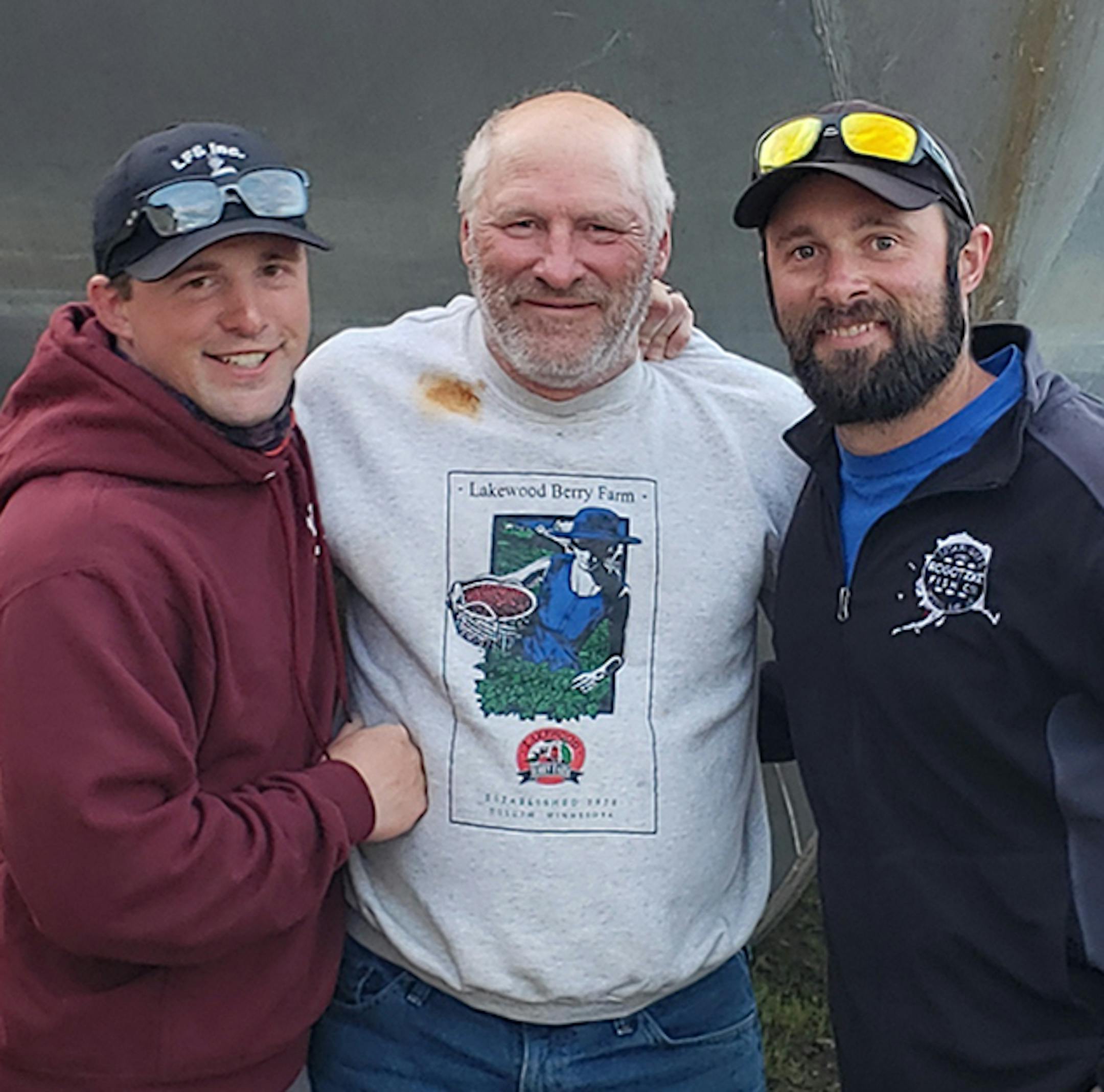
Jay, Roger and Tom Rogotzke at the close of the 2020 season.
Provided by Tom RogotzkeJay, Roger and Tom Rogotzke at the close of the 2020 season. (The Minnesota Star Tribune)
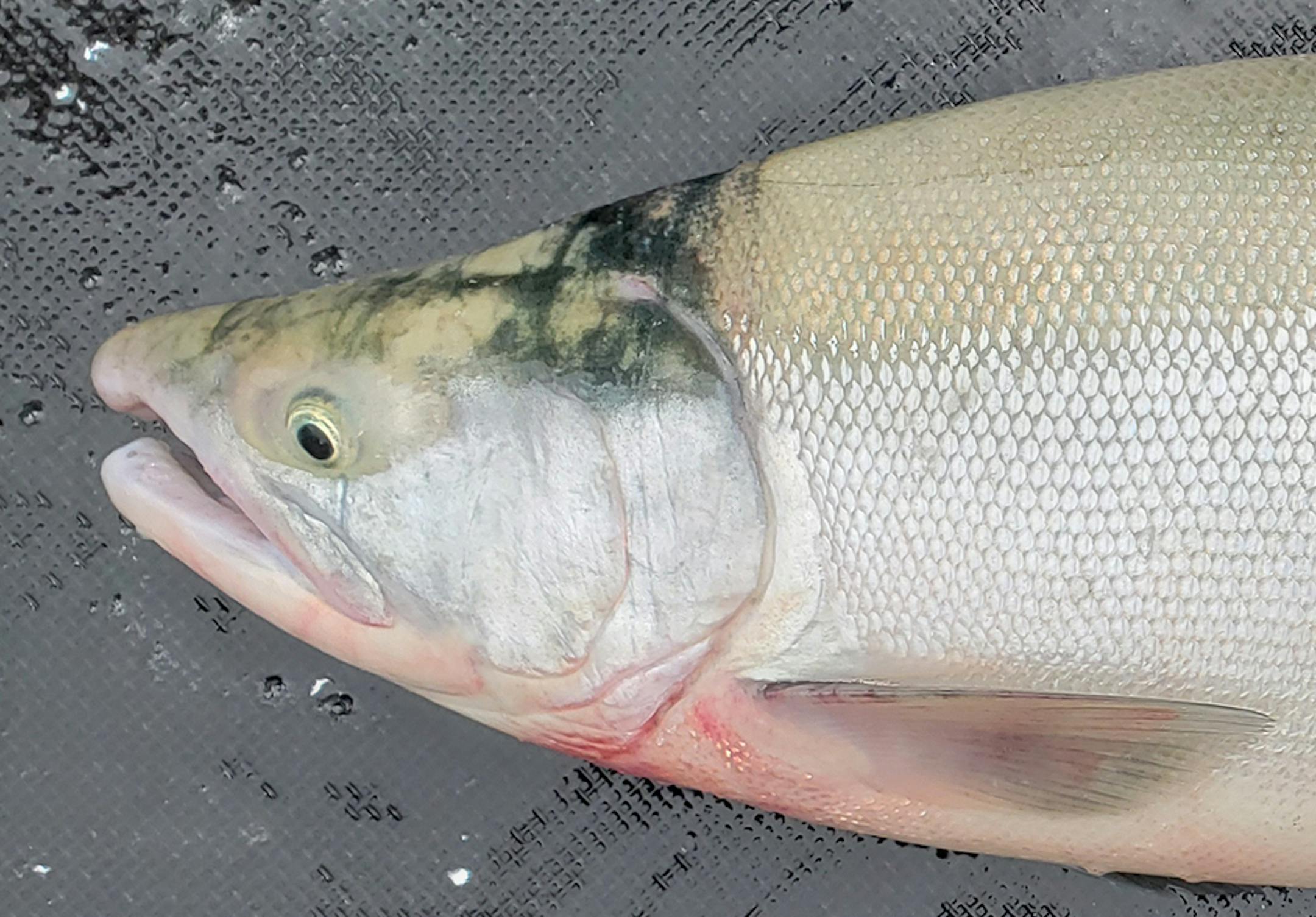
Sockeye salmon on the dock in Bristol Bay, Alaska.
Provided by Tom RogotzkeSockeye salmon on the dock in Bristol Bay, Alaska. (The Minnesota Star Tribune)
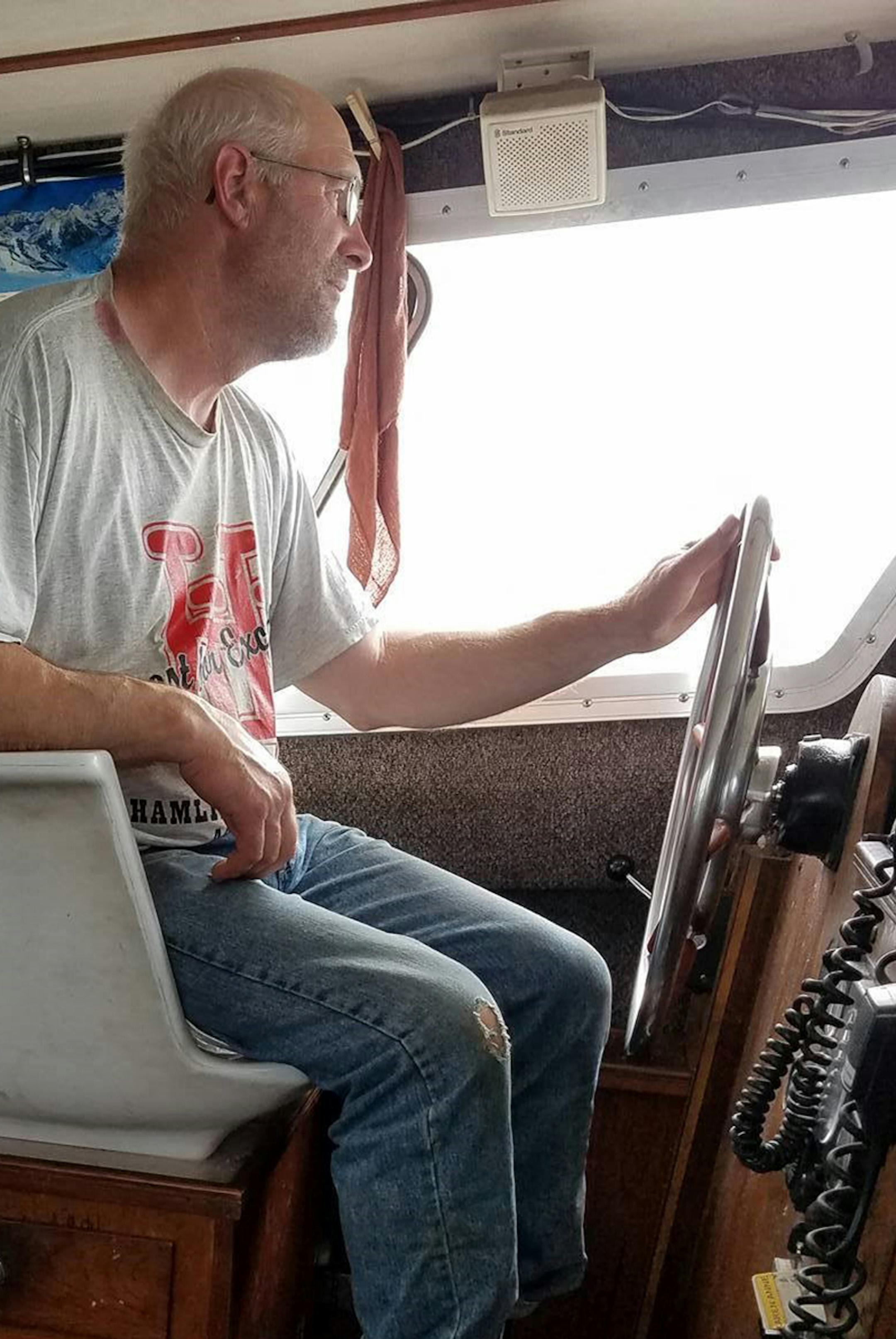
Provided by Tom Rogotzke Roger Rogotzke at the helm of his boat, the Karen Anne. Roger has been fishing in Bristol Bay since 1982.
Provided by Tom RogotzkeRoger Rogotzke at the helm of his boat, the Karen Anne. Roger has been fishing in Bristol Bay since 1982. (The Minnesota Star Tribune)
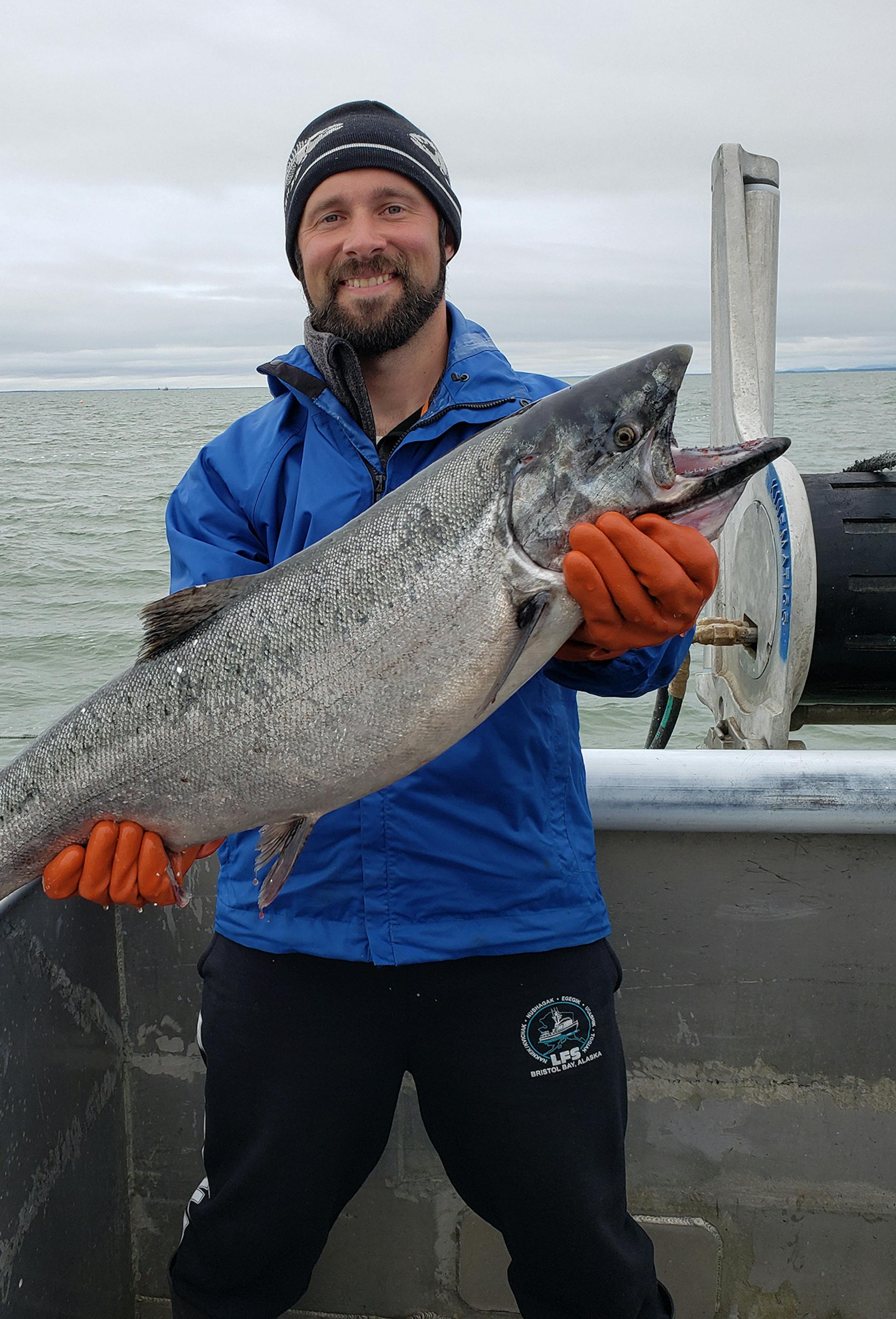
Tom Rogotzke with a King salmon.
Provided by Tom RogotzkeTom Rogotzke with a King salmon. (The Minnesota Star Tribune)
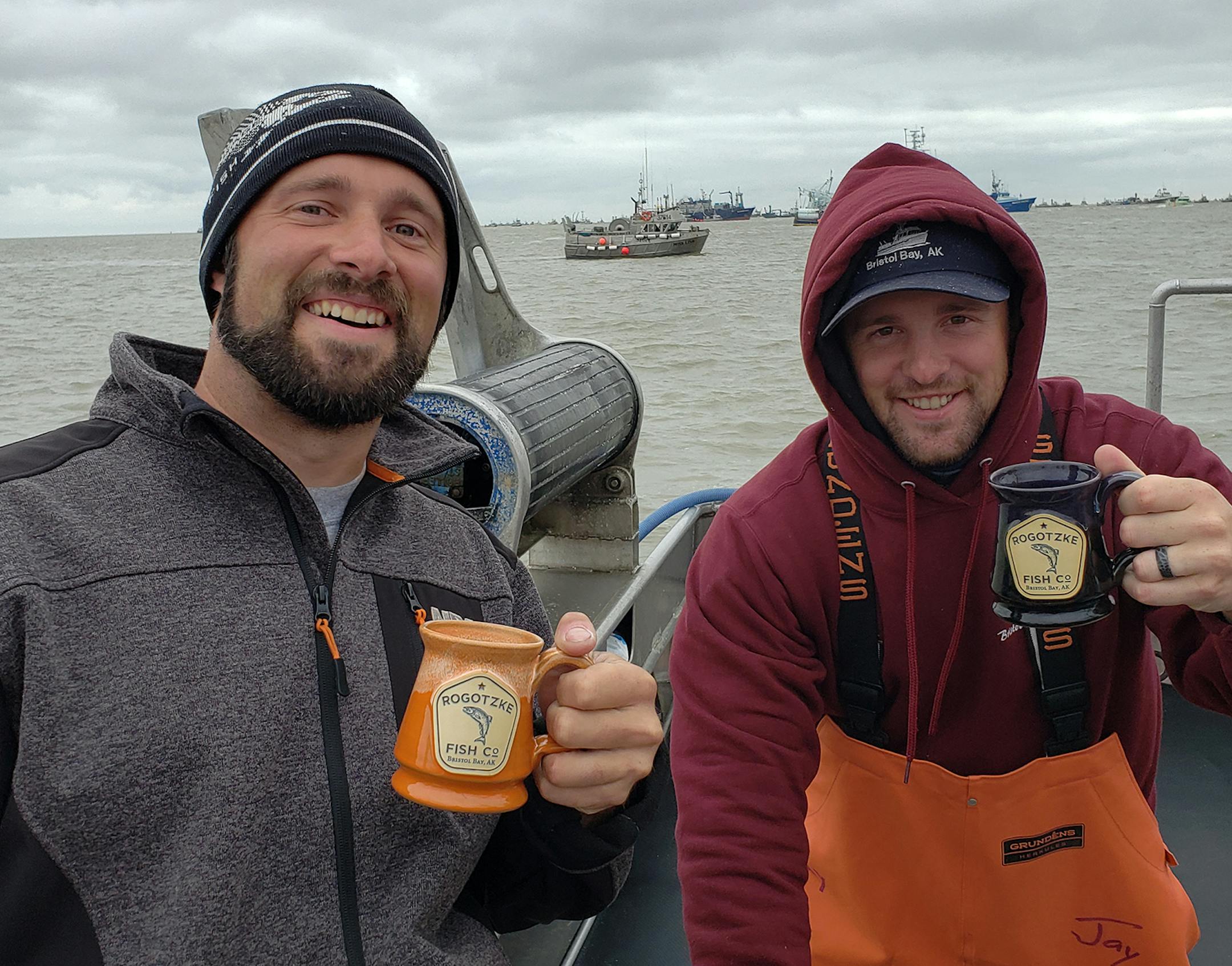
Provided by Tom Rogotzke Tom and Jay Rogotzke have morning coffee in Bristol Bay.
All in the family: Tom and Jay Rogotzke have morning coffee in Bristol Bay. Jay, Roger and Tom Rogotzke at the close of the 2020 season. Roger at the helm of the Karen Anne. (The Minnesota Star Tribune)
about the writer

about the writer

Brian Hagenbuch

More from Minnesota Star Tribune

See More
card image
J. SCOTT APPLEWHITE, ASSOCIATED PRESS/The Minnesota Star Tribune

The "winners" have all been Turkeys, no matter the honor's name.

In this photo taken Monday, March 6, 2017, in San Francisco, released confidential files by The University of California of a sexual misconduct case, like this one against UC Santa Cruz Latin Studies professor Hector Perla is shown. Perla was accused of raping a student during a wine-tasting outing in June 2015. Some of the files are so heavily redacted that on many pages no words are visible. Perla is one of 113 UC employees found to have violated the system's sexual misconduct policies in rece