
Minnesota equine therapy center helps kids, veterans

July 17, 2018 at 1:24AM
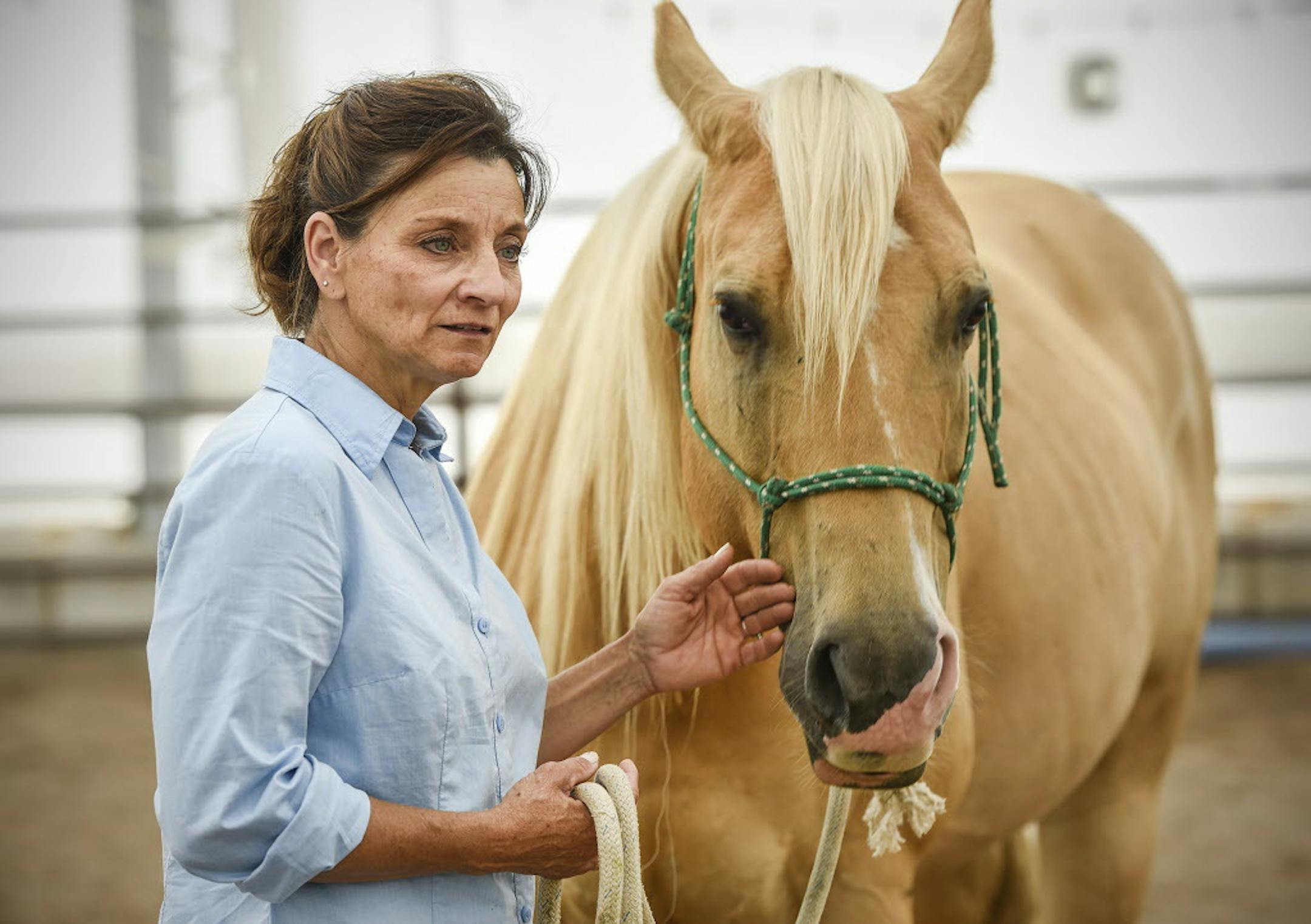
ADVANCE FOR USE WITH WEEKEND EDITIONS SATURDAY, JULY 14, 2018 In this Wednesday, June 27, 2018 photo, Jodine Rothstein talks about opening her equine-assisted therapy center called Gaits of Hope at her Sandy Knoll Farm in Rice, Minn. The center serves veterans and children with mental health issues. (Jason Wachter/St. Cloud Times via AP)
Jodine Rothstein knows that horses can connect with people at times when traditional therapy is not enough. She founded Gaits of Hope in Rice, Minn., to serve children and veterans. (The Minnesota Star Tribune)

RICE, MINN. – Brooke Belair thinks about a horse named Buck a lot, at least every day.

Just the thought of being with Buck at Sandy Knoll Farm relaxes her, the 13-year-old said.

Buck became a regular part of her life last fall, when Belair started equine-assisted therapy for anxiety and depression.

"It was kind of like love at first sight," Brooke said. The program "gives you a feeling of hope, and it makes you happy."

Three years ago, the equine-assisted therapy center Gaits of Hope started serving veterans and children with mental health issues. It's Jodine Rothstein's labor of love.

Rothstein, 53, lives at the Rice stables with her daughter's family on 40 acres that used to be part of her parents' farm.

On a sunny day in late June, her palomino, Maverick, grazed around a swing set while Pepper, a kitten Rothstein had rescued from a ditch, climbed around her shoulders.

Rothstein worked as a riding instructor for about 14 years before she launched Gaits of Hope. She noticed that the same horses behaved differently with different students.

Weeks after she learned equine therapy existed, Rothstein started training. At the time, she helped veterans with simple tasks at home and wanted to do more. She started holding workshops with veterans and horses.

"It was just something God put on my heart, to say, 'This is what you need to do,' " she said. "That's my mission."

Rothstein is a certified equine specialist with the Equine Assisted Growth and Learning Association, or EAGALA. She watches how horses react to people for insight into their problems. Folks who let a horse push them around may have boundary issues, she said.

"My job is to ask questions," Rothstein said. Clients groom the horses, walk them through obstacles, and sometimes groups of kids observe and discuss the horses' behaviors with Rothstein.

Horses are good therapy animals because they're social and sensitive to their environment and nonverbal cues, according to the EAGALA website. The size and power of a horse is also part of the equation.

"We can't just control a powerful horse," according to EAGALA. "Approaching horses helps us reflect on how we approach our relationships, and how we can face other big or overwhelming things in our lives."

Rothstein has about 13 horses, including two mares who work well with women who are managing sexual trauma.

Two minis named Murdock and Pudgy are less intimidating than larger horses for some kids. They also visit senior living centers, she said.

Annie, a white horse, works well with children with autism. One boy was shut off, with his hood pulled up. When he finally put a hand on Annie, the horse lowered her head to him. "She just wraps herself around them and loves on them," Rothstein said. "She stands like a statue while they pet her."

Eric Goodrich takes his daughter, Heidi, to Gaits of Hope and has for three years. Heidi has a close relationship with the white horse.

"She talks about Annie often, almost like she's a friend," Goodrich said. "It's made her life more enjoyable, something to look forward to."

Goodrich first brought a group of special education students to the farm and watched as they lifted up their chins and smiled. So he brought Heidi for help with her reactive attachment disorder and fetal alcohol disorder.

She'd been in the mental health system since she was adopted at age 3, Goodrich said, and the horses aided her improvements.

Goodrich has worked in mental health for 30 years. It's heavily regulated, and he thinks it has lost some of its compassion and connection.

"Equine therapy isn't that way," Goodrich said. "It's connecting living, breathing things with one another."

about the writer

about the writer

NORA G. HERTEL, St. Cloud Times

More from Minnesota Star Tribune

See More
card image
J. SCOTT APPLEWHITE, ASSOCIATED PRESS/The Minnesota Star Tribune

The "winners" have all been Turkeys, no matter the honor's name.

In this photo taken Monday, March 6, 2017, in San Francisco, released confidential files by The University of California of a sexual misconduct case, like this one against UC Santa Cruz Latin Studies professor Hector Perla is shown. Perla was accused of raping a student during a wine-tasting outing in June 2015. Some of the files are so heavily redacted that on many pages no words are visible. Perla is one of 113 UC employees found to have violated the system's sexual misconduct policies in rece