

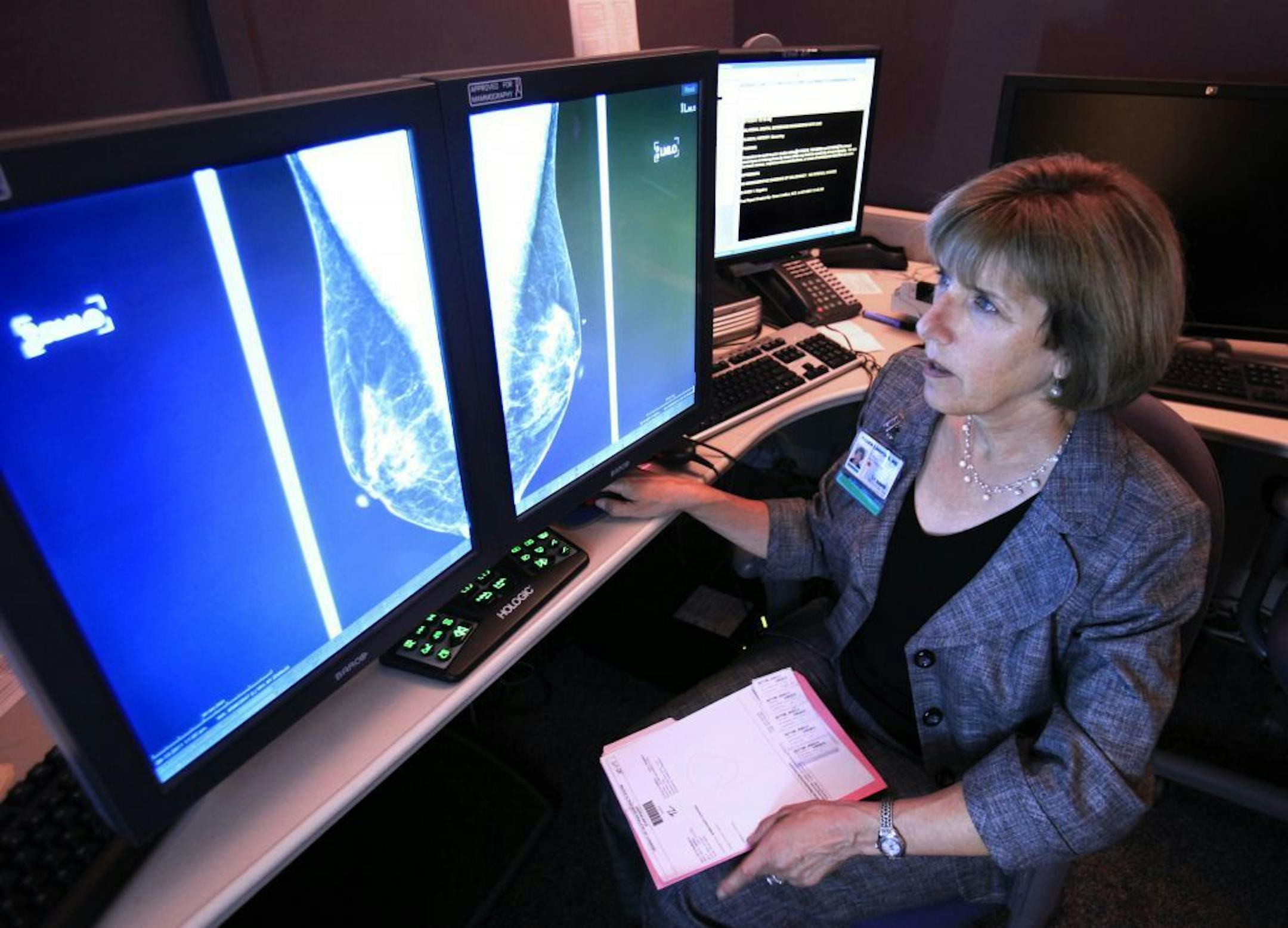
The standard "all-clear" letter sent after mammograms to tell women they are cancer-free is going to contain new and potentially troubling information for thousands of Minnesota women — the disclosure that they have dense tissue in their breasts that could cloud their cancer screenings.
Minnesota mandated as of Aug. 1 that doctors notify women if their mammograms discover dense breast tissue, which can mask the presence of a tumor on an X-ray.
"There is no shortage of women like me who have been harmed by their density and never knew it," said Nancy Cappello, a breast cancer survivor from Connecticut. She became an advocate for state-mandated disclosure of tissue density after mammograms failed to find her tumor until it was enlarged and her cancer had spread beyond her breast.
Breast tissue density is well-known among cancer specialists and radiologists; studies suggest 47 percent of women have tissue that is dense enough to hide a tumor on an X-ray image. Research also has indicated that dense breast tissue itself increases cancer risks, especially for the 8 percent of women with extremely dense tissue.
But some doctors treat tissue density as back-of-the-house information that patients don't need to know, in part because it is unclear exactly what women should do with the information and which alternative cancer screenings work best.
Cappello said doctors were so resistant to notifying patients on their own that she formed the "Are You Dense?" advocacy organization and sought mandates that have been enacted in 19 states.
"I was shocked," she said, "not that I had breast cancer, but that it was [detected] so darn late."
While mandate proposals have generated intense debates in other states, the Minnesota legislation quietly received support in the House this spring before it was tucked into a health care omnibus bill and sent to the governor's desk. Organizations such as the Minnesota Medical Association had concerns — especially the impact of notifying so many women when the solutions for dealing with dense breast tissue are unclear — but didn't oppose the bill.


