
Minnesota children's dental care needs a brush-up

More than half of Minnesota's third-graders have tooth decay, a first-of-its-kind survey finds, and the state is concerned.

February 20, 2013 at 8:25PM
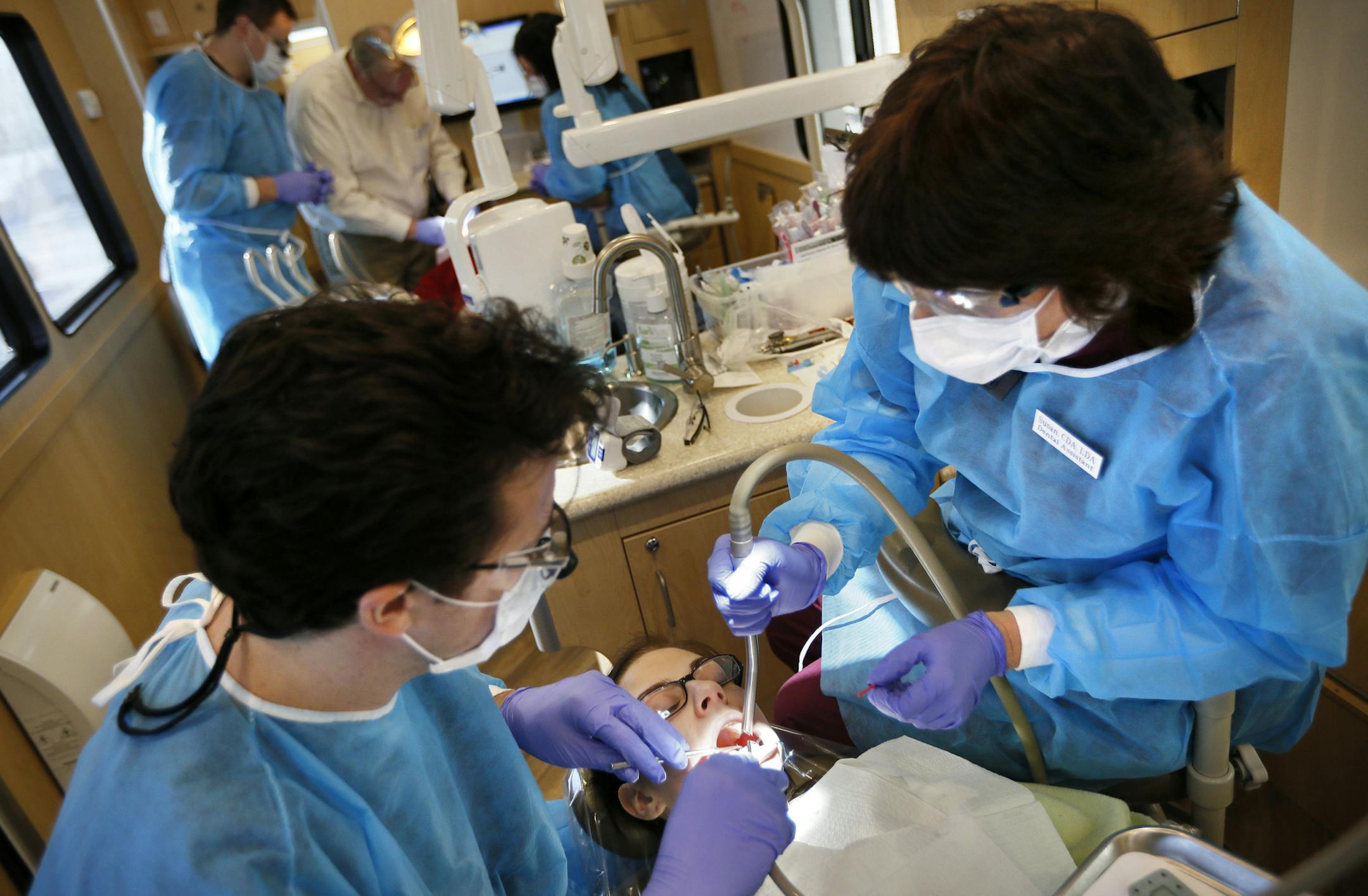
Parked outside Diamond Lake Lutheran Church in S. Minneapolis, children and adults receive dental care in the Ucare mobile dental clinic. The mobile clinic provides dental check-ups, cleanings, and simple restorative care to qualified eligible UCare members of all ages in Minnesota who have limited access to quality dental care. All care is provided by faculty-supervised dental and dental hygiene students from the University of Minnesota School of Dentistry, UCare's Mobile Dental Clinic partner.
U dental student Neil Keane and dental assistant Susan Raden worked Tuesday with 17-year-old Sammie Halverson on preventive care in the UCare Mobile Clinic. (The Minnesota Star Tribune)

More than half of Minnesota's third-graders have suffered from tooth decay, and untreated dental problems have generated $148 million in emergency room charges in recent years — numbers that are drawing attention from state officials as an important public health challenge.

Although tooth decay is preventable, it remains a prominent childhood disease in Minnesota, especially among low-income families, according to a new initiative announced Tuesday by the Minnesota Department of Health. About 55 percent of third-graders surveyed by the agency in 2010 had experienced cavities, compared to 53 percent nationally among children between 6 and 8 years old. The first-ever open mouth patient survey was conducted across 40 Minnesota ­public schools.

Untreated tooth decay can have a "big impact" on kids, said Dr. Dan Rubin, associate medical director at UCare Minnesota, one of the state's largest health plans. Long-running oral health problems can lead to early tooth loss, which can affect what children eat and cause nutritional ­deficits and even malnutrition, he said.

Lack of proper dental care can also trigger larger medical and financial problems, said Merry Jo Thoele, oral health director at the Health Department. Risk factors connected to poor ­dental hygiene are also linked to chronic conditions such as obesity and heart disease.

"We must recognize the connection between oral and total health," she said. "The mouth is the first place a lot of things happen."

Low-income Minnesota children — those ­eligible for discounted school lunches — were almost three times as likely to have untreated tooth decay compared to those from higher income families, the survey showed. Those preventable, untreated cases helped rack up $148 million in statewide emergency care charges between 2007 and 2010.

"It's tragic," said Dr. Paul Schulz, director of outreach at the University of Minnesota School of Dentistry.

Pediatric dental coverage is among 10 basic benefits — including prescription drugs and mental health care — that will be required by the federal Affordable Care Act for health policies that are listed on public insurance exchanges. Rules governing that coverage are expected from the Obama administration this week.
Ideally, children should have their first dental appointment at age 1, Rubin said, with regular checkups to follow.

But at the University of Minnesota's dental clinic, most children show up for their first appointment between the ages of 2 and 5, said Dr. Rob Jones, an assistant director in the division of pediatric dentistry at the U's School of Dentistry.

By then, he said, "their visits are more problem-focused rather than preventive. Fillings don't change the bacteria in your mouth."

While tooth decay is an issue facing all age groups, Rubin said, children may be less aware of the risks and reluctant to tell adults. Jones said baby teeth are also very important to maintain because decay in primary teeth can be passed on to ­permanent ones.

While 64 percent of Minnesota third-graders have some kind of dental sealant — something proven to prevent tooth decay — the number drops to 42 percent among the state's poorest families, the survey found.

Jeff Hargarten is a University of Minnesota student reporter on assignment for the Star Tribune.

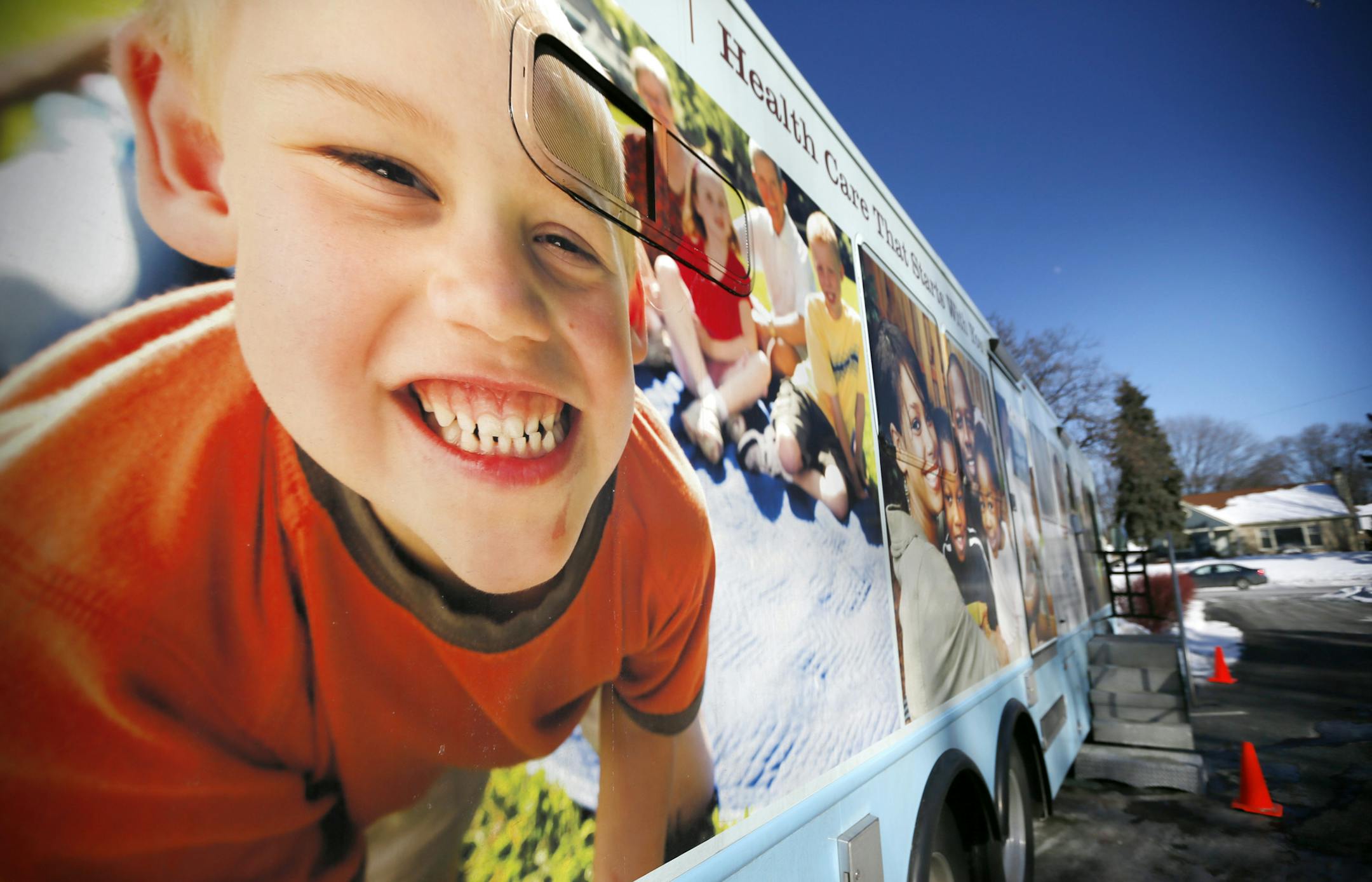
Parked outside Diamond Lake Lutheran Church in S. Minneapolis, children and adults receive dental care in the Ucare mobile dental clinic. The mobile clinic provides dental check-ups, cleanings, and simple restorative care to qualified eligible UCare members of all ages in Minnesota who have limited access to quality dental care. All care is provided by faculty-supervised dental and dental hygiene students from the University of Minnesota School of Dentistry, UCare's Mobile Dental Clinic partner.
The UCare Mobile Dental Clinic served patients outside Diamond Lake Lutheran Church in Minneapolis. (The Minnesota Star Tribune)
about the writer

about the writer

Jeff Hargarten

Data Journalist

Jeff Hargarten is a Minnesota Star Tribune journalist at the intersection of data analysis, reporting, coding and design.

See Moreicon

More from Minnesota Star Tribune

See More
card image
J. SCOTT APPLEWHITE, ASSOCIATED PRESS/The Minnesota Star Tribune

The "winners" have all been Turkeys, no matter the honor's name.

In this photo taken Monday, March 6, 2017, in San Francisco, released confidential files by The University of California of a sexual misconduct case, like this one against UC Santa Cruz Latin Studies professor Hector Perla is shown. Perla was accused of raping a student during a wine-tasting outing in June 2015. Some of the files are so heavily redacted that on many pages no words are visible. Perla is one of 113 UC employees found to have violated the system's sexual misconduct policies in rece