
Migration worth the trip for tropical birds

Many tropical birds forsake their winter homes for more abundant northern resources.

March 25, 2015 at 2:01AM
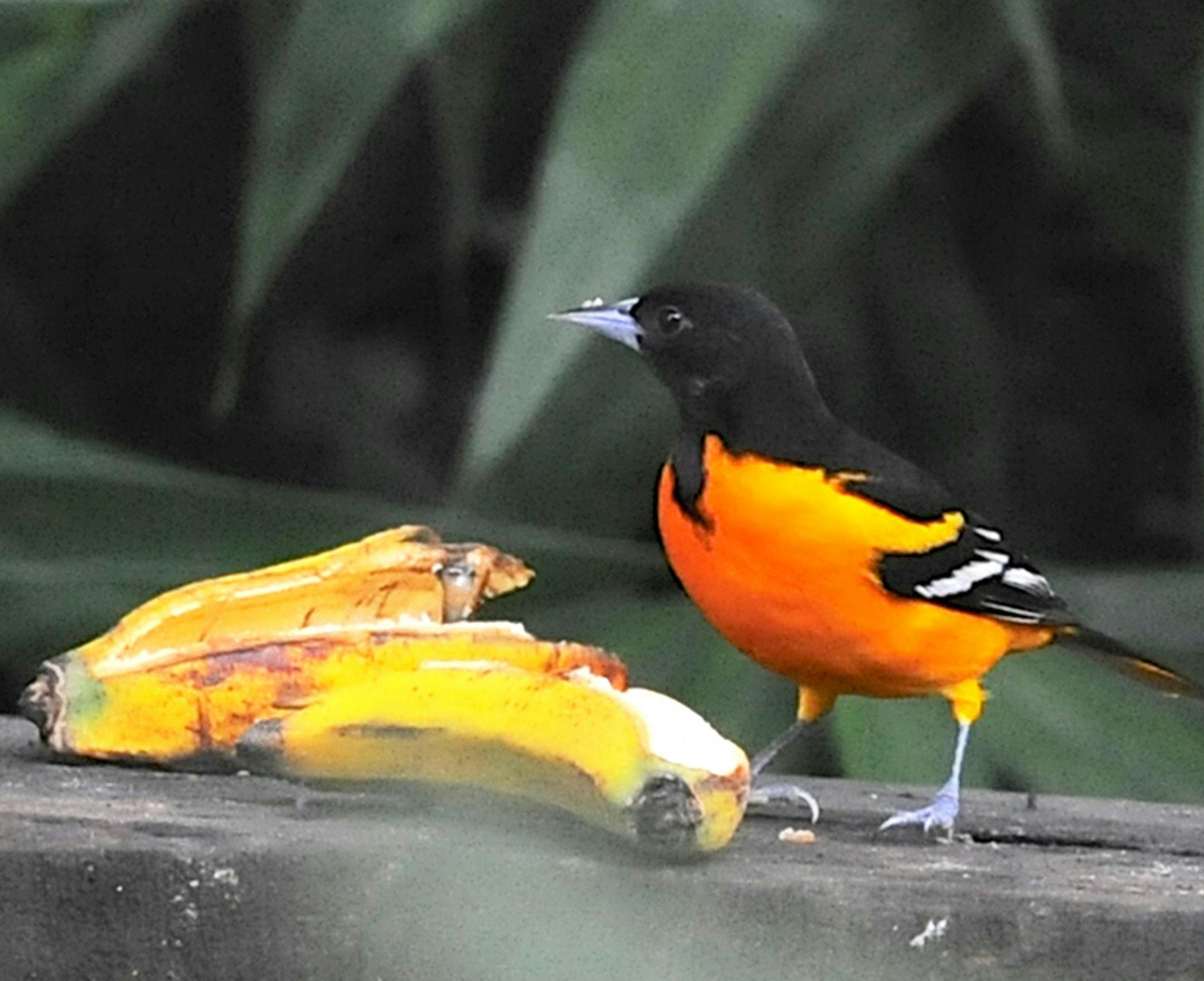
This male Baltimore Oriole was seen in Costa Rica in January, eating banana at a feeding station. Sometime in April the bird will respond to signals that tell it to return north for breeding. It is believed that the extent of daylight at a given time in a given place sets in motion a hormonal change that leads to breeding, beginning with migration. credit: Jim Williams, special to the Star Tribune
This male Baltimore oriole ate banana at a Costa Rica feeding station in January. Sometime in April the bird will return north for breeding, possibly in a hormonal response to extended daylight hours. (The Minnesota Star Tribune)

Baltimore orioles are tropical birds. So are most of the colorful species that take up temporary residence to nest here. They are tropical species that make long and dangerous migrations because the risk is worth the reward.

In the tropics, yearlong uniform weather offers a constant level of food for birds — constant but not abundant. Birds nesting in the tropics typically produce fewer chicks per nest than do, say, that oriole and his mate nesting here. So tropical birds work harder to raise fewer young.

There is enough food and territorial space in the tropics, however, to allow winter migrants to subsist until spring.

Why return? Why invest the energy and test the dangers of migration twice a year? Why not settle for a smaller clutch of eggs?

The onset of warmth in northern North America creates an explosion of plant and insect life offering superior opportunity to raise young. A bird can double the number of chicks per nest, and perhaps nest more than once. More young equals a more profound genetic heritage.

Built-in programming

Migration begins when a signal sets a hormonal clock inside the bird. A timed sequence begins. The bird might molt, fatten for migration, migrate, court, nest, raise young, molt again, fly south — some or all of the above.

The clock stops at a point, then resets.

This is a simplified description. Exactly what the signal is or signals are, what happens, and sometimes why, is uncertain, according to Dr. Robert Zink, University of Minnesota ornithologist.

Author Scott Weidensaul wrote about migration in his book "Living on the Wind." The birds, he says, "have been drawn from their tropical havens by the subtle shifts of the photoperiod and the biological clocks within their own bodies."

Humidity or rain or something else also could have a role. Perhaps there is a combination of signals. Perhaps it is just that internal clock, ticking through the year, one hormonal change leading to another.

Evolving patterns

Migration is a complex behavior that has developed over millions of years. It is thought to have existed as far back as Gondwanaland, the earth's original single landmass that broke into the continents we see today.

In North America, glaciers came and went, the environment changing with the advance and retreat of ice. Cold weather eliminates food and water sources for certain species of birds, like orioles, tanagers and warblers.

Birds moved south when the continent was cold, returned to residence in the north when it warmed again. Migration became etched in their genes.

Our winter resident species have evolved in the other direction: to successfully meet the seasonal changes. Migration has high energy and risk cost. Staying here in winter is just as expensive. It takes large amounts of energy, and it has risks.

If needed, birds can override the migration program on either a temporary or permanent basis: Temporary, for instance, when a storm blocks a migration route; permanent should conditions change year-round needs.

That flexibility hopefully will play well for them as our now restless climate undergoes its own evolution.

Lifelong birder Jim Williams can be reached at woodduck38@gmail.com. Join his conversation about birds at www.startribune.com/wingnut.

about the writer

about the writer

More from Minnesota Star Tribune

See More
card image
J. SCOTT APPLEWHITE, ASSOCIATED PRESS/The Minnesota Star Tribune

The "winners" have all been Turkeys, no matter the honor's name.

In this photo taken Monday, March 6, 2017, in San Francisco, released confidential files by The University of California of a sexual misconduct case, like this one against UC Santa Cruz Latin Studies professor Hector Perla is shown. Perla was accused of raping a student during a wine-tasting outing in June 2015. Some of the files are so heavily redacted that on many pages no words are visible. Perla is one of 113 UC employees found to have violated the system's sexual misconduct policies in rece