

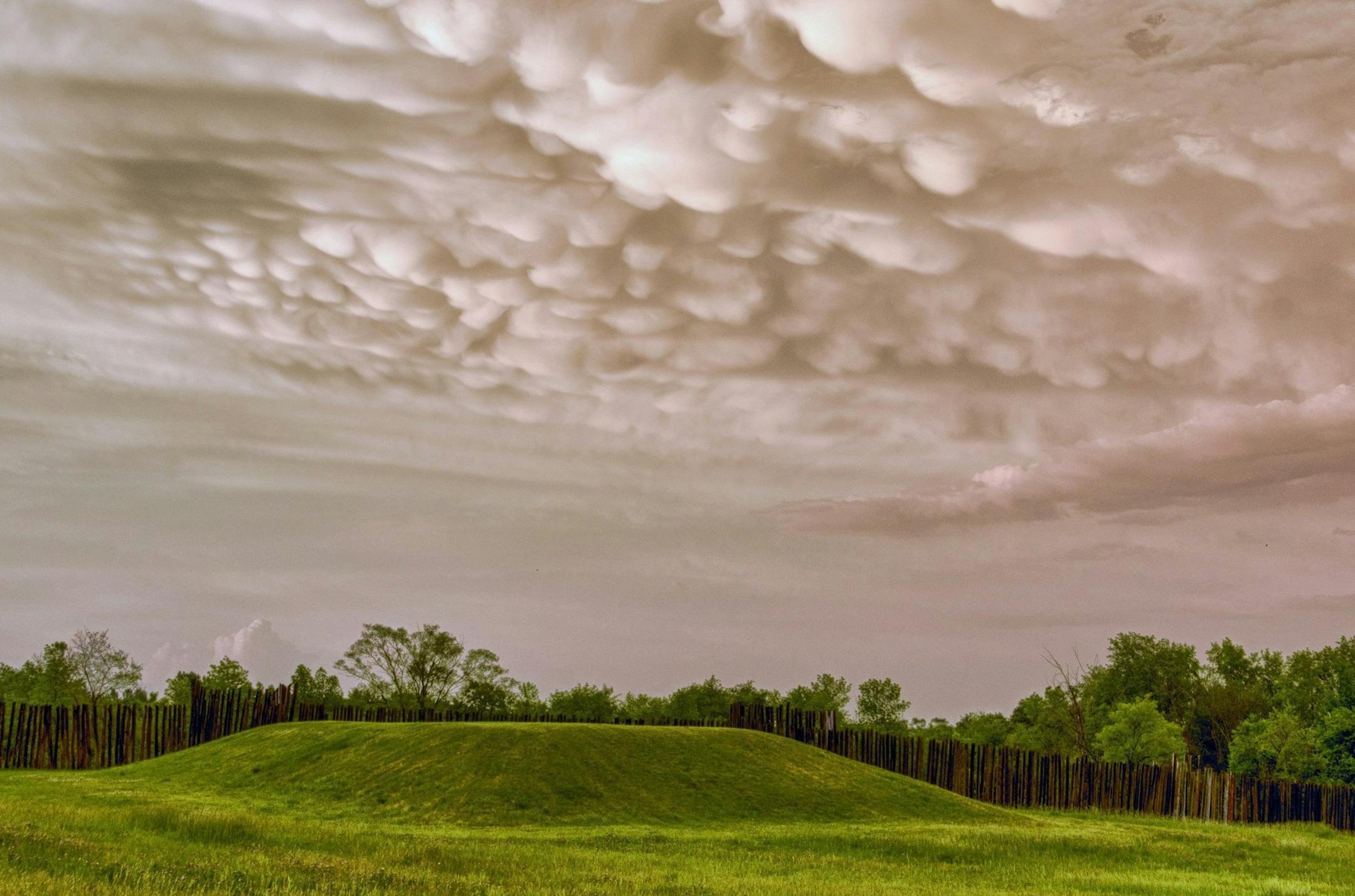
Westbound from Milwaukee, the scenery on Interstate 94 gradually shifts from subdivisions and strip malls to rolling Wisconsin prairie blanketed in cornfields. At Exit 259, about two-thirds of the way to Madison, some make a seven-minute detour to Aztalan State Park, a tranquil stop on the banks of the Crawfish River. It's a chance to see an unusual archaeological site, an outpost of a long-lost Indian civilization.
Toward twilight, you can sit atop a grass-covered, 900-year ceremonial mound and take in the pastoral vistas.
And, perhaps sitting at one of the park's picnic tables, wonder: Were they really cannibals?
In 1836, a territorial settler came across the series of earthen mounds on the west bank of the river that clearly were not the work of nature. Surveyors and scientists followed and determined the rises were the work of a vanished pre-Columbian culture. As the city-building Aztecs of Mexico believed they were originated in a land to the north, the mounds in Jefferson County were given an Aztec-inspired name: Aztalan.
The federal government wasn't interested in acquiring the ruins. The surface was plowed for farming and several mounds were leveled. Two of the three large flat-topped ceremonial platform mounds — the tallest is 16 feet — remain fully intact. Of the 40-some smaller "marker" mounds, nine are still present.
The first formal scientific excavation of Aztalan, in 1919, determined the perimeter of the stockade and its watch towers; underground within the enclosure were found house sites, tools, pottery shards and more. The fire pits and refuse piles also were found to contain butchered and charred human bones and heads: It was clear that people had eaten people here.
That the Woodland tribes of southern Wisconsin had no formal cities — and no oral history mentioning Aztalan — thickened the air of mystery at the site.
Folklore and sometimes-rival archaeological theory continue to this day. The History Channel sent a crew over the summer to do an Aztalan show. On a more serious note, there were two scientific digs this summer.


