

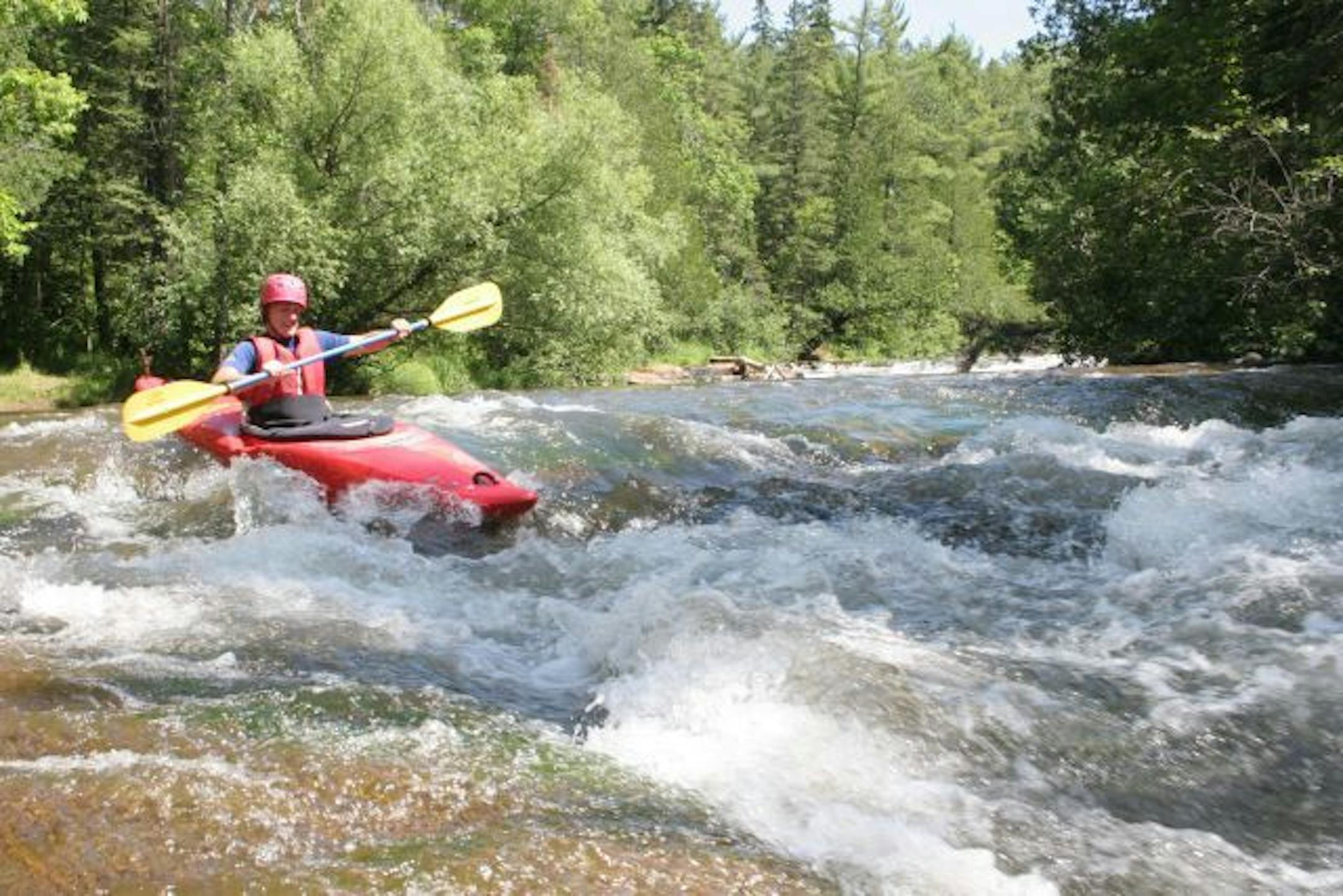
Like all streams, the Brule River is always the same yet always different. A proud white pine on the riverbank could be next summer's obstacle, creating a symphony of sound as the water sifts through the branches. An exposed rock today may be submerged tomorrow. By nature, the Brule is scenic and wild, calling those who love to paddle, hunt and fish to its wooded corridor. It also offers a serene respite in its quiet moods. Though most of the colors have faded from the forest by now, there are few fall pastimes more suited to re-creating yourself than letting the Brule carry you downstream.
THE BASICS
The Brule River meanders north for 44 miles through 47,000 acres of the surrounding Brule River State Forest before spilling into Lake Superior in northwestern Wisconsin. It has two distinct personalities. The upper river flows through miles of coniferous bog, fed by numerous springs. When the river crosses the Copper Range, it begins a fall of 328 feet in its remaining 18-mile journey to Lake Superior. This is the section that excites kayakers and trout anglers. Strings of rapids tumble over rocks and ledges as the boisterous river runs between steep red cliffs in the shadow of the boreal forest.
Well-heeled fishermen discovered the joys of trout fishing on the Brule long before the loggers arrived. Families well known in the Twin Cities, such as the Carlsons and Ordways, are longtime landowners on the Brule. Cedar Island Lodge, which is privately owned, has been a refuge for five U.S. presidents: Grant, Cleveland, Coolidge, Hoover and Eisenhower. Coolidge spent the summer of 1928 at Cedar Island Lodge, adding to the Brule's lore as the "river of presidents."
WHAT TO DO
Canoe or kayak: Sunny summer days inspire legions of paddlers to push off downstream, bumping through rapids and lingering along Lake Superior at the mouth of the Brule.
The Brule's dual nature makes it fun for both novice and experienced paddlers. The most popular canoe or kayak trip begins at Stones Bridge canoe landing. The river takes its time here, winding through cedar, spruce and balsam bog forests. A handful of playful Class I rapids interrupt the mostly flat water. Even the youngest kayaker in our group, an 11-year-old nephew, handled these with ease.
More experienced paddlers like to put in at the Copper Range Campground to run the Lenroot Ledges, Mays Ledges and Hwy. 13 rapids. This stretch boasts almost continuous ledges and rapids that are rated Class II-III, depending on water flow and depth. The Brule relaxes again below the Hwy. 13 landing for a leisurely paddle down to Lake Superior. The sandy shoreline here is a great spot to search for beach treasures and to bask under the vast vault of the inland sea.
To rent watercraft or arrange shuttle service, contact Brule River Canoe Rental at 1-715-372-4983; www.brulerivercanoerental.com.
Go fishing: The Brule is an exceptional fly fishing trout stream. It is one of the few tributaries of Lake Superior to support natural reproduction, which adds to its allure. Resident populations include brook, brown and rainbow trout. The fall run of coho salmon and steelhead usually ends in late November. For details about fishing seasons and licenses, contact the Brule River State Forest (1-715-372-5678; dnr.wi.gov/topic/StateForests/bruleRiver).


