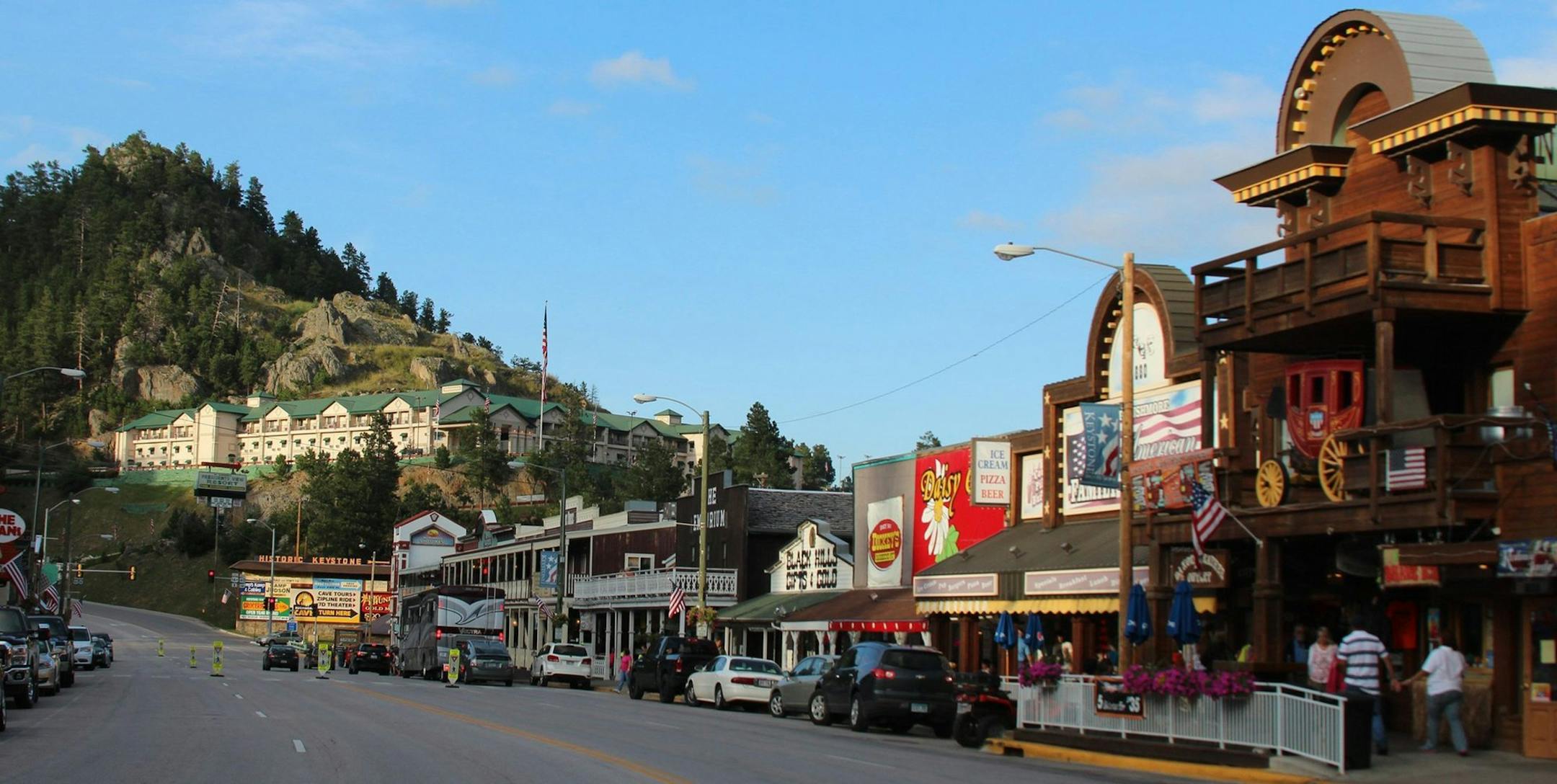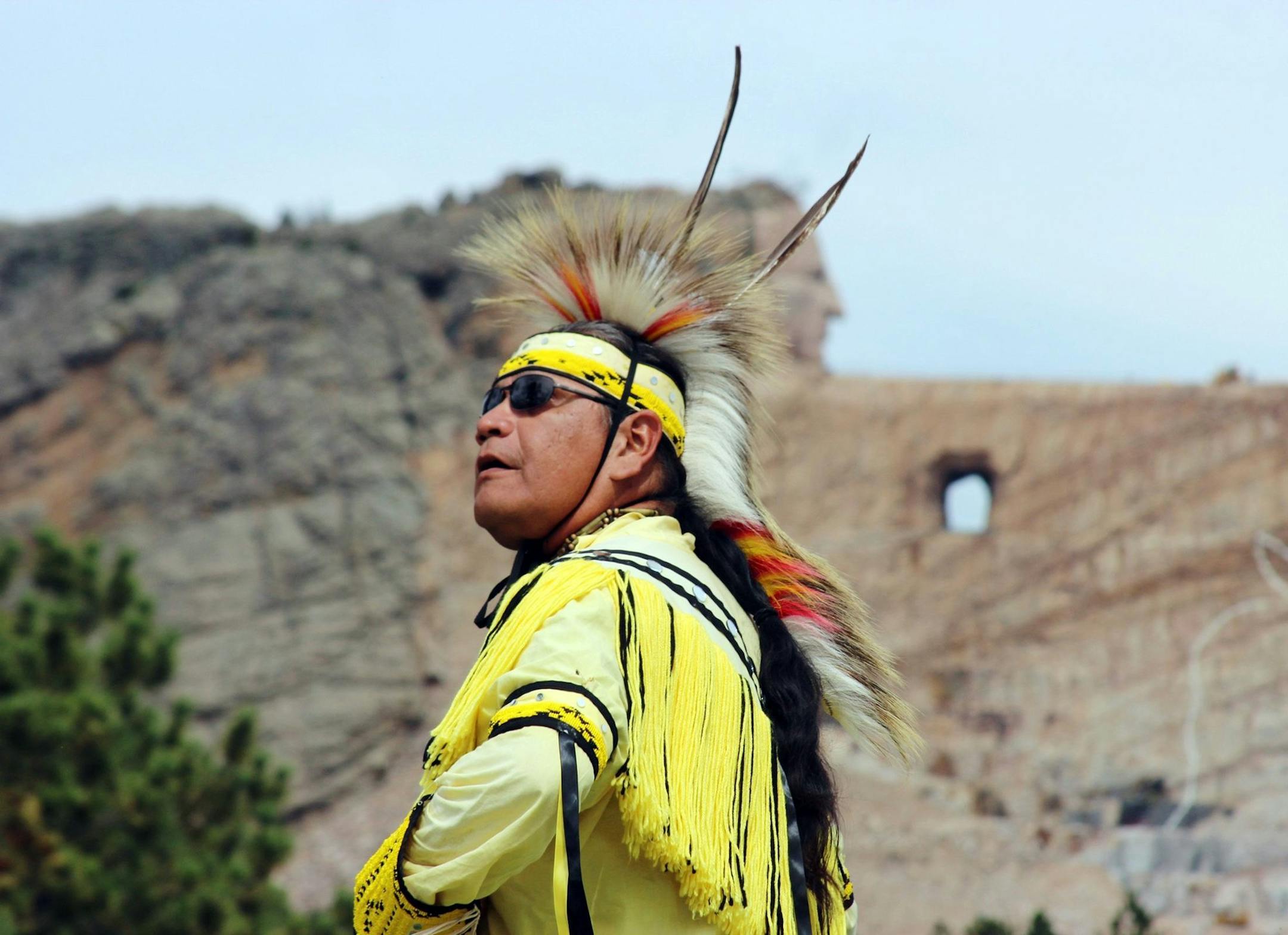
MOUNT RUSHMORE, S.D. – As fall begins, the light is as golden as the prairie. The sky is big and blue. This year, with lots of rain, the hills of ponderosa pines undulate in a deep, thick green carpet so solid that the hills really do look black. One can see why American Indians revere this land so, and why a sculptor spent 14 years hanging off the edge of a cliff to chisel its fine granite. The Black Hills shout of the vibrant West, and whisper of a far older past.
Of the 2.2 million visitors that Mount Rushmore gets each year, I'd guess about 2.1 million of them zoom up, spend a couple of hours, then speed off. That is such a mistake.
This region, where the West and Midwest collide, has a rich cultural texture and an eternity's worth of sweeping scenery, far more than just a mountain with four heads. (And by the way, if those heads could talk they would back me up on this — they've been gazing at the scenery for 73 years and have, oh, about 7.2 million more years before eroding, geologists say.)
I spent five days in this southwest corner of South Dakota, and I have to say I will add it to my unexpected favorite travel spots, along with Memphis, Mexico City and Krakow, Poland.
The Black Hills, like those places, delivers more than promised.
Favorites and misses
So let me do a little rundown on my personal highlights, and you can then make your own trip.
Mount Rushmore National Memorial: You see the throngs of tourists snapping away on their cameras as they get a first glimpse of the famous sight in person. But walk closer. And closer. And closer. A nice, wide pavilion gives you the classic view.
Take the Presidential Trail and you'll get so close you can look up the nostrils of the 60-foot-high sculptures of Presidents Washington, Lincoln and Jefferson and Teddy Roosevelt. Visit sculptor Gutzon Borglum's studio and a museum that tells the story of how Mount Rushmore was built between 1927 and 1941 with ingenuity and pure muscle.