

In central Iowa, en route to the B&B where my husband and I had planned to stay, we received word: closed immediately due to emergency. With a distillery tour scheduled for 10 a.m. in Templeton, Iowa, the following morning, we knew we'd have to quickly find an alternative. Now what? A Web search via smartphone while we barreled down Interstate 80 didn't turn up a whole lot. Days Inn, Super 8 … meh. We wanted something a bit more special. It was the night before my birthday, after all.
One place sounded intriguing, however.
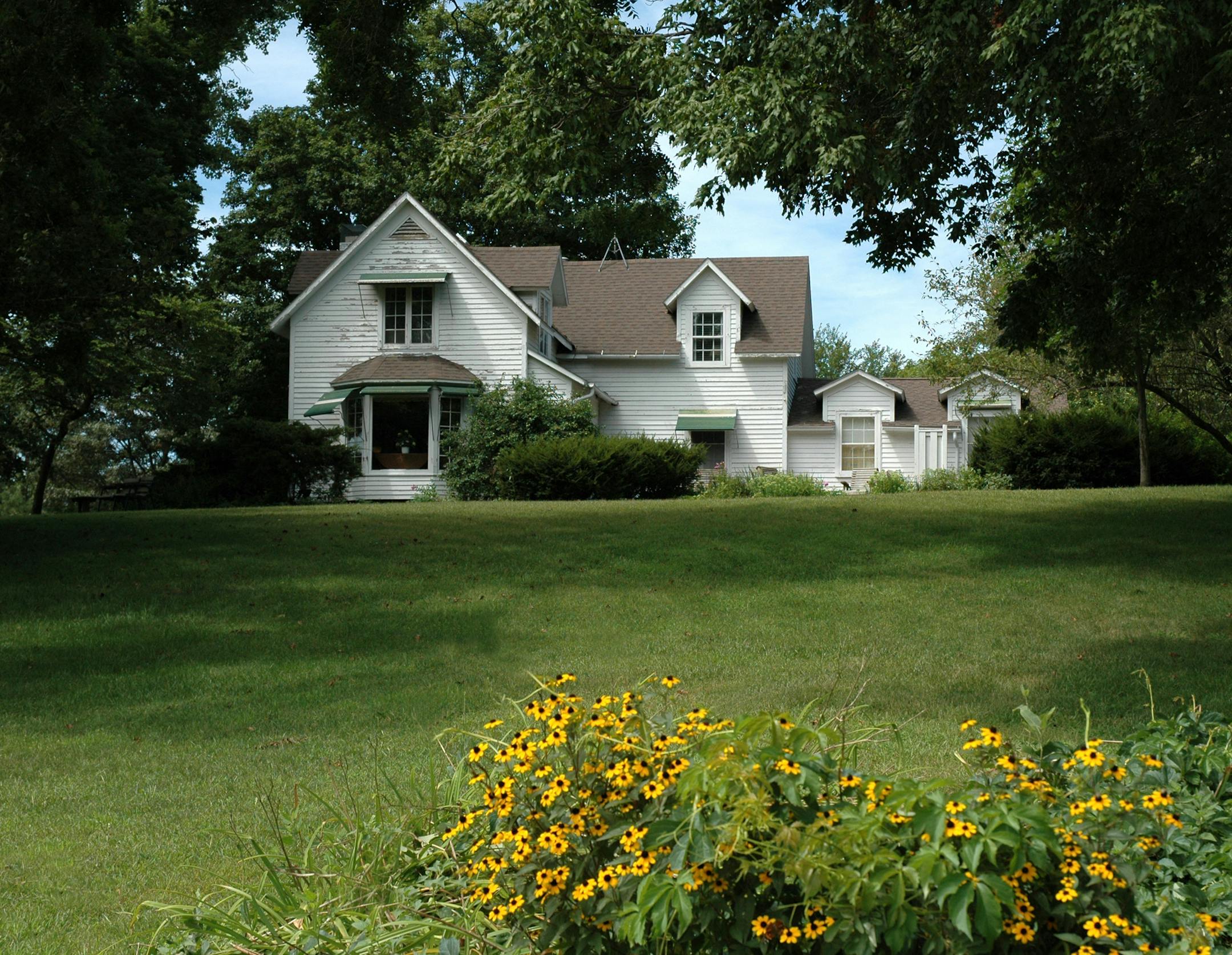
Just 20 minutes up the road, near Coon Rapids, Iowa, was Whiterock Conservancy, a nonprofit land trust caring for 7 square miles along the Middle Raccoon River Valley (www.whiterockconservancy.org). It took a little digging on the website to discover that yes, there were more than just options for pitching a tent; there were also rooms available at a farmhouse on the property, the former home of Roswell and Elizabeth Garst (www.whiterockconservancy.org/lodging.html; 1-712-684-2964).
As I hung up after reserving a room, my husband looked quizzical, saying, "that name … sounds so familiar."
Winding through Iowa farm country, we saw a patchwork of fields, got lost at least twice due to road construction, got stuck behind a tractor and a manure hauler, and finally crept our way up a two-lane highway to the farmhouse. It wasn't well-marked, so thank goodness it was still daylight.
Tiny farmhouse's place in history
You may already have recognized the name Garst and its significance in U.S. history. In 1959, Soviet Premier Nikita Khrushchev visited the Garsts' tiny two-story farmhouse. With its use of hybrid corn and other midcentury agricultural innovations, the large Garst farm was considered one of the country's only operations comparable to the scale of Soviet collective farms. The Garsts' selling of seed to the Soviet Union a few years before Khrushchev's visit was considered a positive step in U.S.-Soviet relations.
We were charmed upon entering the unlocked home. No one was there since we'd arrived after hours. A small chalkboard in the entryway welcomed us and noted which room we'd be staying in. We were the only guests that night, so we had full run of the house and were able to peek into each room.
Placed on the National Register of Historic Places in 2009, the farmhouse is decorated with images from the Khrushchev visit. In one, Roswell Garst stands behind Khrushchev, his hand resting lightly on the Soviet leader's shoulder as they smile genuinely, mouths open as if laughing. In another, Khrushchev looks solemnly from the cover of USSR magazine, with a tag, "N.S. Khrushchev We Go To The USA With An Open Heart."


