

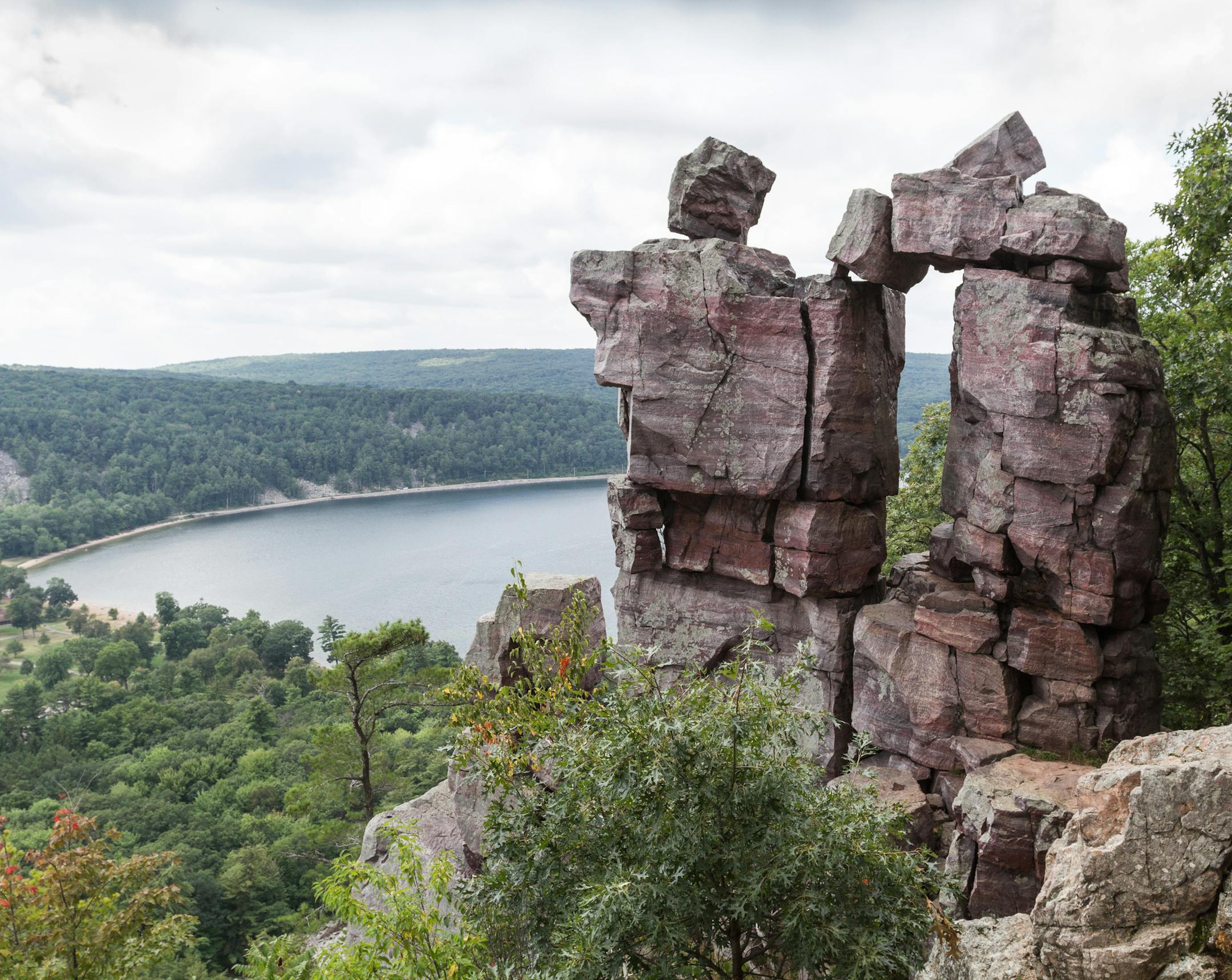
As the campfires flickered along the shores of Devil's Lake, stories flitted around like sparks. So it must have been across the centuries, when tales were passed on about the mesmerizing lake tucked below 500-foot bluffs in southern Wisconsin's Devil's Lake State Park. The Winnebago Indians, who camped on its waters when Europeans arrived in the 1840s, called it "Spirit Lake." Other tribes, like the Sauk, Fox, Kickapoo and the ancient Effigy Mound Builders, camped along these shores for perhaps 400 generations before the Europeans.
Tales of fiery meteors, volcanoes and epic battles between water spirits and powerful thunderbirds all helped the native tribes explain how the rugged bluffs and tumbled boulders around the handsome, 360-acre lake came to be.
Perhaps these myths and legends conjured up images of evil spirits in the new settlers, inspiring them to begin calling it Devil's Lake.
The Wisconsin River once flowed where Devil's Lake now lies. As the last glacier retreated, it blocked both ends of the river's quartzite gorge with moraine, leaving a clean, blue, rectangular lake at the foot of the massive bluffs. It's a scene as alluring now as when the first campfire blazed here perhaps 10,000 years ago.
Today, campfire stories in the park tend to reflect tales about water sports, hiking, rock climbing, mountain biking and other exploits. Wisconsin's largest state park (9,217 acres) is also its most popular, averaging about 2 million visitors per year.
The lake has always been the main attraction. Elegant hotels lined the south shore from 1866 into the early 20th century. Ulysses S. Grant and Mary Todd Lincoln toured the lake on one of the steam excursion boats. Ladies in ankle-length dresses played croquet on shaded lawns.
When the park opened in 1911, elegant pleasures gave way to the simpler, more active diversions still popular today.
Spring for a quiet hike
A springtime visit to the park is a quieter way to become immersed in the park than during the bustling days of summer.


