
Michigan's vibrant wine scene

September 14, 2011 at 1:33PM
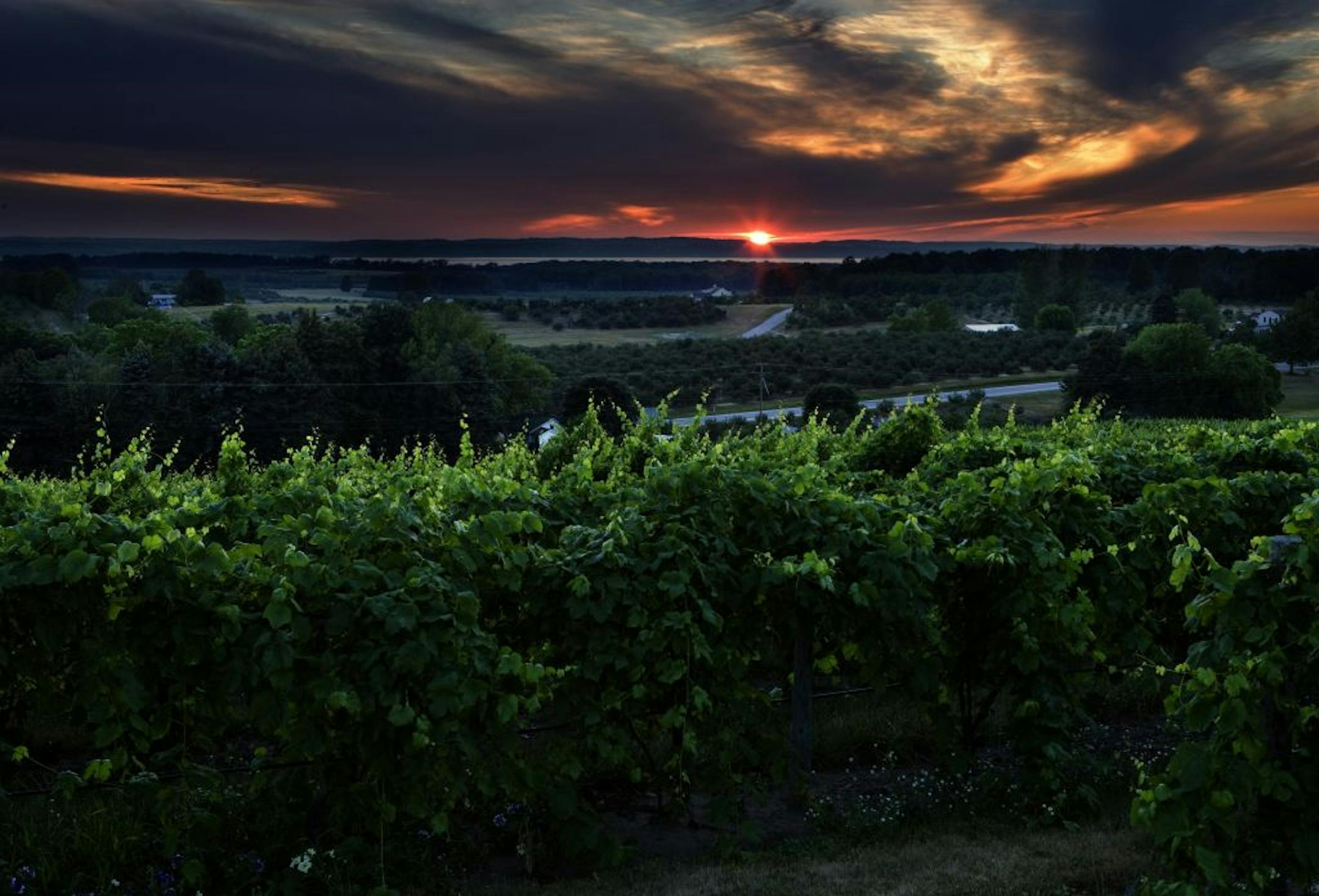
The sun sets over Chateau Chantal winery in Traverse City, Michigan, in July 2006.
The sun sets over Chateau Chantal winery in Traverse City, Michigan, in July 2006. (Chicago Tribune/The Minnesota Star Tribune)

We went to Traverse City for the food.

We went back for the wine.

The first time there was no specific plan, just a loose schedule for a road trip that would be easy on the budget. When a friend raved about a restaurant in Traverse City, we put it on the itinerary.

Traverse City turned out to be a foodie paradise ("Iron Chef" Mario Batali has a home in the area). That wasn't the big surprise, though. It was the wine.

The resort town earned its reputation thanks to its geographically elite position on Lake Michigan. Grand Traverse Bay sits northwest on the state's lower peninsula, surrounded by forest, sand dunes and farmland. Think of Wisconsin's Door County, only bigger and with more cherries.

On a map, two peninsulas -- Leelanau and Old Mission -- splay out on the east side of the lake like skinny fingers. In the middle is Traverse City. It's the location that allows the area to host a wine trail that, although small by California standards, can meet even a wine snob's expectations.

We brought the family, three grown daughters, a significant other and the family dog for our second visit over Memorial Day. It cost $1,500 a week to rent a four-bedroom house on one of the area's smaller lakes that we found on www.vacationrentals.com.

We timed the wine tours for the drizzly cold weather, which left the nicer days and nights open for cooking paella on an open flame, kayaking, taking in a minor-league baseball game, shopping and more eating.

During the first trip, we went in with only a half-baked plan and a restaurant name -- Cooks' House, which Batali has recommended.

The Cooks' House (115 Wellington St.; www.thecooks house.net) now sits in bigger quarters in an old house that borders Traverse City's downtown, an intact shopping area where T-shirt shops blend with the stores selling all things cherry (Traverse City has unofficially dubbed itself the cherry capital). The town is small, and it's easy to walk from one end to the other. A bustling downtown farmers market on Saturdays is overshadowed only by picturesque glimpses of Lake Michigan.

Touring on our own

We couldn't afford to take the entire family to Napa or Sonoma, but we knew they could make a weekend of the Grand Traverse area wineries. They were skeptical at first, as were we.

We're not wine enthusiasts so much as enthusiastic wine drinkers. To start, we stopped at the Blue Goat, a small liquor store carrying hundreds of local wines. The clerk recommended the 2008 Grand Traverse Chardonnay. Our mistake was not buying enough bottles of the 2008. The winery, Chateau Grand Traverse, sold out of the vintage before the end of summer.

That's how our personal wine tour began as we cruised up and down country roads. Chateau Grand Traverse is the most commercial-looking building of them all, while Bowers Harbor Vineyards looks like a fruit stand on steroids. A Bernese mountain dog named Brix greets customers (he was a rowdy teething puppy on our 2010 visit).

The wine area is known for its competitive rieslings, sweet white wines that pair well with food, but 2 Lads, a contemporary-looking winery with a vista view of the lake, boasts a couple of strong red wines including a cabernet franc.

Lee Lutes, winemaker for Black Star Farms, said vineyards were planted 40 years ago, but the wine industry has been a solid part of tourism in the area now for 30 years. Lutes, who is from Traverse City, returned to the area in the 1990s after a stint as an assistant winemaker in Italy.

Black Star has two wineries a short drive from Traverse City: One is a tasting room with a vineyard view just outside the city limits; the other is on Suttons Bay and includes tours of the winery, an inn and a horse farm on property surrounded by vineyards.

Thanks to prevailing winds and a maritime climate, foliage stays green in Grand Traverse through December. The prevailing winds and plenty of snow also keep the grapes from freezing in winter.

This year wineries were allowed by law to charge for tastings. Black Star Farms had been charging $5 for a keepsake glass to use at tastings. Patrons who brought their glass on future visits or to the other Black Star tasting rooms received free samples. Lutes said they found they were "giving away in excess of $50,000 a year" in wine.

Not all wineries are on board with the idea. Some give a finite number of pours for free, while others such as Brys Estate Vineyard & Winery, a small winery set in a building that looks like a mission from the outside, charges but lets tourists keep the glass. A typical fee is $5 for four to six wine samples.

Michigan wines, of course, don't have the strong heritage or cachet of California wines. But cars from Alabama to New Hampshire can be spotted in the parking lots, and Lutes said that's been the case since the recession.

You don't find Michigan's wine country by traveling through. You find it because you want to, Lutes said.

about the writer

about the writer

KATHY FLANIGAN, Milwaukee Journal Sentinel

More from Minnesota Star Tribune

See More
card image
J. SCOTT APPLEWHITE, ASSOCIATED PRESS/The Minnesota Star Tribune

The "winners" have all been Turkeys, no matter the honor's name.

In this photo taken Monday, March 6, 2017, in San Francisco, released confidential files by The University of California of a sexual misconduct case, like this one against UC Santa Cruz Latin Studies professor Hector Perla is shown. Perla was accused of raping a student during a wine-tasting outing in June 2015. Some of the files are so heavily redacted that on many pages no words are visible. Perla is one of 113 UC employees found to have violated the system's sexual misconduct policies in rece