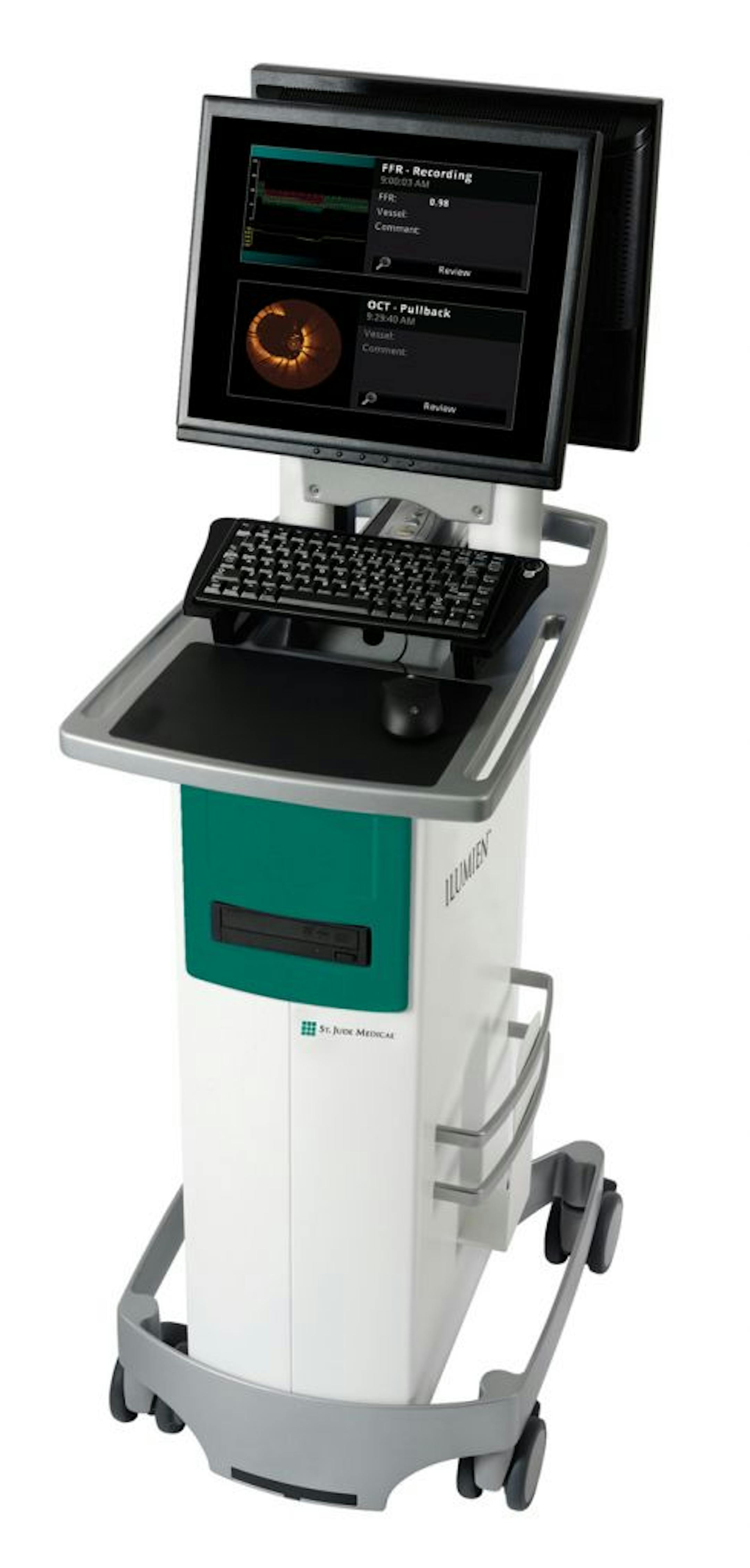
Doctors at Mercy Hospital in Coon Rapids have been among the first in the nation to use a new technology that combines blood flow measurements in coronary arteries with infrared scanning to better find and then clear blockages to the heart.
Called the Ilumien PCI Optimization System and made by St. Jude Medical Inc., the technology is helping Dr. Jeff Chambers make better decisions on what blockages pose the greater risk to patients. That, in turn, makes treatment more efficient, he said.
"Ilumien puts both technologies on the same machine and the same platform. I can use one or the other," said Chambers, an interventional cardiologist and director of the catheterization lab at the Metropolitan Heart & Vascular Institute at Mercy. "It makes it much easier for me to tell if a lesion is severe and needs treatment."
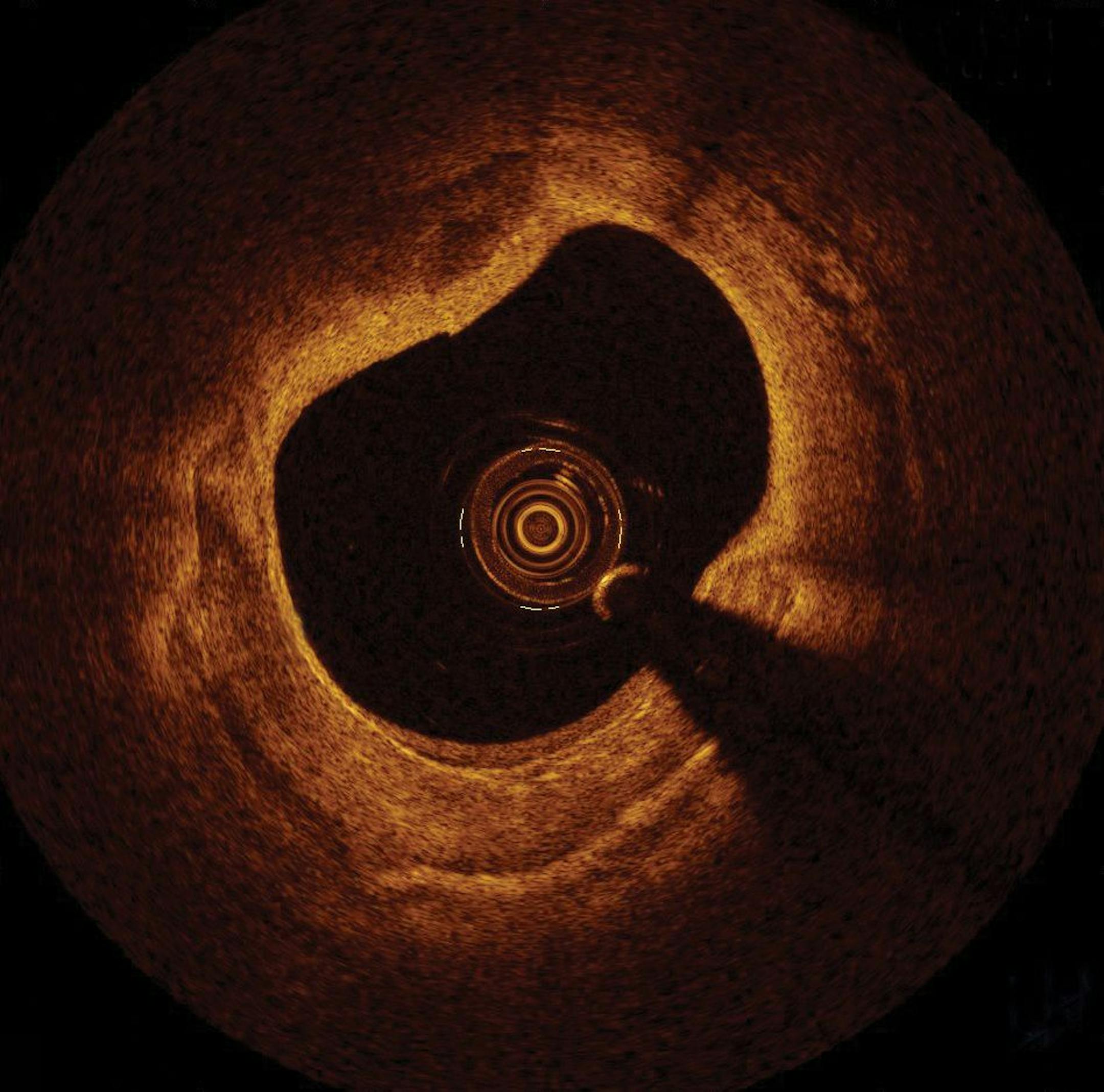
Ilumien pairs what is called fractional flow reserve (FFR), which measures pressure in an artery to find possible blockages, with infrared imaging called optical coherence tomography (OCT). The imaging technology is like a "high-definition television" compared with traditional ultrasound imaging that he has used for years, Chambers said. He is among the first physicians in the country to use Ilumien, which was approved by the U.S. Food and Drug Administration several months ago.
"You can really see the structures better," Chambers said.
Coronary artery disease is the most common type of heart disease, affecting millions of people worldwide. It is caused by a narrowing or blocking of the arteries from plaque, which restricts blood flow and reduces the amount of oxygen to the heart.
Doctors use several tools to treat the disease, including an X-ray examination of the blood vessels of the heart and FFR. Doctors then use that information to guide treatment, often using balloon angioplasty to open the blockage and placing a stent to inhibit blockages from reoccurring.
Last week, St. Jude Medical released study results showing that patients who received blood-flow measurements in the coronary arteries to guide the placement of stents were significantly less likely to be readmitted to the hospital.