

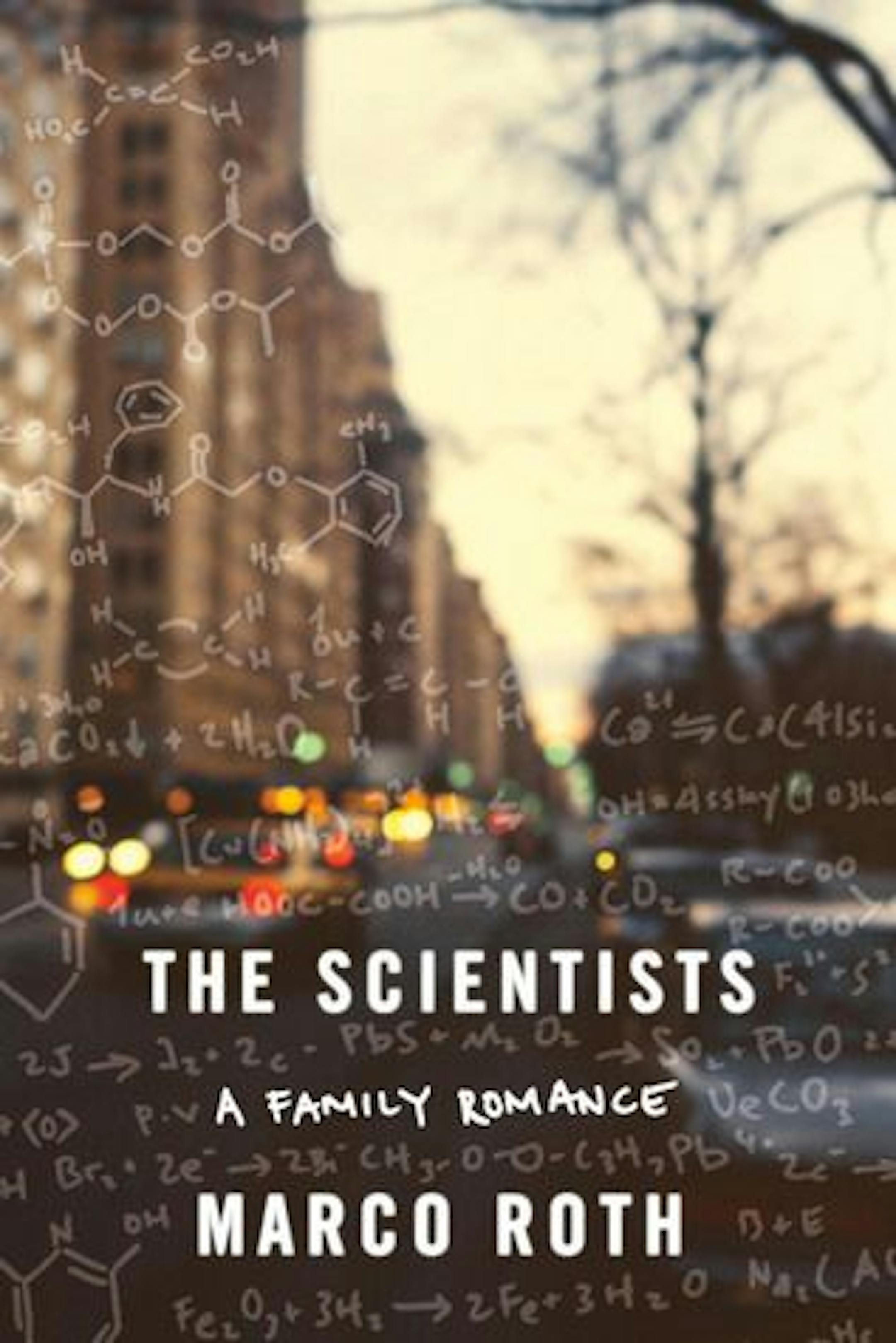
Raised in a large apartment on Central Park West, Marco Roth was the inevitably precocious only child of a classical pianist and a zealously, imperiously intellectual doctor. The father read Thomas Mann to his preteen son, raged against philistines and displayed apparently sincere physical pain at the sight and sound of televised baseball. Possibly the Yankees game only aggravated vastly more serious pain, since the father suffered for more than a decade from AIDS, a situation that by paternal mandate was to remain a family secret till the end.
One might guess that Roth's debut memoir, "The Scientists," will climax with the father's death in 1993. Instead, by page 60 the coffin is being "winched down into a neat rectangular gash in the steep hillside overlooking the Hudson." The book then turns more forcefully in the direction of intellectual autobiography, one guided by Roth's roundabout efforts to puzzle out his enigmatic father. Roth portrays his father as tortured and cuttingly critical, a man who loved his son undeniably but by no means unconditionally. As for the author, he's a sort of high-achieving screw-up, prone to caprice, grudges and tantrums, to "leaving everything half done or worse"; he's also, his writing attests, self-aware, perceptive and soulful.
Roth, a founding editor of the excellent and fashionable journal n+1, is from a literary family and isn't the first to cover this very ground in print. In 2000 his father's sister, novelist Anne Roiphe, published a memoir about her upbringing, "1185 Park Avenue." A suggestion therein helps drive the latter half of Roth's book.
As part of his puzzling-out project, or as a literary conceit, Roth starts reading and rereading the books his father gave him, including Samuel Butler's "The Way of All Flesh," Goncharov's "Oblomov" and Turgenev's "Fathers and Sons." Roth studied comparative literature at Columbia and Yale, and traveled to Paris for a seminar with philosopher Jacques Derrida. He's adept at reading closely and with an eye toward puncturing humanistic cant. More traditionally and less fancily, he sees his father and himself in these old novels, finds transmissions from the grave, striking if not necessarily meaningful loops of life imitating art imitating life. It doesn't really answer his questions, but it's successful autobiographical criticism, at once skeptical and innocent, irreverent but never merely jokey.
"The Scientists" is partly a book about privilege, and like many books is itself a manifestation of privilege. Roth is smart about this. Ignoring the code of discretion common to the affluent, he gives actual figures, for example, of his inheritance (he might do this to keep the reader from imagining a more impressive sum), and has managed to write a frankly ivory-towerish book that all the same feels wisely grounded. It's an elegy not just for a lost parent but for what Roth's bio calls "the vanished liberal culture of Manhattan's Upper West Side" -- material, it might seem, better suited to a writer born significantly before 1974. But this is just another hurdle Roth overcomes in this graceful book.
Dylan Hicks is a Minneapolis writer, musician and author of "Boarded Windows."


