

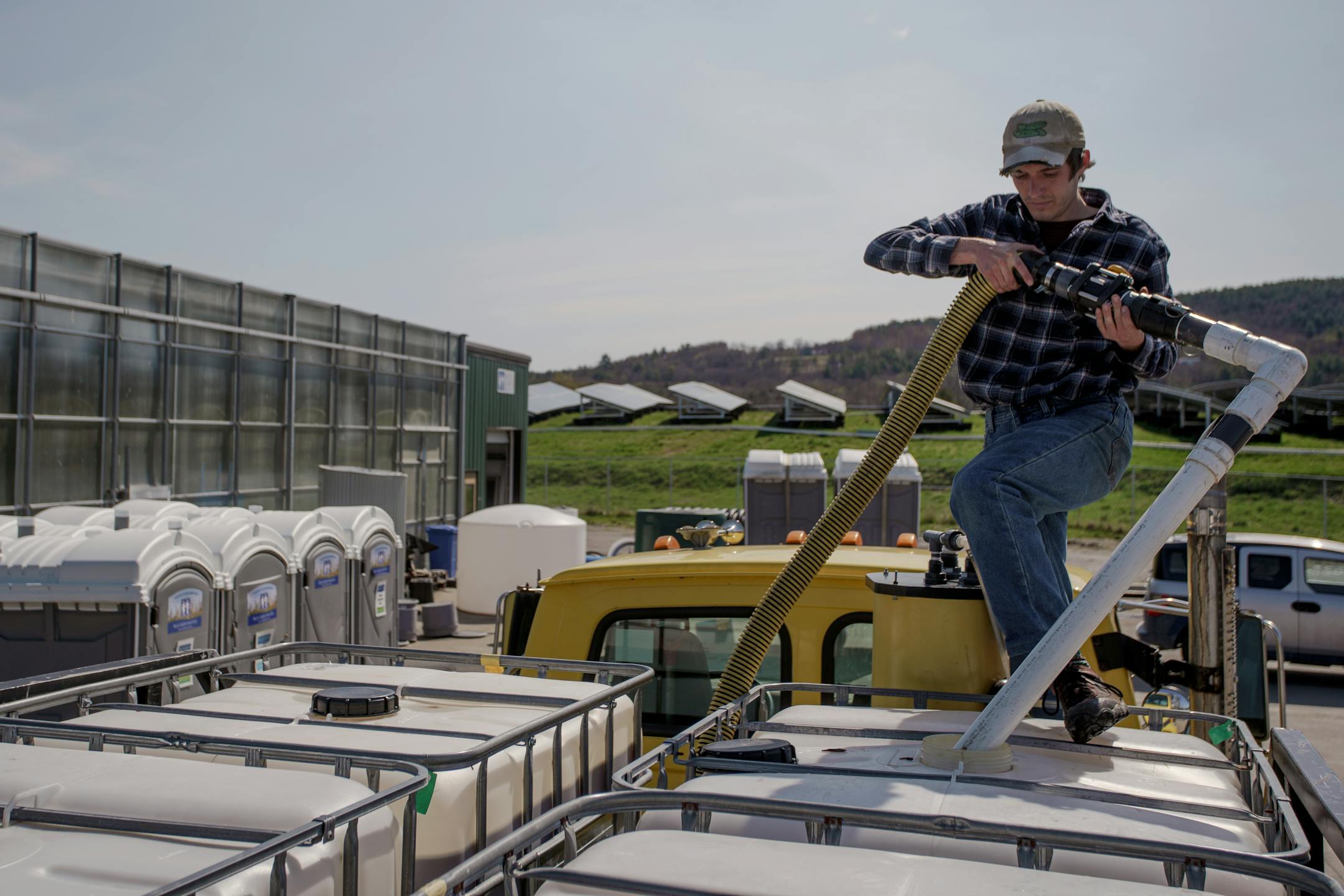
BRATTLEBORO, Vt. — When Kate Lucy saw a poster in town inviting people to learn about something known as peecycling, she was mystified.
"Why would someone pee in a jug and save it?" she wondered. "It sounds like such a wacky idea."
She had to work the evening of the information session, so she sent her husband, Jon Sellers, to assuage her curiosity. He came home with a jug and funnel.
Human urine, Sellers learned that night seven years ago, is full of the same nutrients that plants need to flourish. It has a lot more, in fact, than Number Two, with almost none of the pathogens. Farmers typically apply those nutrients — nitrogen, phosphorus and potassium — to crops in the form of chemical fertilizers. But that comes with a high environmental cost from fossil fuels and mining.
The local nonprofit group that ran the session, the Rich Earth Institute, was working on a more sustainable approach: Plants feed us; we feed them.
Efforts like these are increasingly urgent, experts say. Russia's invasion of Ukraine has worsened a worldwide fertilizer shortage that is driving farmers to desperation and threatening food supplies. Scientists also warn that feeding a growing global population in a world of climate change will only become more difficult.
Now, more than 1,000 gallons of donated urine later, Lucy and her husband are part of a global movement that seeks to address a slew of challenges — including food security, water scarcity and inadequate sanitation — by not wasting our waste.
At first, collecting their urine in a jug was "a little sloshy," Lucy said. But she was a nurse and he was a preschool teacher; pee did not scare them. They went from dropping off a couple of containers every week or so at an organizer's home to installing large tanks at their own house that get professionally pumped out.


