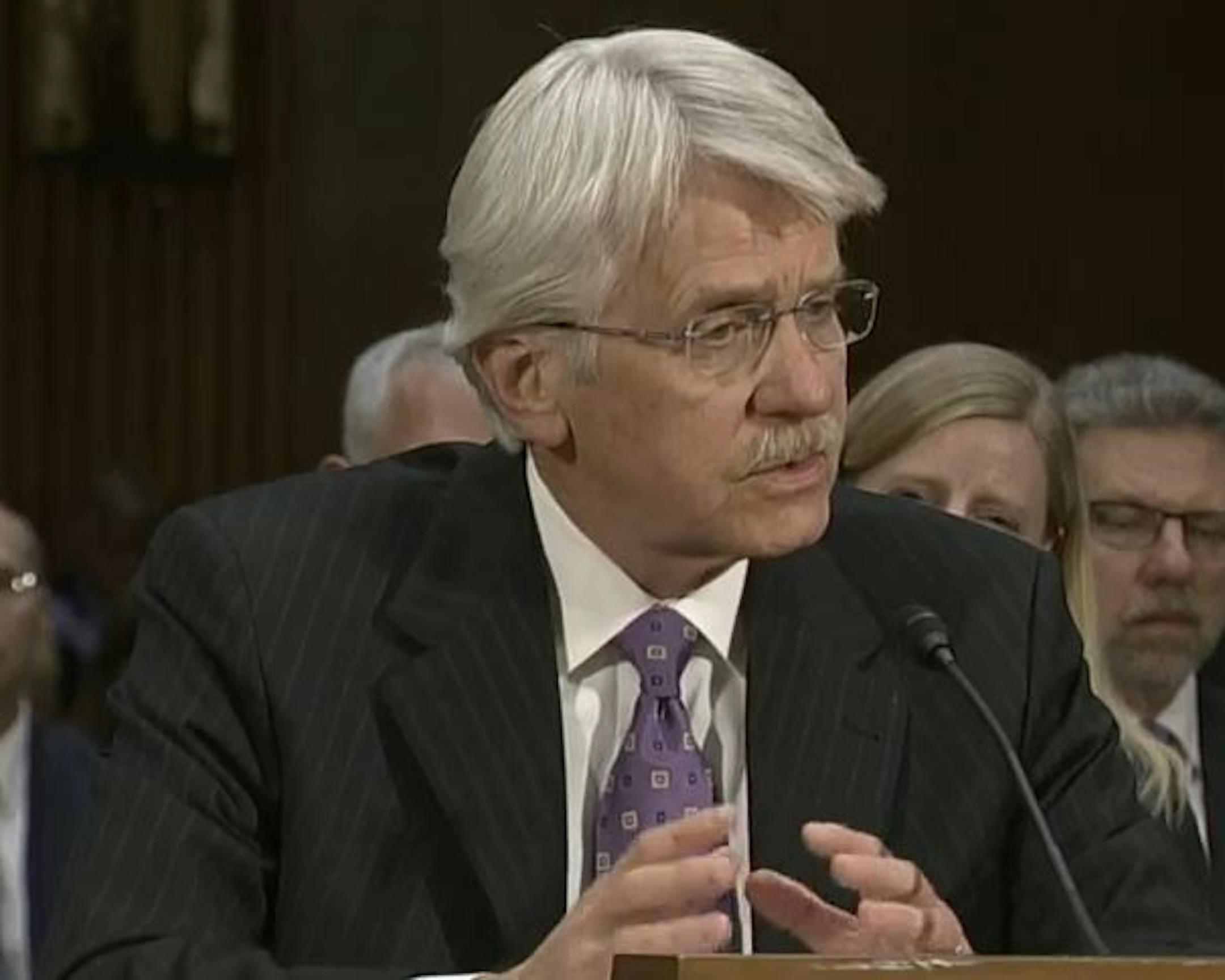
WASHINGTON – Dr. Ronald Petersen did not promise the Senate Special Committee on Aging a cure for Alzheimer's disease in 10 years. But on Wednesday, the Mayo Clinic's director of Alzheimer's research held out hope for highly effective treatments in a decade if the government significantly increases its investment in research.
Last year, Alzheimer's, the disease that has become the curse of 5.3 million Americans and the fear of tens of millions more, received less than $600 million in research funding. That compares with $5.3 billion for cancer, $3 billion for HIV/AIDS and $2 billion for heart disease.
Petersen chairs the advisory council of the National Alzheimer's Project Act, a 2010 law that required a federal plan to address dementia. Petersen told the committee on aging that scientific investigators will need at least $2 billion a year to make good on a 2025 deadline to significantly reduce the disease's impact.
"We cannot wait until there is a more convenient time to increase funding," Petersen warned.
To delay or cut Alzheimer's funding, said Petersen, "we're turning off a younger generation of investigators."
In an interview with the Star Tribune, Petersen said he was "not suggesting that they take money from another disease, but the government has to take a stand."
Petersen joined two other physicians, an Alzheimer's patient and a pair of caregivers offering testimony in a room packed with 300 people. Most wore purple sashes bearing the insignia of the Alzheimer's Association.
The emotional two-hour hearing came as the Senate debated a budget proposed by the Republican majority that would cut funding to the National Institutes of Health, which hands out government research grants. The House GOP budget also envisions cuts to the NIH. Republican Sen. Susan Collins of Maine, the committee on aging's chairwoman, said she hopes to add an amendment to the budget that specifies an increase for Alzheimer's research.