

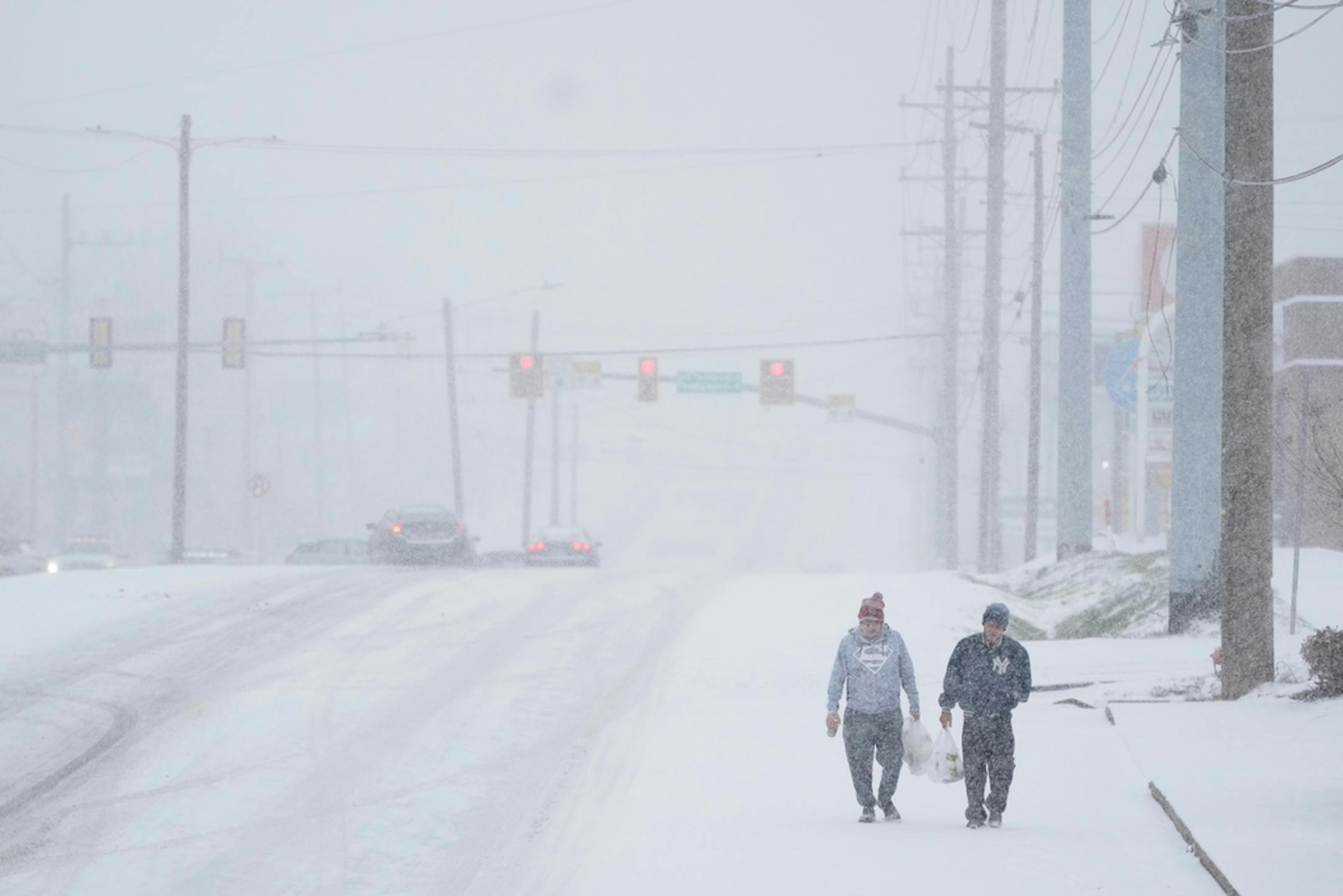
A massive winter storm dumped sleet, freezing rain and snow across much of the U.S. on Sunday, bringing subzero temperatures and halting air and road traffic. Tree branches and power lines snapped under the weight of ice, and hundreds of thousands of homes and businesses in the Southeast were left without electricity.
The ice and snowfall were expected to continue into Monday followed by very low temperatures which could cause ''dangerous travel and infrastructure impacts'' for days, the National Weather Service said.
Heavy snow was falling from the Ohio Valley to the Northeast, while ''catastrophic ice accumulation'' threatened from the Lower Mississippi Valley to the Mid-Atlantic and Southeast.
''It is a unique storm in the sense that it is so widespread,'' weather service meteorologist Allison Santorelli said in a phone interview. ''It was affecting areas all the way from New Mexico, Texas, all the way into New England, so we're talking like a 2,000-mile spread.''
President Donald Trump approved emergency declarations for at least a dozen states by Saturday. The Federal Emergency Management Agency had rescue teams and supplies in numerous states, Homeland Security Secretary Kristi Noem said.
In New York, communities near the Canadian border saw record-breaking subzero temperatures, with Watertown registering minus 34 degrees Fahrenheit (minus 37 degrees Celsius) and Copenhagen minus 49 F (minus 45 C), Gov. Kathy Hochul said.
Coping with the storm
Freezing rain that slickened roads and brought trees and branches down on roads and power lines were the main peril in the South. In Corinth, Mississippi, heavy machinery manufacturer Caterpillar told employees at its remanufacturing site to stay home Monday and Tuesday.


