

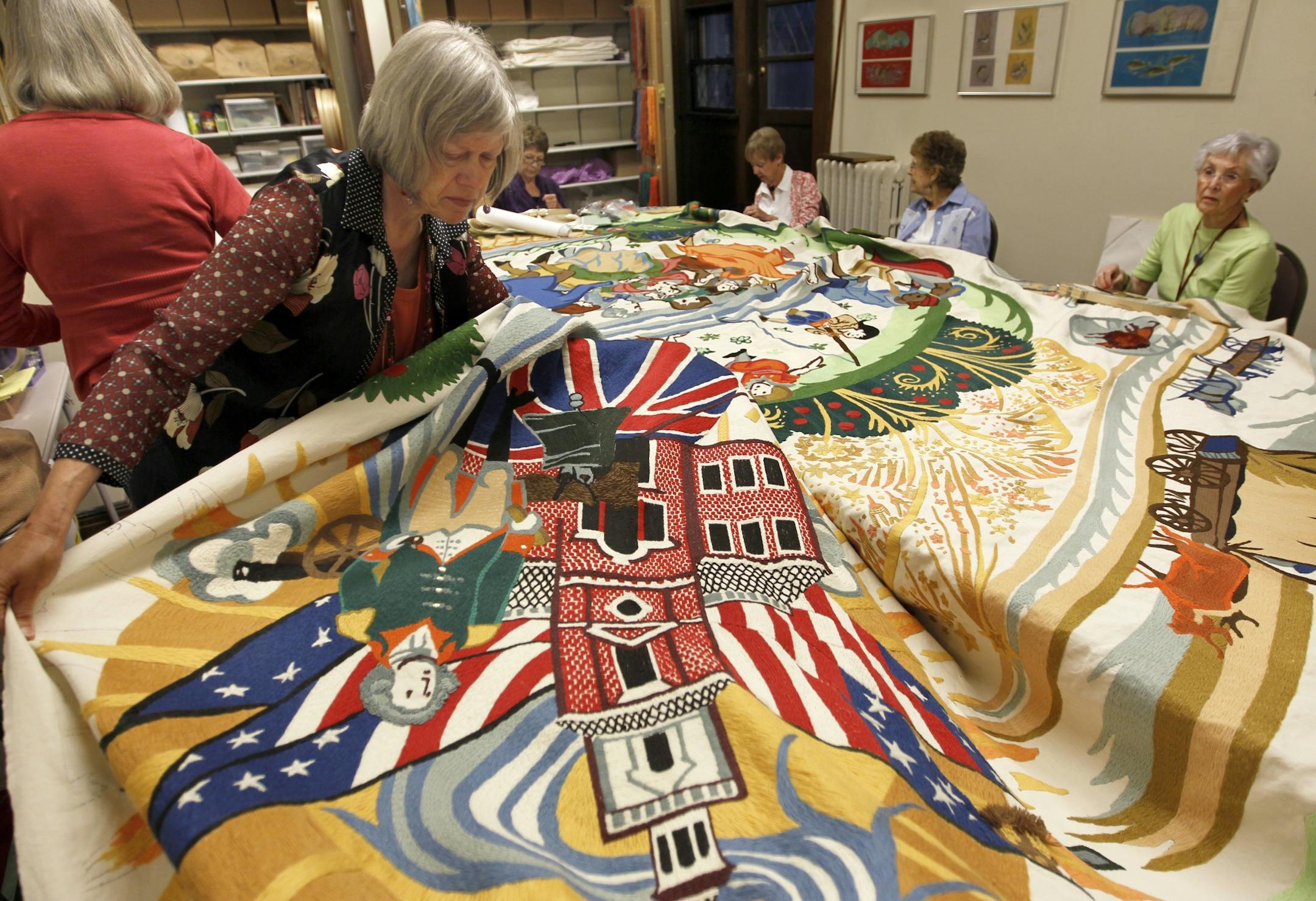
Sprawled across a vast table in a sunny room at Plymouth Congregational Church in downtown Minneapolis, the huge sheet of rumpled linen allowed only fragmentary glimpses of a big picture. There, George Washington stands beside a miniature Independence Hall. Here, Thomas Jefferson and James Madison sign a document. Dancers in frock coats and colonial gowns cavort to a fiddler's tune. Clerics of various denominations preach and baptize in one corner. Opposite them, men in judicial robes clutch papers. Here and there children fish and play, a covered wagon rumbles west, and Indians watch from distant mountains.
All of the incidents were stitched onto the 16 feet tall by 25 feet wide Irish linen using bright wool yarns. Bent over embroidery hoops, several women worked steadily on a recent morning, their fast fingers and sharp needles putting finishing touches on an encircling border of cattails, native flowers and religious symbols. With just days to go, the Plymouth "needlers" were rushing to finish the embroidery, called the "Summer of the First Amendment," in time for its unveiling and dedication Sunday.
"We come down at dawn and go home at sunset," joked stitcher Betty Workinger.
The women's project is the fourth and final hanging in a series designed for the church's Guild Hall by British artist Pauline Baynes, who is most famous as the illustrator of books by J.R.R. Tolkien and C.S. Lewis. The series was started more than 40 years ago by the late Elaine Marsh, then an associate minister at Plymouth, and two members of the congregation, Mary Carson and her husband, Paul, who has since died. The Carsons commissioned four Baynes designs that church members have enlarged and translated into wall hangings, each with a seasonal theme tied to church history.
"Mary was always very proud that our embroideries don't depict war, which is a common theme in European tapestries," said needler Dawn Wanous. "We have Minute Men and patriots but basically it's peaceful and about religious freedom."
"And about freedom from religion, too," interjected Workinger.
Religious freedom, summer motifs
The First Amendment is a core concept among Congregationalists. A ribbon of words from the amendment is even embroidered along the bottom of the hanging: "Congress shall make no law respecting an establishment of religion or prohibiting the free exercise thereof."


