It's that special time in the late afternoon when the light turns golden and life seems to move at the pace of a bygone era.
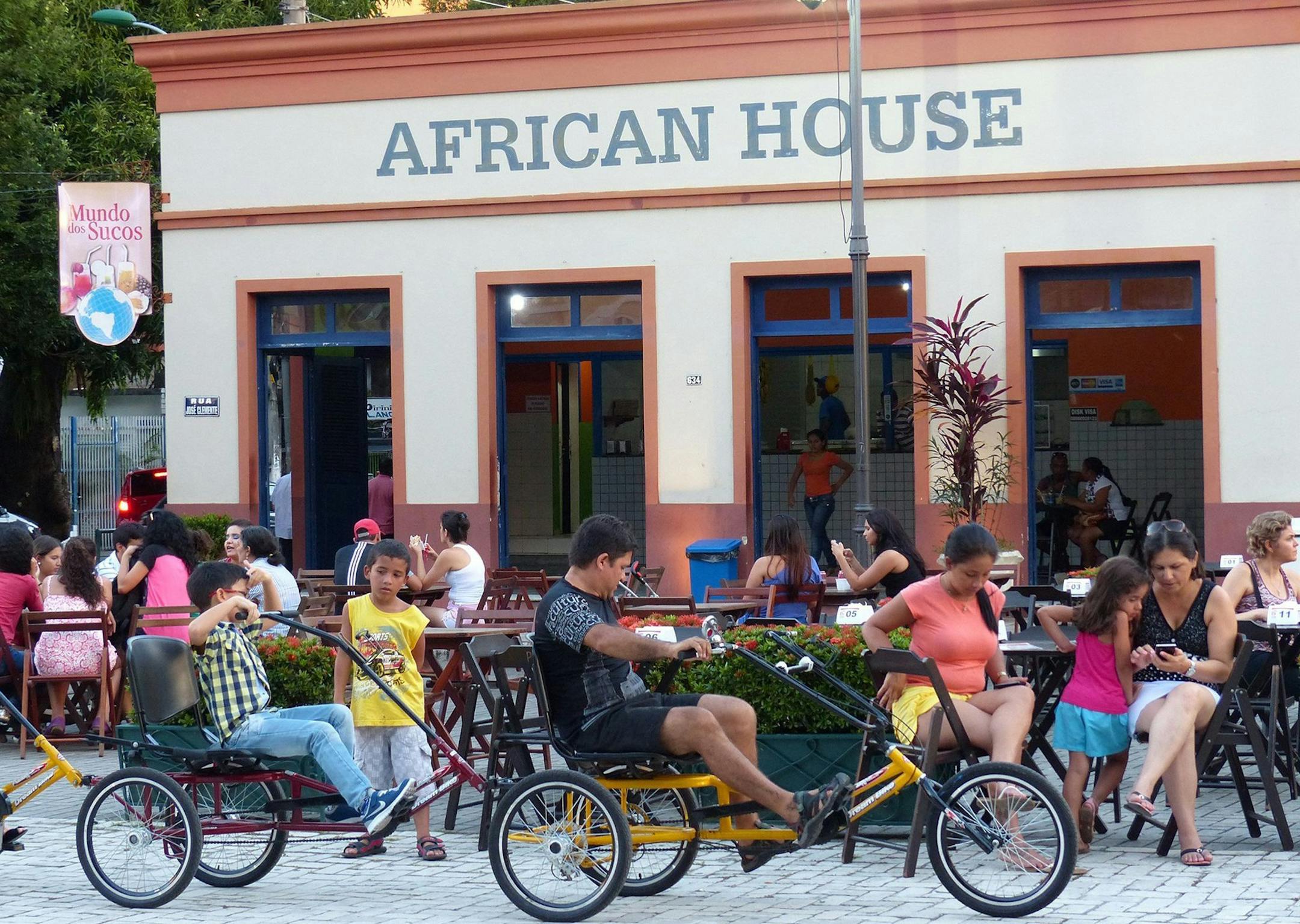
Children clamor to catch soap bubbles sent aloft, tourists pedal by the African House on three-wheeled bikes, a stand turns out bowl after bowl of steaming tacacá soup and Manaus' opera house looms over it all.
If there's one square that encapsulates all that makes Manaus special, it's the Largo de São Sebastião. The architecture, culture, cuisine and history of the Amazon are all on display in this historic district near the Port of Manaus.
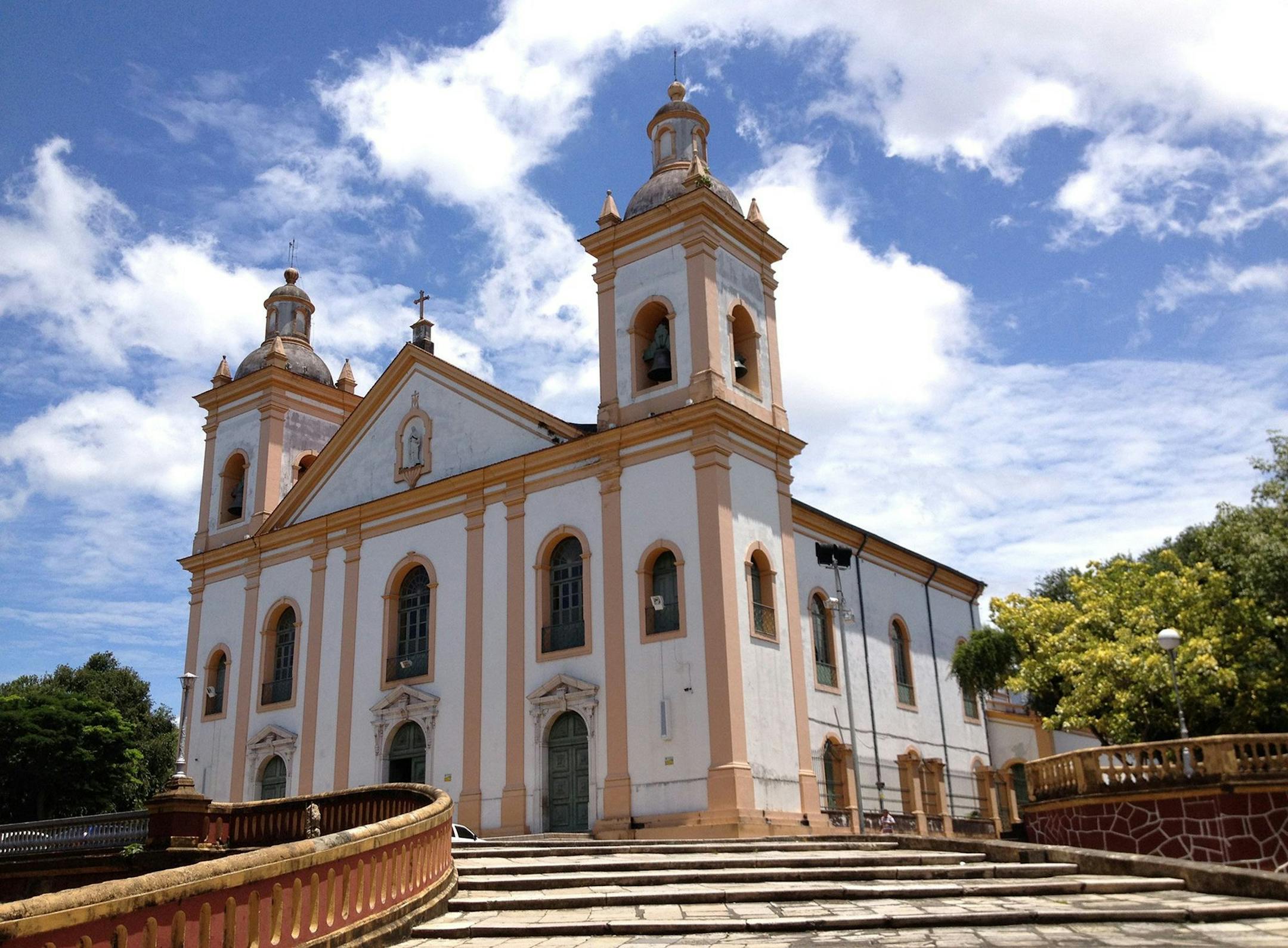
Entering the pink opera house with its neoclassical and Greco-Roman flourishes is like stepping back into the 19th century, when the rubber industry made Manaus Brazil's golden city, the richest in the entire country.
It was a time, from 1879 to 1912, when the "aroma of rubber perfumed the air," when women sent their gowns to be laundered in Portugal, the best opera companies in the world visited and rubber barons lit their cigars with currency, says Robério Braga, secretary of culture for Amazonas, the largest state in Brazil but one of the most sparsely populated.
Then the rubber industry sputtered out, after rubber tree seeds were smuggled out of Brazil and planted by the English in Malaysia, Sri Lanka and Africa. The famous opera house was shuttered for decades.
But the renovated opera house is once again a cultural hub, home to the Amazonas Symphony Orchestra and open for guided tours and performances, including some that are free. And Manaus once again is hoping for a star turn when it hosts four World Cup games from June 14 to 25, with the United States playing Portugal on June 22.
"This is a special opportunity, so we must take advantage of it. This is not so much a financial windfall, but an opportunity to promote our state" and cement its reputation as a cultural and tourism center, Braga said.