
Man charged with stealing terra-cotta warrior's thumb at ugly-sweater event in Philadelphia

The New York Times
February 19, 2018 at 5:45PM
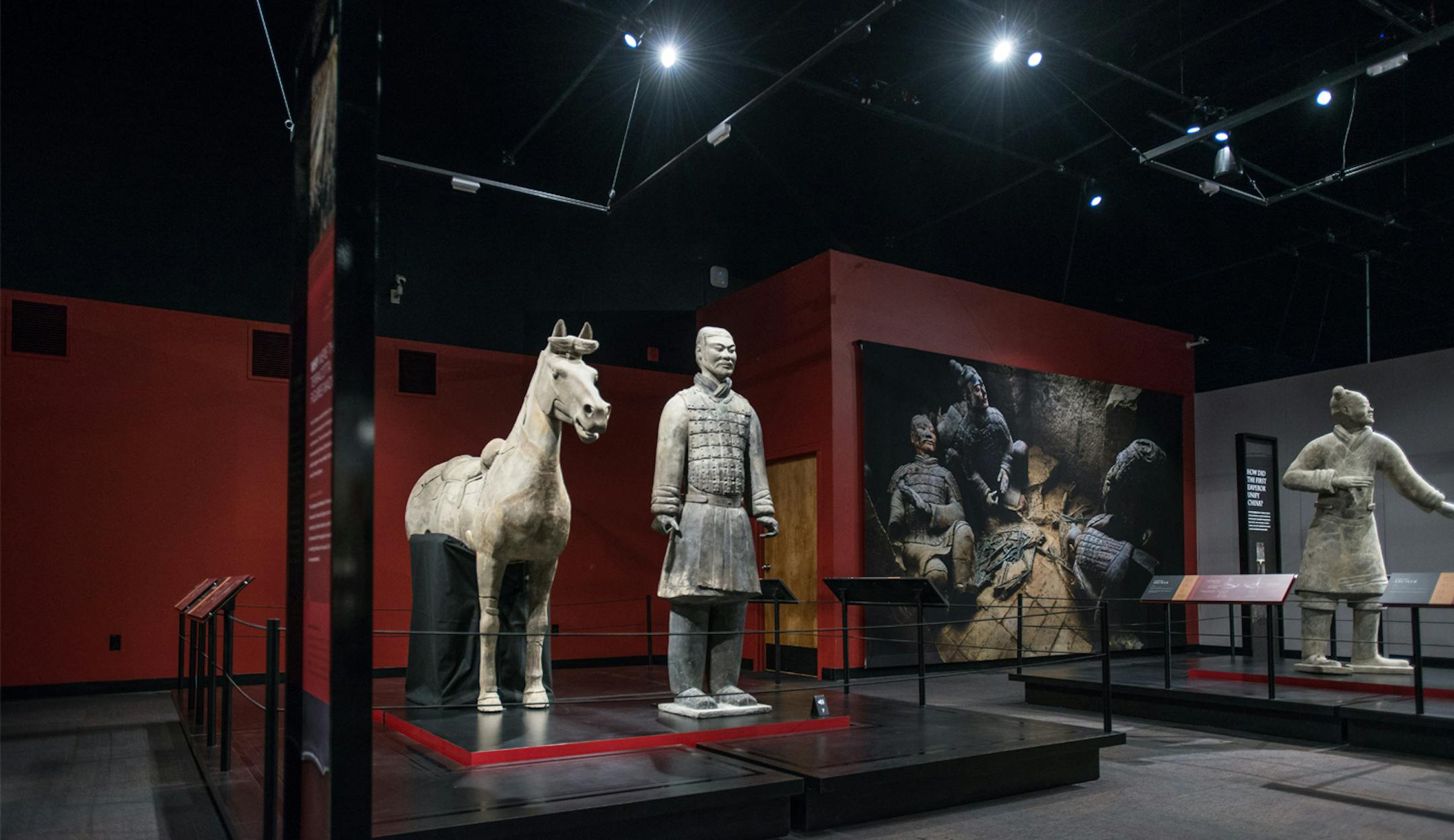
In a photo provided by the Franklin Institute, Chinese terra cotta warrior statues of the First Emperor, at the Franklin Institute in Philadelphia. In early 2018, a man was been charged with theft after apparently breaking off the thumb of the terra-cotta statue at center. (The Franklin Institute via The New York Times) -- NO SALES; FOR EDITORIAL USE ONLY WITH NYT STORY TERRACOTTA-STATUE-THEFT BY AUSTIN RAMZY FOR FEB. 19, 2018. ALL OTHER USE PROHIBITED. --
The theft of the thumb of a terra cotta warrior — valued at $4.5 million — from the Franklin Institute in Philadelphia, above, provoked anger in China, where the statues are considered national treasures. (The Minnesota Star Tribune)

HONG KONG – The warrior was a symbol of martial strength, molded from terra cotta and buried more than 2,000 years ago with China's first emperor to defend him in the afterlife.

The statue was helpless, however, against a man in a green sweater and a Phillies hat who, authorities say, sneaked into a closed-off area during a party at the Franklin Institute in Philadelphia in December and stole its thumb.

The man, who was attending the museum's after-hours ugly-sweater party on Dec. 21, entered the terra-cotta warrior exhibition room and used his cellphone's flashlight to view the displays. Then, according to an affidavit by Jacob B. Archer, an FBI special agent, the man put his arm around the statue and took a selfie.

Authorities said the man, later identified as Michael Rohana, then went for a more permanent memento. He grabbed the left hand of the statue, which is valued at $4.5 million, and broke off its thumb. Taking the piece with him, he left with friends for his home in Bear, Del.

Rohana, 24, was charged last week in Philadelphia with theft of an artwork from a museum, concealment of the artwork and interstate transportation of stolen property. He was released on bail.

An attorney for Rohana could not be reached for comment.

Archer said that when he asked Rohana whether he had anything he wanted to hand over, Rohana said he had a finger. The FBI agent retrieved it from a desk in the man's bedroom.

News of the theft provoked anger in China, where the terra-cotta warriors are national treasures and a major tourist attraction. An official from the Shaanxi Cultural Heritage Promotion Center, which organizes the display of the statues abroad, asked that the thief be given a tough penalty.

"We call on the American side to severely punish the person who committed this destruction and theft of mankind's cultural heritage," the unidentified official told the Beijing Youth Daily, a Communist Party affiliated newspaper, on Sunday.

The official said the center had offered to send two experts to the United States to repair the statue.

The statue of a cavalryman was one of 10 on display from Sept. 30 to March 4 at the Franklin Institute, along with other ancient artifacts including coins, gold pieces, jade and weapons.

The Franklin Institute told the Courier-Post that a security contractor had not followed "standard closing procedures" the night of the party.

"As a result of this incident, we have thoroughly reviewed our security protocol and procedures, and have taken appropriate action where needed," the museum said.

Another group of terra-cotta warriors is now on display at the World Museum in Liverpool, England. The museum has reviewed procedures and told security guards that "any lapses are intolerable," the Shaanxi Cultural Heritage Promotion Center official told the Beijing Youth Daily.

The terra-cotta warriors were built for the tomb of Qin Shi Huang, China's first emperor. He united much of the country under the short-lived Qin dynasty, which is generally considered the origin of the name "China."

Thousands of the life-size statues, each unique, were buried with models of horses, chariots and weapons after the emperor's death in 210 B.C. The tomb and its contents were not discovered until farmers unearthed some of them in 1974.

Many of the statues are on display at the Mausoleum of the First Qin Emperor in Xi'an, China, where they are lined up in vast pits. Many others remain buried. Others still have been removed from the pits and are sent for temporary exhibitions in museums around the world.

The Xi'an museum and the statues were named a UNESCO World Heritage site in 1987.

about the writer

about the writer

AUSTIN RAMZY

More from Minnesota Star Tribune

See More
card image
Provided/Sahan Journal

Family members and a lawyer say they have been blocked from access to the bedside of Bonfilia Sanchez Dominguez, while her husband was detained and shipped to Texas within 24 hours.

card image