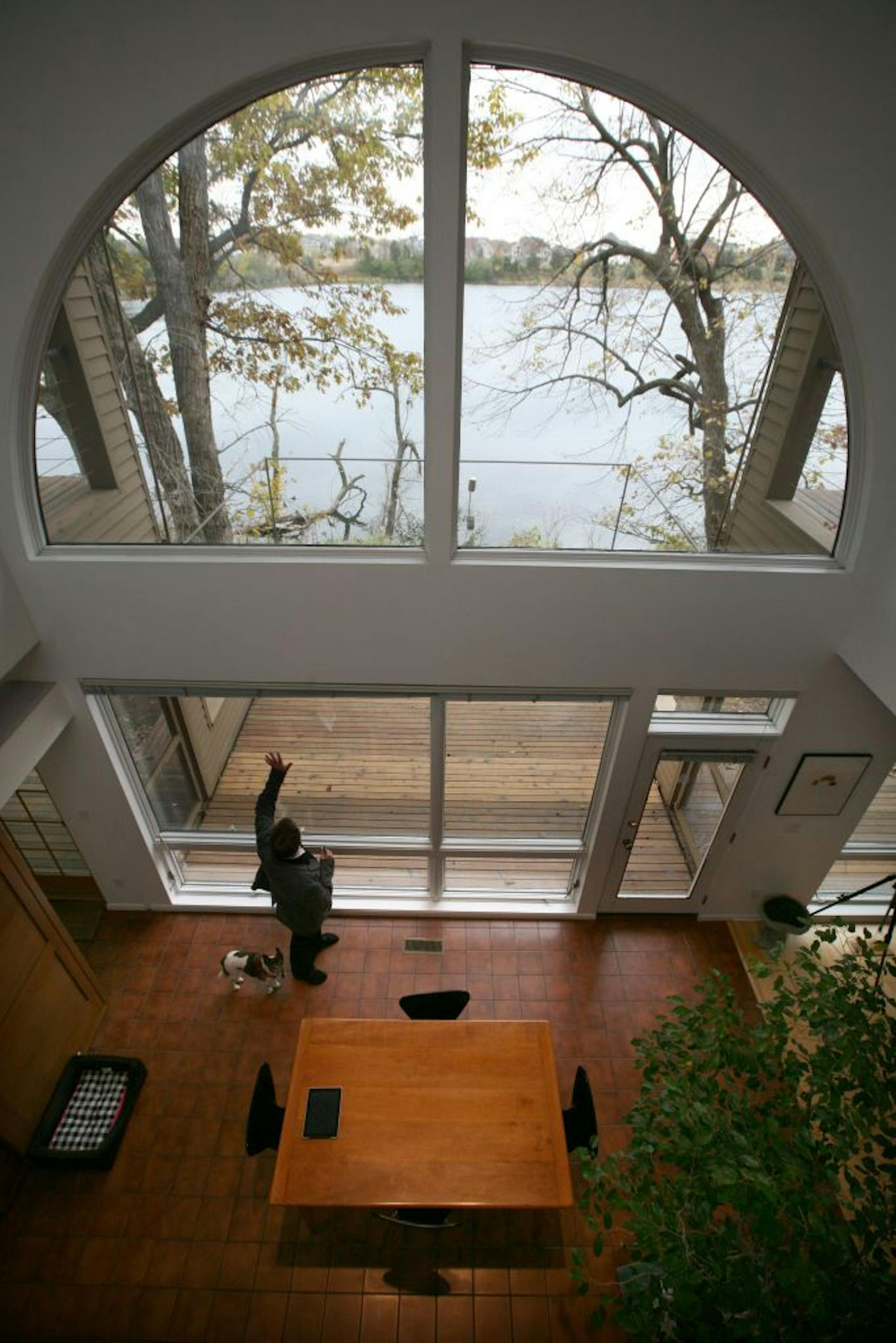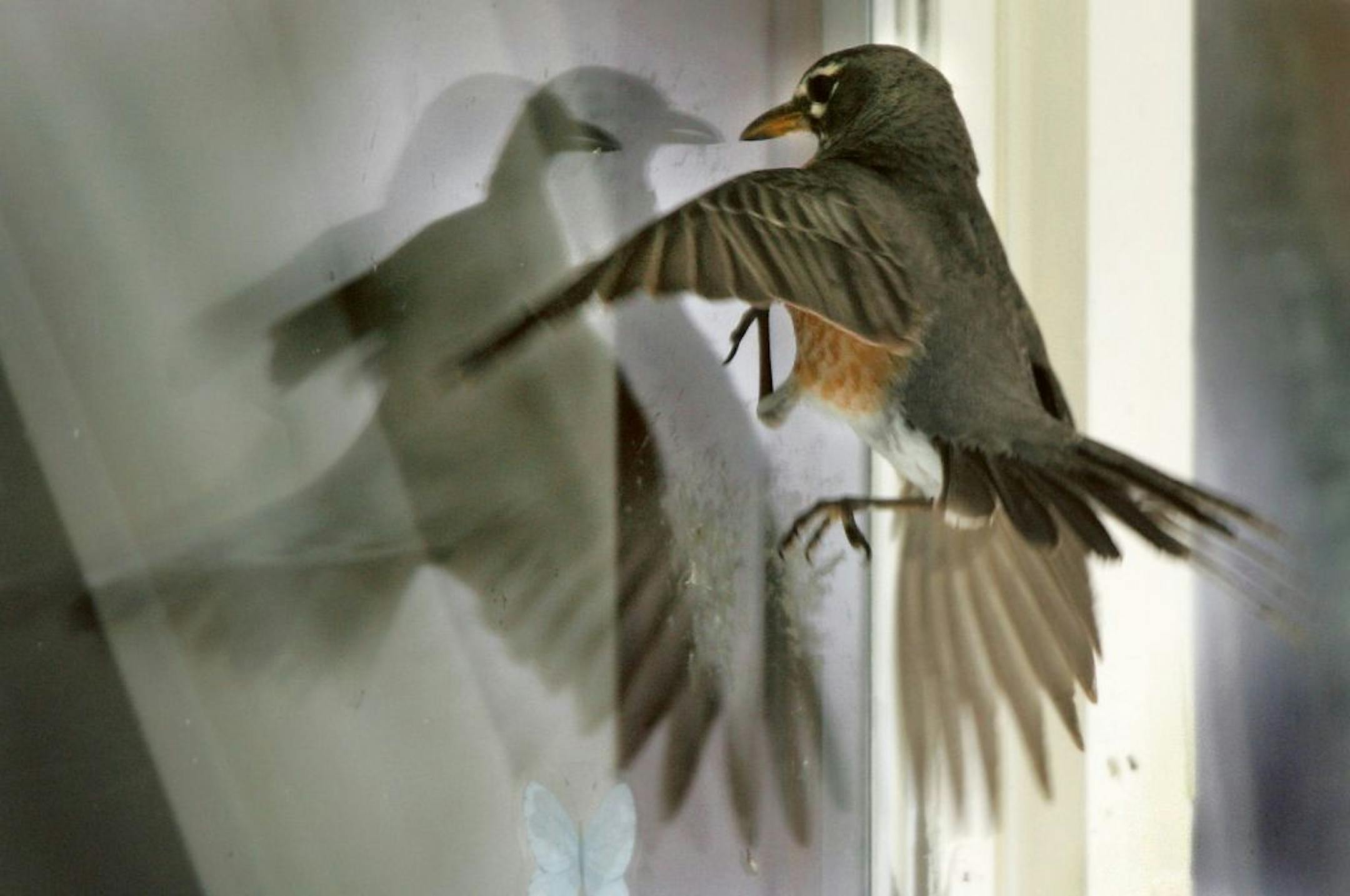
'Great views and lots of glass." That's what first attracted Bill Lutz to his home overlooking a tranquil pond in Victoria.But soon after he and his wife, Julie Brophy, moved in, they heard a loud thunk. A bird, a white-breasted nuthatch, had crashed into a window and fallen dead on their deck. It was spring -- migration season -- and soon the thunks became an everyday occurrence.
"We'd hear it and cringe," Lutz recalled. "It made us rethink buying the house."
Within a month, 11 different species, some that had migrated from as far as Central America, had crashed and died at the couple's home. "We had to do something," Brophy said. So Lutz crafted a solution, using screening and clear decals, that has reduced their bird casualties to virtually zero.
"It's not pretty, but it's been 100 percent effective," Brophy said.
Retrofitting their home to eliminate feathered fatalities has worked for Brophy and Lutz. But a growing chorus of bird enthusiasts are advocating avian-friendly architecture at the design stage as the best prevention. It's a national movement that started in Chicago and has spread to other major cities, including the Twin Cities.
Big expanses of glass are generally bad news for birds because they reflect sky, water and habitat, attracting flying species until it's too late for them to put on the brakes. Window collisions kill at least 100 million and as many as 1 billion birds in the United States every year, according to Laura Erickson, the Duluth-based author of "101 Ways to Help Birds."
"Most people do not want to kill birds," Erickson said. But many homeowners and design professionals perceive -- incorrectly, she said -- that it will cost a lot or be "grossly inconvenient" to design kinder, gentler structures.
"You can build a bird-safe building without any additional cost," said Joanna Eckles, coordinator of Project BirdSafe/Lights Out for Audubon Minnesota. "There are so many solutions," including types of glass and how they're used. Educating people about those solutions is the goal of Project BirdSafe, which last year published its Bird-Safe Building Guidelines (mn.audubon.org).