Standing on the edge of the wharf in Boston Harbor, we hear a warning.
"What you're about to do would be considered treason by many."
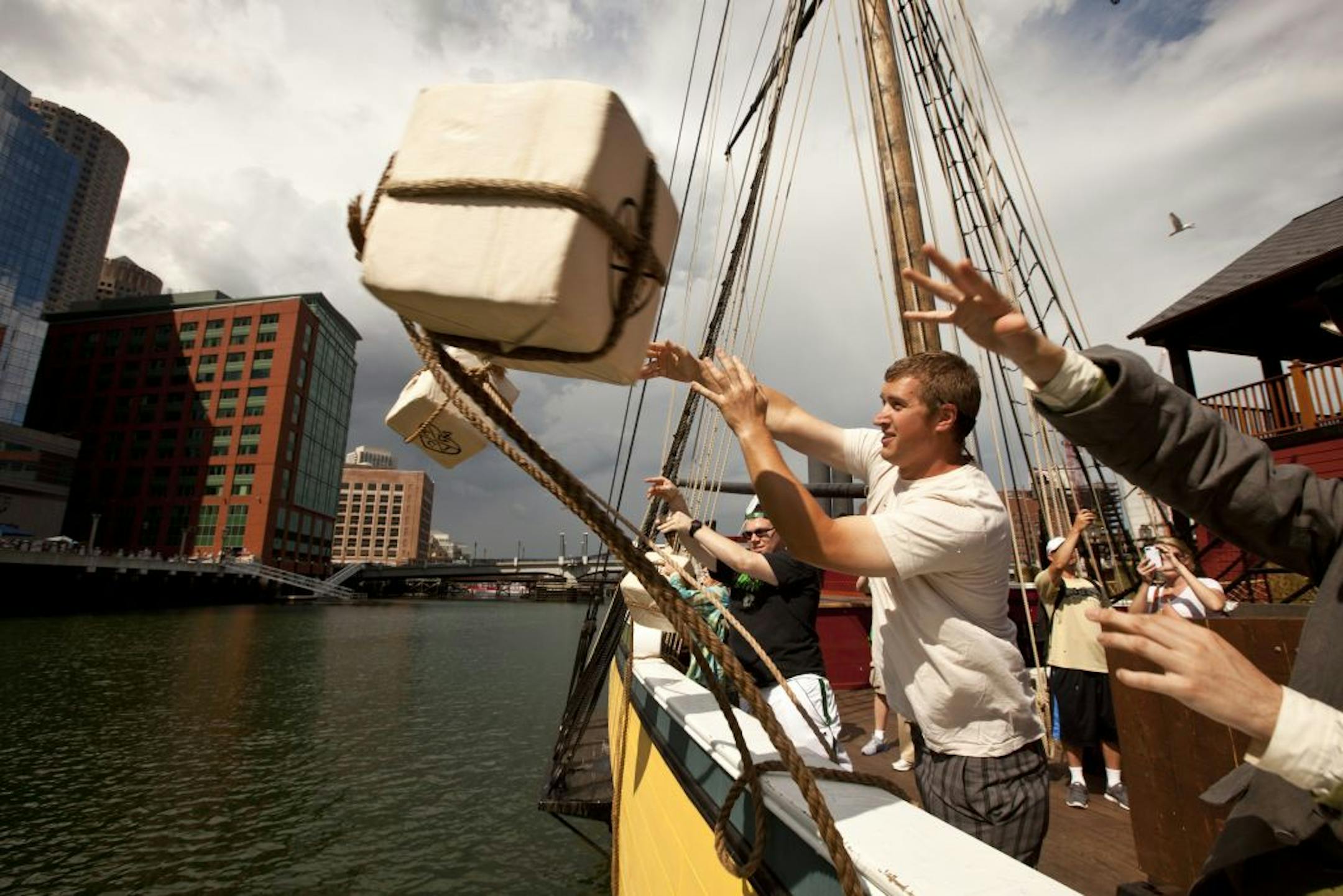
Yet we carry on, disguised as American Indians with feathers, and board the brig Beaver to carry out the plan: Dump 342 crates of tea into the harbor as an act of protest again British taxes.
My 3-year-old daughter, Chloe, doesn't seem to care a whit about treason, and eagerly climbs up one tea crate to push another over the edge of the boat into the water, chanting again and again, "Dump the tea into the sea!" Behind her, a boy of about 12 hurls a crate into the harbor with all his might, hollering "huzzah!" with a wild, slightly crazed look in his eye.
"Sure beats standing around listening to someone talk," I hear someone remark.
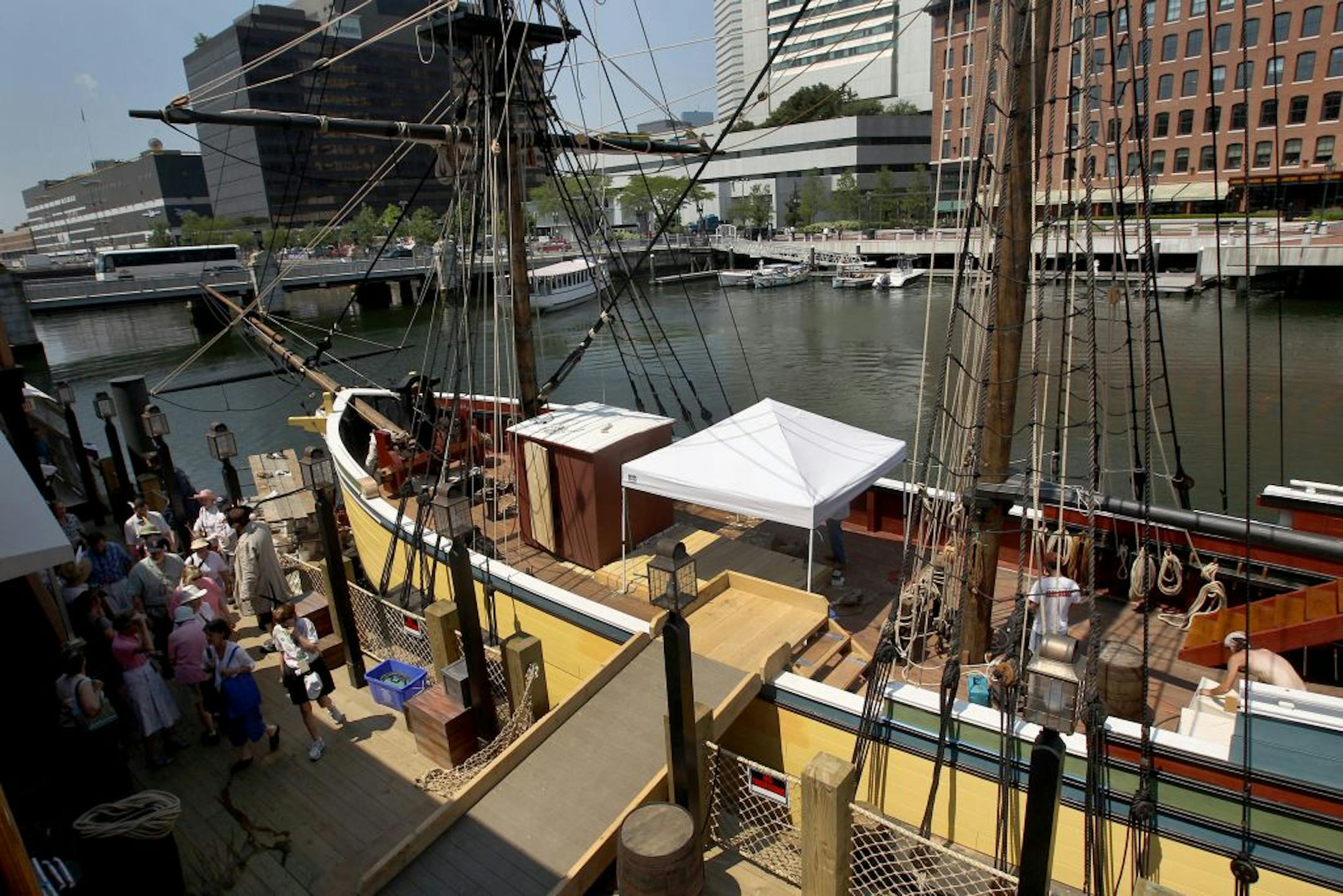
Boarding a meticulously crafted replica of one of the Boston Tea Party ships, surrounded by role-playing guides, and watching kids (and adults) launch tea chests into Boston Harbor, I can't help but agree. If this isn't bringing history alive for these kids, I don't know what would.
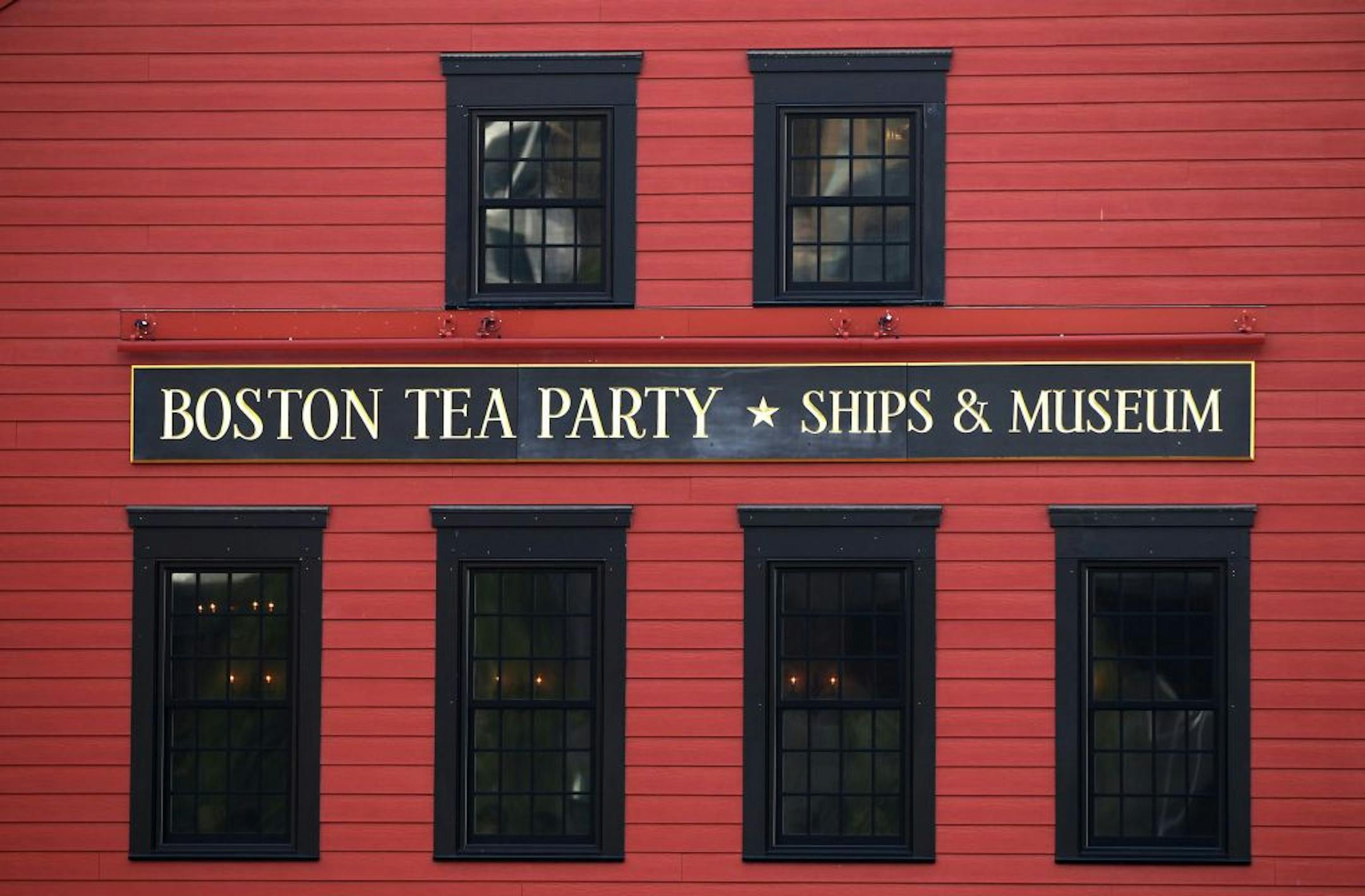
Breathing new life into a 239-year-old event is the goal of the new Boston Tea Party Ships and Museum, which opened on June 26 in Boston's Fort Point Channel region.
Of course, patriots in tricorn hats and woolen cloaks have been leading tourists around Boston for decades. As a local school kid on field trips, and later, as a grown-up history geek, I've traipsed across many blocks of the Freedom Trail, over bricks and cobblestones to historic burial grounds, churches, Faneuil Hall, Bunker Hill and the deck of the USS Constitution herself. But with the opening of the Boston Tea Party Ships and Museum, and the revitalization of Boston's waterfront in general, I wanted to explore Boston history from a different perspective: Off the Freedom Trail and out to sea.