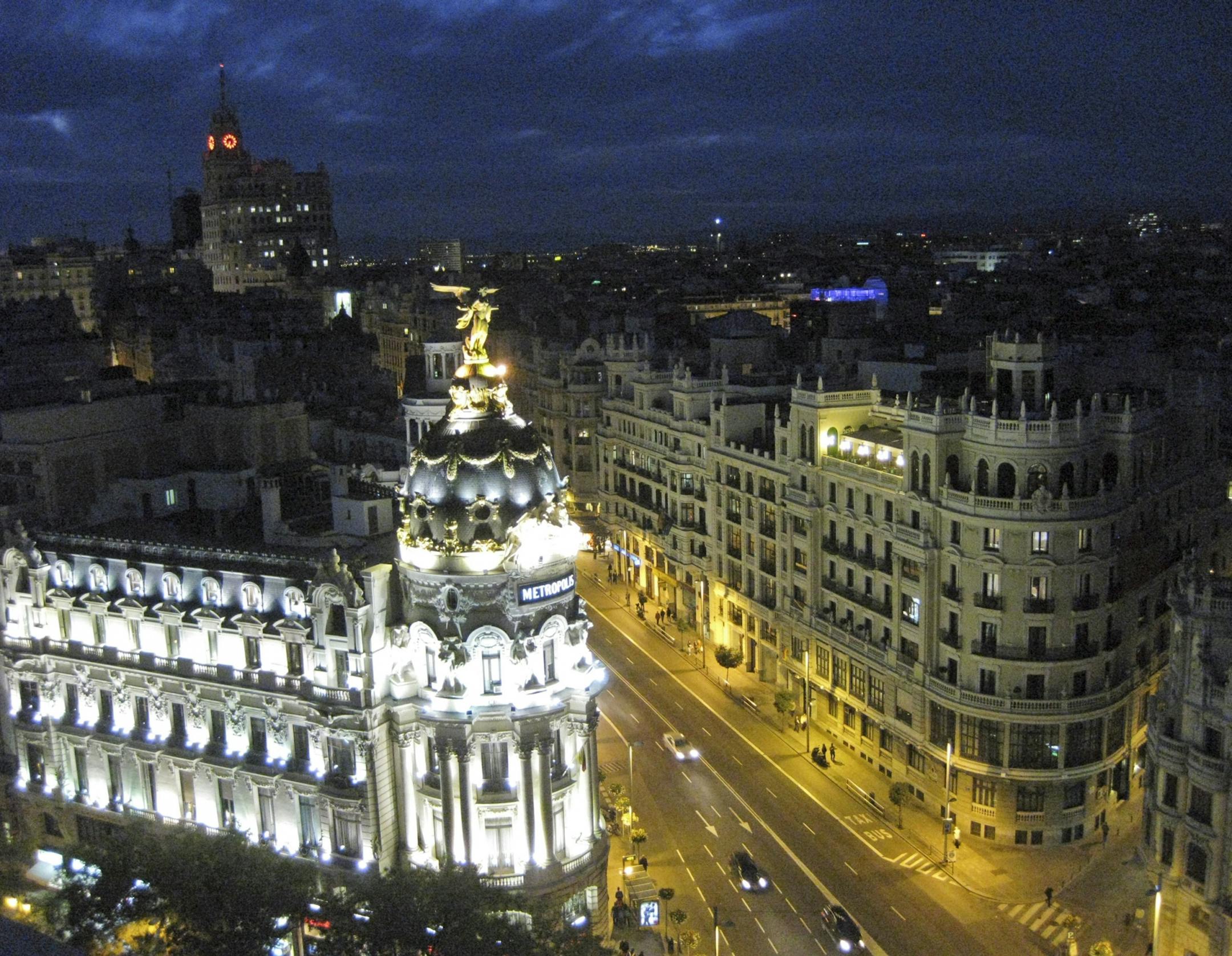
As the clock in the tower of the "Communications Palace" pushed toward 10 p.m. on a recent evening, points of light exploded around the stone face of the building, like diamond studs in the midday sun.
That Spaniards would build a post office and call it the Communications Palace says plenty about the Iberian ego. But the building's design and its nighttime lighting say even more. Built in the early 20th century, the palace boasts an ornate stone facade that calls to mind a regal vision of a Renaissance monarch.
You see a lot of that kind of flourish in Madrid. The architects who designed this city of 3.3 million -- and the government leaders and private benefactors who paid them -- understood the benefit of marrying flair to function. Nothing about Madrid's major public and private buildings suggests cut corners or planned obsolescence.
The fact that the Communications Palace is no longer a post office doesn't really matter. Today, the building serves as City Hall. And like so many of its neighboring beauties, when darkness falls, it sparkles as one of many jewels in a nocturnal crown.
The sight is among many that make going to Spain's cultural and political capital at least as exciting as trips to Europe's other mainstay destinations.
Of course, many things recommend Madrid as a vacation destination, even if its economic turmoil hasn't turned it into a bargain hunter's paradise.
World-class art
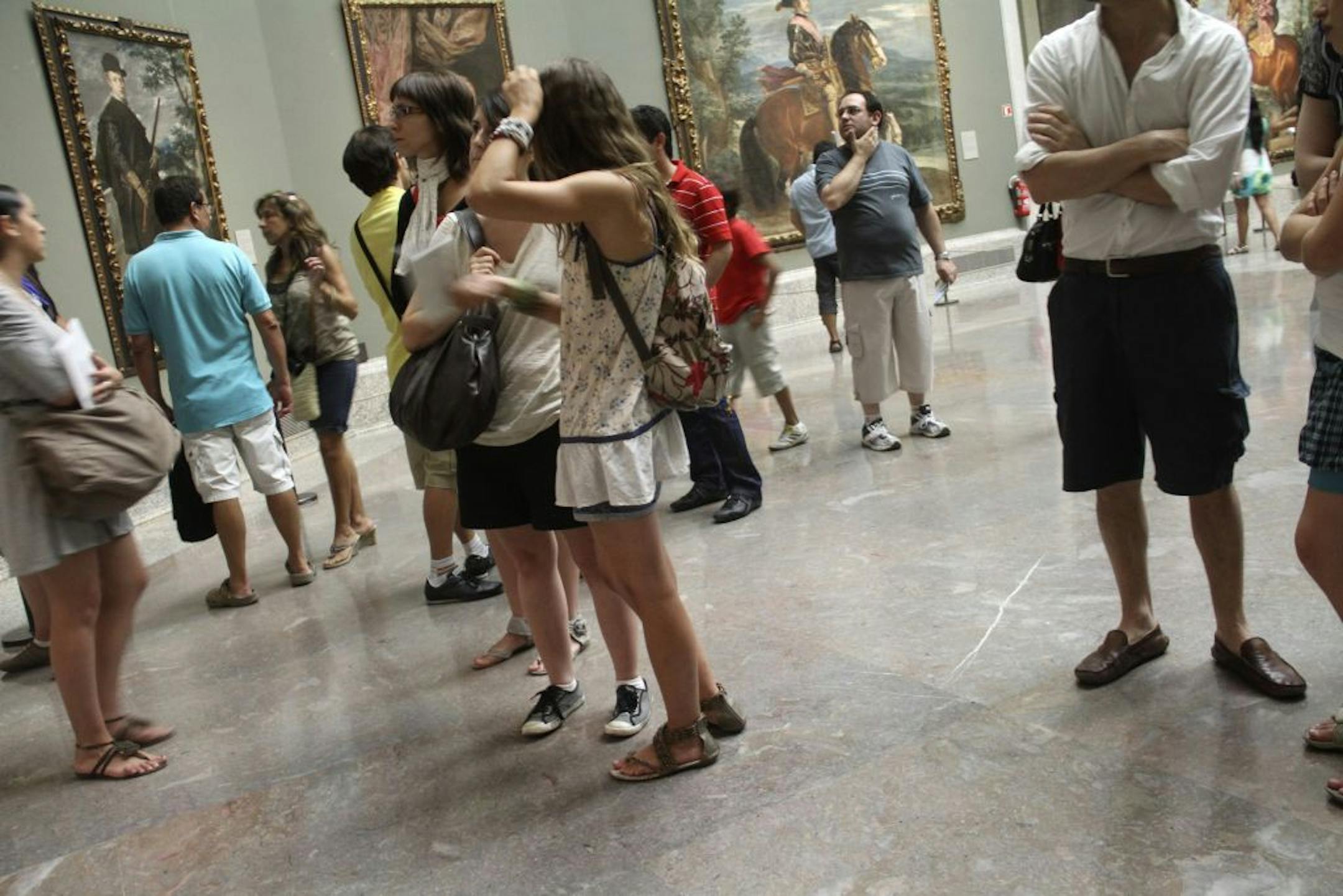
The city boasts several of the world's finest museums. The grand collections of the Prado Museum, Spain's national museum of 12th- to 19th-century art, and Reina Sofía Museum, which focuses on modern art, each could take days to completely experience and appreciate. They are filled with Goya, Delacroix, Picasso and hundreds of other artists of equal talent but less name recognition. Other major and minor art exhibitions pop up all over Madrid's storied center.