

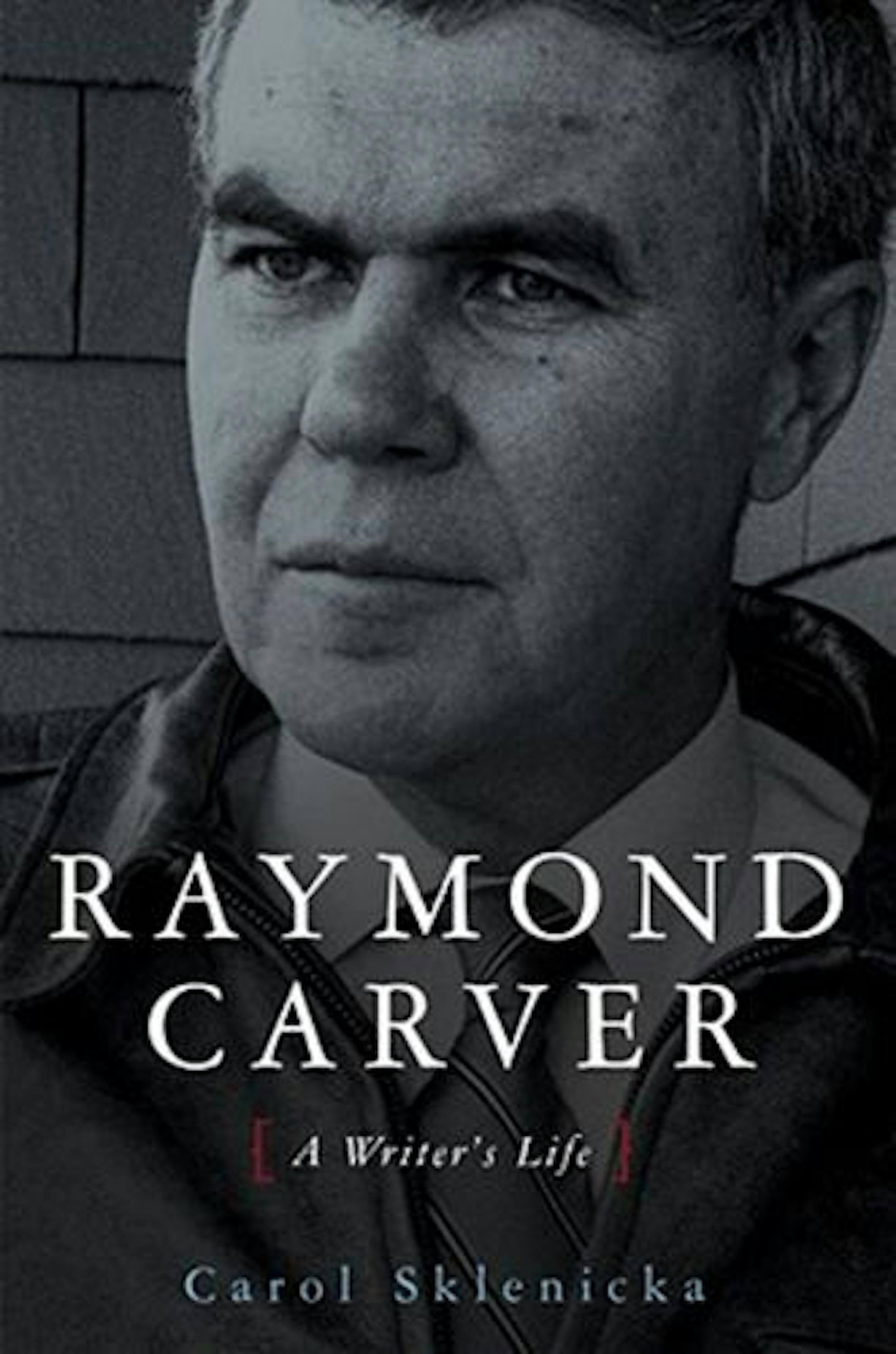
Who made Raymond Carver? Maybe it was Gordon Lish, who edited Carver's short stories about workaday lives into the minimalist style that made him famous. Perhaps it was editor Gary Fisketjon, whose marketing savvy made Carver a standard-bearer of American fiction in the 1980s. Or it could have been his second wife, Tess Gallagher, who bolstered Carver's reputation in the years before his death in 1988. So many people have had a claim on Carver's good name that it's fair to wonder how much of it Carver could claim for himself.
Carol Sklenicka's meticulously researched, sharply analytical biography never denies Carver his talent, but it also sheds ample light on larger literary forces that shaped his career. That makes the book something of a shadow history of American fiction writers across three decades, with Carver as a typical if troubled exemplar. The product of an Oregon working-class family, he grew up with Hemingway-level ambitions but toiled, like many of his contemporaries, in college writing workshops. Academia made him anxious, but it did introduce him to the likes of John Gardner and John Cheever, and it helped earn his early stories placements in "little magazines." That work caught the attention of Lish, who wielded great power in the '70s as the fiction editor at Esquire.
Lish's editing could be brutal, and Sklenicka's detailed comparisons show how Lish's versions of Carver's stories often feel like distant cousins of the originals. Carver only haphazardly protested: He often praised Lish's edits but in 1980 unsuccessfully begged him not to publish the radically revised stories in "What We Talk About When We Talk About Love." (The unadulterated versions are included in a new Carver collection from the Library of America.) In the prior decade Carver fell into, and recovered from, a deep alcoholism, and Sklenicka offers a grimly compelling account of those years. In his worst moment, he smashed a wine bottle against the head of his first wife, Maryann Burk, nearly killing her.
His recovery marked a clear split from "Bad Ray" into "Good Ray," but Carver was persistently an insecure Ray. Routinely disengaged from his family and the machinations of the publishing industry, Carver often seemed absent from the world, hiding into a bottle, another teaching appointment, or another story. Only toward the end of his life (he died of lung cancer at 50), his reputation and income stream secure, did a more confident Ray emerge.
Carver's is a redemption story, but Sklenicka wisely resists sentimentalizing it, neither damning Lish nor deifying Carver. "He was a materialist and a sensualist and a dreamer," she writes. "Meeting problems head-on was difficult for him." Perhaps no writer spent more effort attempting to both drink and write his way out of those problems. Happily, almost miraculously, the writing won out.
Mark Athitakis is a reviewer based in Washington, D.C. He blogs at americanfiction.wordpress.com.


