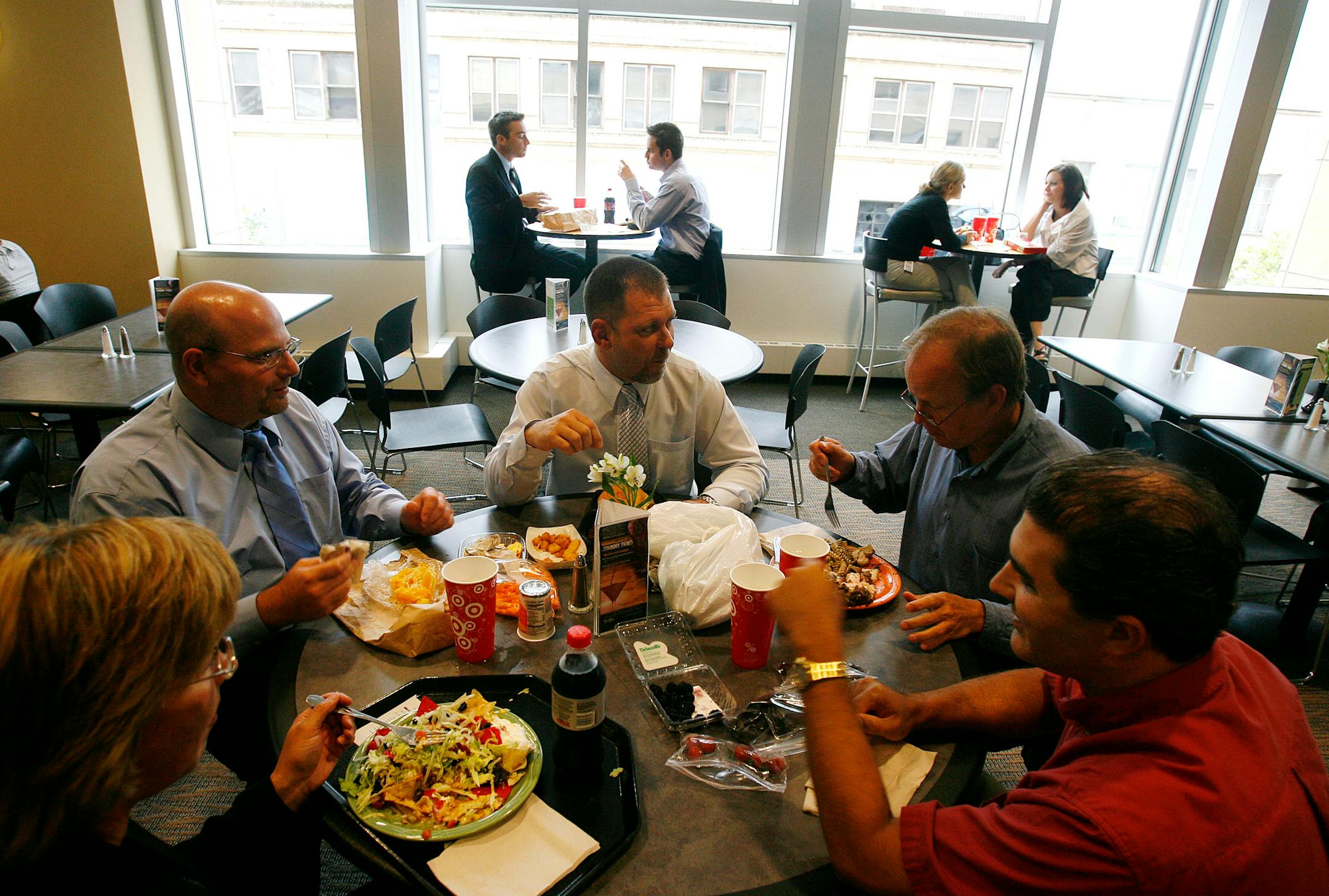
"Eating out? What's that?" Sue Ann Guildermann said when asked about the current state of work lunches. "It doesn't happen anymore."
Actually, she added, there are exceptions. "At professional conferences, I am seeing much more 'on your own for lunch' rather than 'lunch provided.'"
In this economic climate, the experiences of Guildermann, director of education at Empira Inc., a consortium of nursing homes based in Eden Prairie, are hardly unusual.
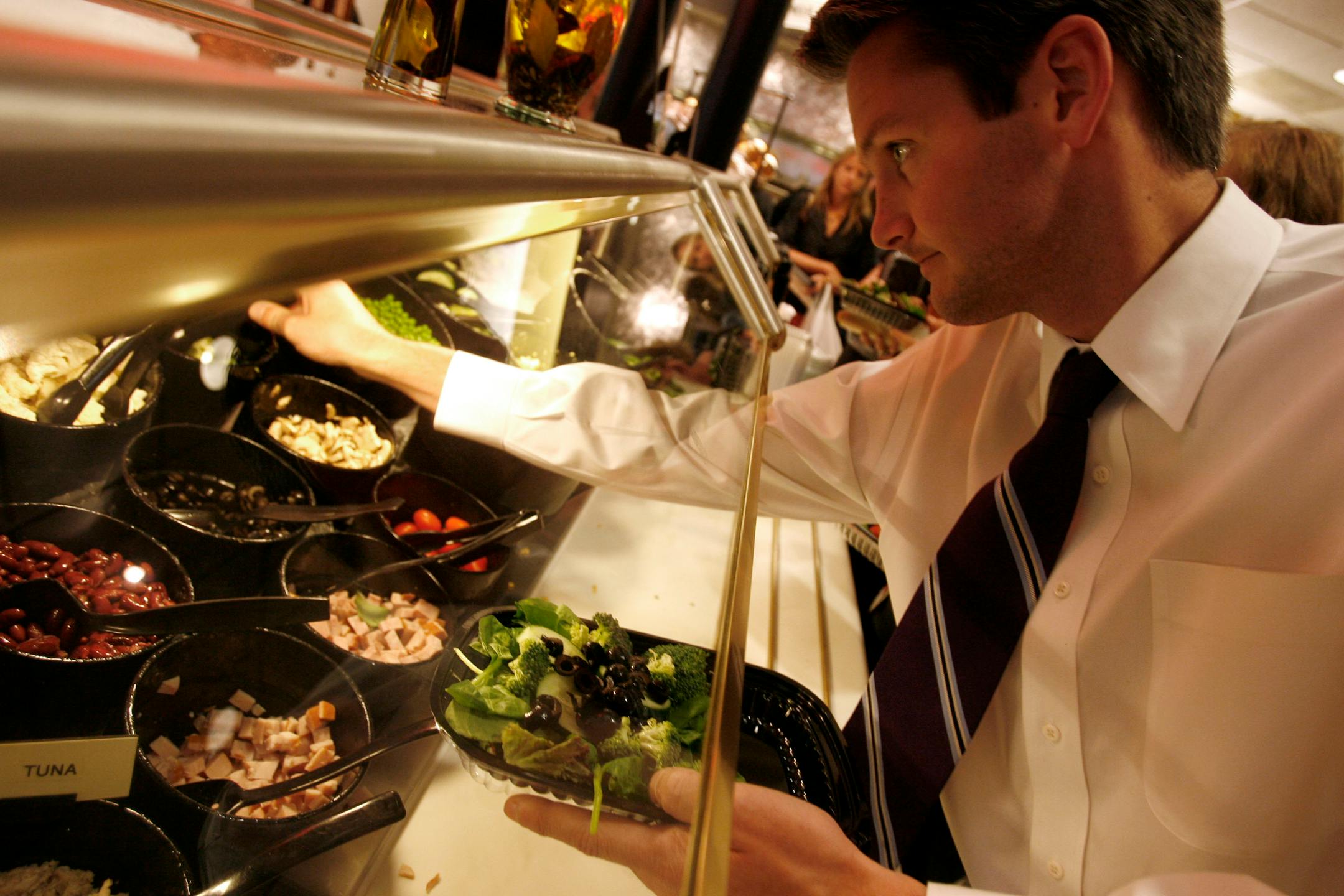
When the going gets tough, it seems, the tough bring in their lunches, or grab something in the office cafeteria (or both) in lieu of a spendier meal at a nearby restaurant.
"Our people are now more likely to eat at our cafeteria than to drive out and get lunch," said Andrea Miller, director of corporate communications of the investment firm the Petters Group in Minnetonka, where she said cafeteria business is up markedly this year. "Whereas before they would say, 'Oh, it'll be a nice break to get out,' now they're eating in and taking breaks at other times."
Meanwhile, a Warners' Stellian salesman reports that sales of small refrigerators to individuals (noncollege-dorm division) and larger fridges and microwave ovens to businesses also have risen during the past year. "These are hot items for us right now," said Mark Stage.
Whether brown-bagging or dining at the office cafe, employees throughout the Twin Cities are scaling back on lunch costs. And the savings can add up quickly. Investment and personal-finance firms such as Family Credit Management and Bankrate.com estimate that workers can save $70 per month based on 20 meals with an average cost of $3 for a "brown-bag" vs. $6.50 for a purchased meal.
With that economic backdrop, it's no surprise that food vendors are scrambling, as well. Per-capita sales had been slipping at the 60 office cafes that Aramark operates in Minnesota, district manager Pat Woods said.