

Looking for an easy way to live more sustainably? Look no further than your bank account.

With Net Zero Banking, Sunrise Banks gives customers the power to put their money toward real climate solutions.

Provided by Amanda Theisen, Sunrise Banks

October 14, 2025 at 6:44PM

There’s no shortage of action for how we can all reduce our own carbon footprint. Recycle more. Make energy efficient upgrades to your home. Bike or take public transportation. Drive an electric vehicle... And that’s just the short list.

Implementing many of these changes takes focus, dedication, resources, and money. But what if the way we store our money could have an impact on our carbon footprint, as well?

That’s the idea Laura Wildenborg thought about for many months. A passionate environmental advocate, she realized a bank account could be a simple, yet effective tool for customers to make positive inroads in the fight against climate change.
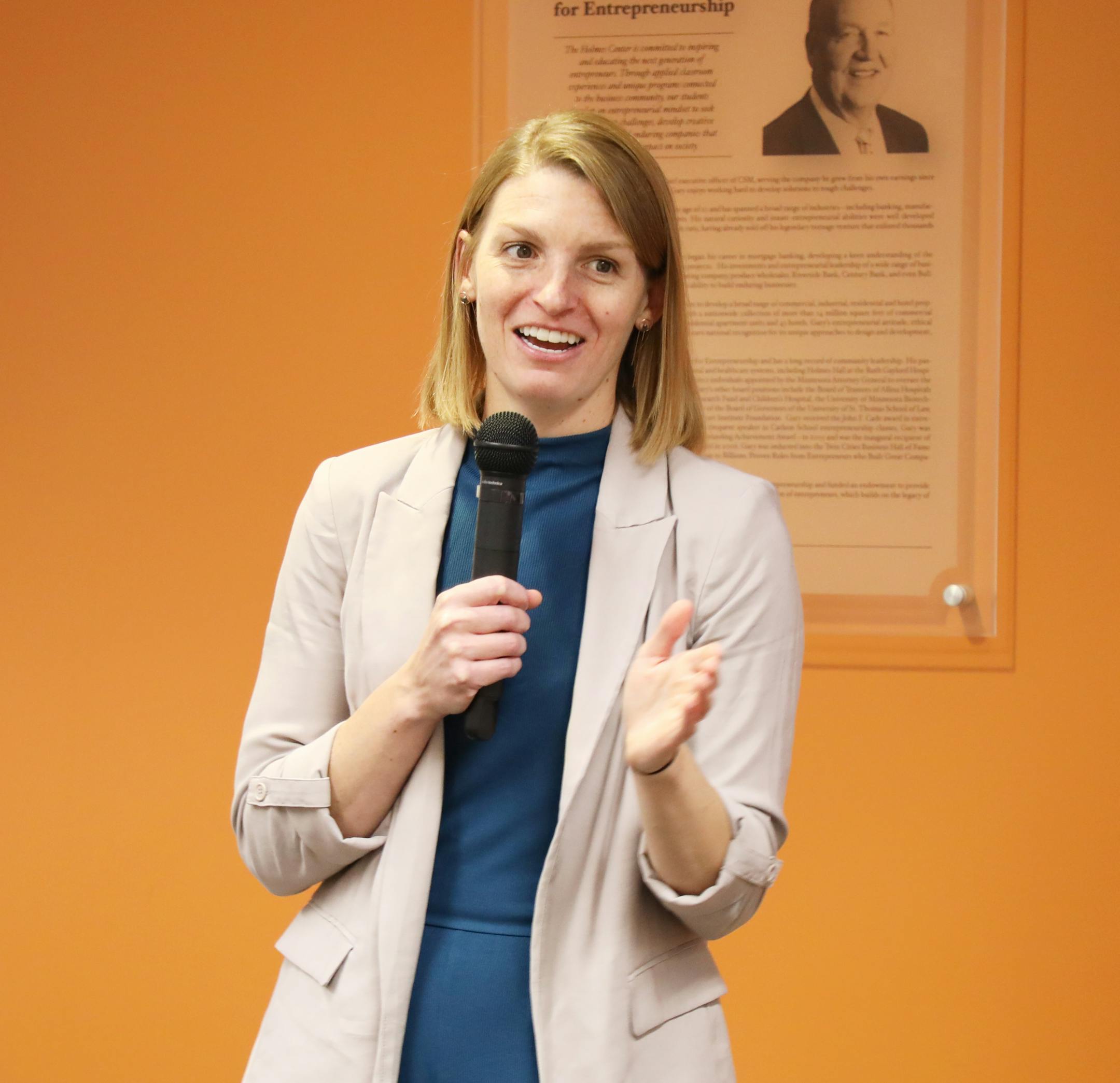
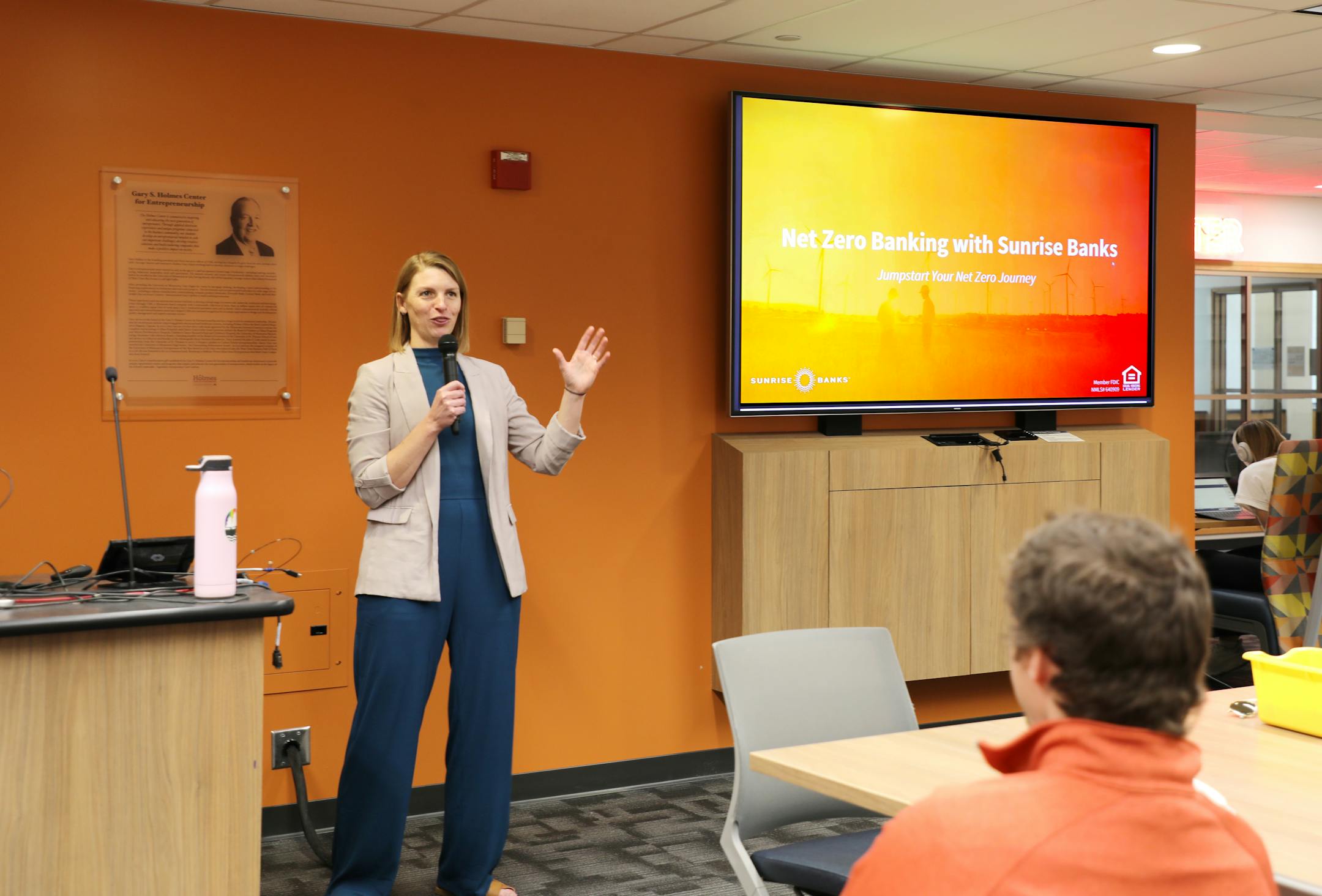
Laura Wildenborg, vice president of strategic lending at Sunrise Banks, talks to students at the University of Minnesota about the company's Net Zero Banking program. Submitted by Amanda Theisen/ Sunrise Banks

When Wildenborg joined Sunrise Banks, she analyzed the bank’s portfolio and the companies and projects it funded.

“That work helped me see how the relationship between deposits and lending could be used to support our customers’ carbon reduction efforts while advancing our bank’s own net zero goals,” says Wildenborg, who is now the vice president of strategic lending at Sunrise Banks.

Out of that thought process came the concept for Net Zero Banking, which Sunrise Banks launched in summer 2024.

Now one year in, the unique deposit and loan program has already prevented about 242 metric tons of carbon dioxide from entering the atmosphere. That is like powering 50 single-family homes with clean electricity for one year.

Where you bank matters
Once you deposit money into your account, it doesn’t just sit there. Banks lend it out to people, companies and projects. And yes, some of those projects aren’t exactly climate friendly.

According to Project Drawdown, a nonprofit that works to drive meaningful climate solutions, big banks in the U.S. lend as much as 30 percent of their portfolio to industries that produce massive amounts of carbon. These can include oil and gas companies, mining, aviation, transportation, and data and tech centers.

That’s why some banks have made the pledge to be more climate-friendly, particularly by lending to projects that actively cut carbon emissions or avoid putting them into the atmosphere altogether.

Wildenborg’s idea for Net Zero Deposits takes that one step further.

The program gives customers the power to direct their money towards loans to finance those climate-friendly projects. Those could be energy efficient building upgrades, electric vehicles, or solar panels.

“Many people have never considered how their bank account could impact climate change,” says Wildenborg. “That moment of realization is powerful as it shifts the conversation from abstract sustainability to something personal and actionable.”

“Net Zero Banking aligned perfectly with our mission to embed climate solutions into every aspect of our work,” says Katie Youtsos with the Minnesota Biochar Initiative. “Sunrise’s transparency and genuine commitment to impact gave us confidence this was more than just a marketing program. It is nice to know the money you deposit will be used for helping advance a cause you believe in.”

Easy action with big results

Wildenborg sought to make the process as simple as possible for customers. All they have to do is tell a banker they want to earmark their savings, checking or CD account as a Net Zero Deposits account.

“What struck me most is how easy the action is and how choosing where your money sits can have a major climate impact,” she says. “It is rare to find something so simple yet so effective. It feels like a no-brainer.”

Yet, Wildenborg says no other banks in the U.S. are addressing climate change the way Sunrise Banks is with its Net Zero Banking program.

Green Cities Accord, a nonprofit that works to restore urban tree canopies across the Twin Cities, recently switched to Sunrise Banks and designated their accounts as Net Zero Deposits.

“We wanted our banking to reflect our mission,” says Michaela Neu, executive director for Green Cities Accord. “The Net Zero Deposit account ensures our funds support real climate solutions, which was a big motivator for us.”

Documenting the proof

Earlier this summer, Sunrise Banks released its first report detailing the impact of its Net Zero Banking program. It also compared those impacts to other ways people may choose to cut their carbon footprint.

For example, the report showed in the first six months of the program, customers directed approximately $4.4 million in Net Zero deposits to loans that funded climate-friendly projects.

The report also showed that putting $10,000 into a Net Zero Deposits account cuts the same amount of carbon emissions as driving an electric vehicle for one year.

Educating the public

Wildenborg says education has become a powerful tool in showing the impact of Net Zero Banking, especially to customers who want to find companies with similar values.

Laura Wildenborg, vice president of strategic lending at Sunrise Banks, talks to students at the University of Minnesota about the company's Net Zero Banking program. Submitted by Amanda Theisen/ Sunrise Banks

“We see a spike in new accounts after nearly every presentation or webinar,” she says. “The enthusiasm is translating into real growth as people share what they’ve learned with their communities.”

Wildenborg says she sees Net Zero Banking becoming a catalyst for communities that want to become more climate resilient.

“This program should not only fund Net Zero Projects but also serve as a resource for companies pursuing sustainability,” she says.

Learn more about Net Zero Banking at Sunrise Banks by visiting sunrisebanks.com/net-zero-deposits.

Amanda Theisen is the communications manager for Sunrise Banks.

Member FDIC.
