

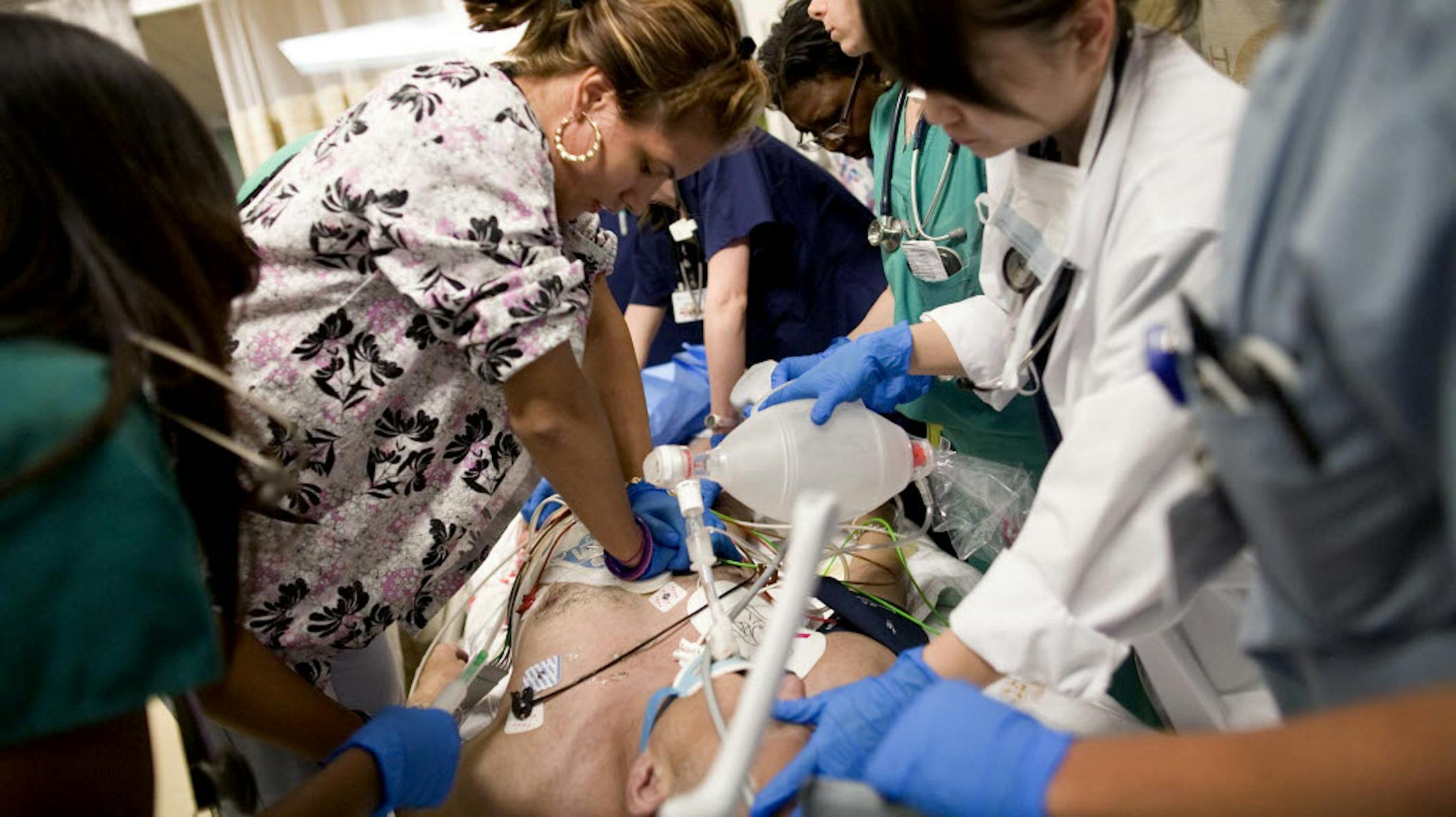
When a hospital patient goes into cardiac arrest, one of the most difficult questions facing the medical team is how long to continue cardiopulmonary resuscitation. Now a new study involving hundreds of hospitals suggests that many doctors may be giving up too soon.
The study found that patients have a better chance of surviving in hospitals that persist with CPR for just nine minutes longer, on average, than in hospitals where efforts are halted earlier.
There are no clear, evidence-based guidelines for how long to continue CPR efforts.
The findings challenge conventional medical thinking, which holds that prolonged resuscitation for hospitalized patients is usually futile because when patients do survive, they often suffer permanent neurological damage. To the contrary, the researchers found that patients who survived prolonged CPR and left the hospital fared as well as those who were quickly resuscitated.
The study, published online Tuesday in the Lancet, is one of the largest of its kind and one of the first to link the duration of CPR efforts with survival rates. It should prompt hospitals to review their practices and to consider changes if their resuscitation efforts fall short, several experts said.
Between one and five of every 1,000 hospitalized patients suffer a cardiac arrest. Generally they are older and sicker than nonhospital patients who suffer cardiac arrest, and their outcomes are generally poor, with fewer than 20 percent surviving to be discharged from the hospital.
Patients in hospitals with the longest CPR efforts were 12 percent more likely to survive and go home from the hospital than those with the shortest times, the study found. The senior author, Dr. Brahmajee Nallamothu, an associate professor at the University of Michigan, said he and his colleagues found that neurological function was similar, regardless of the duration of CPR.


