

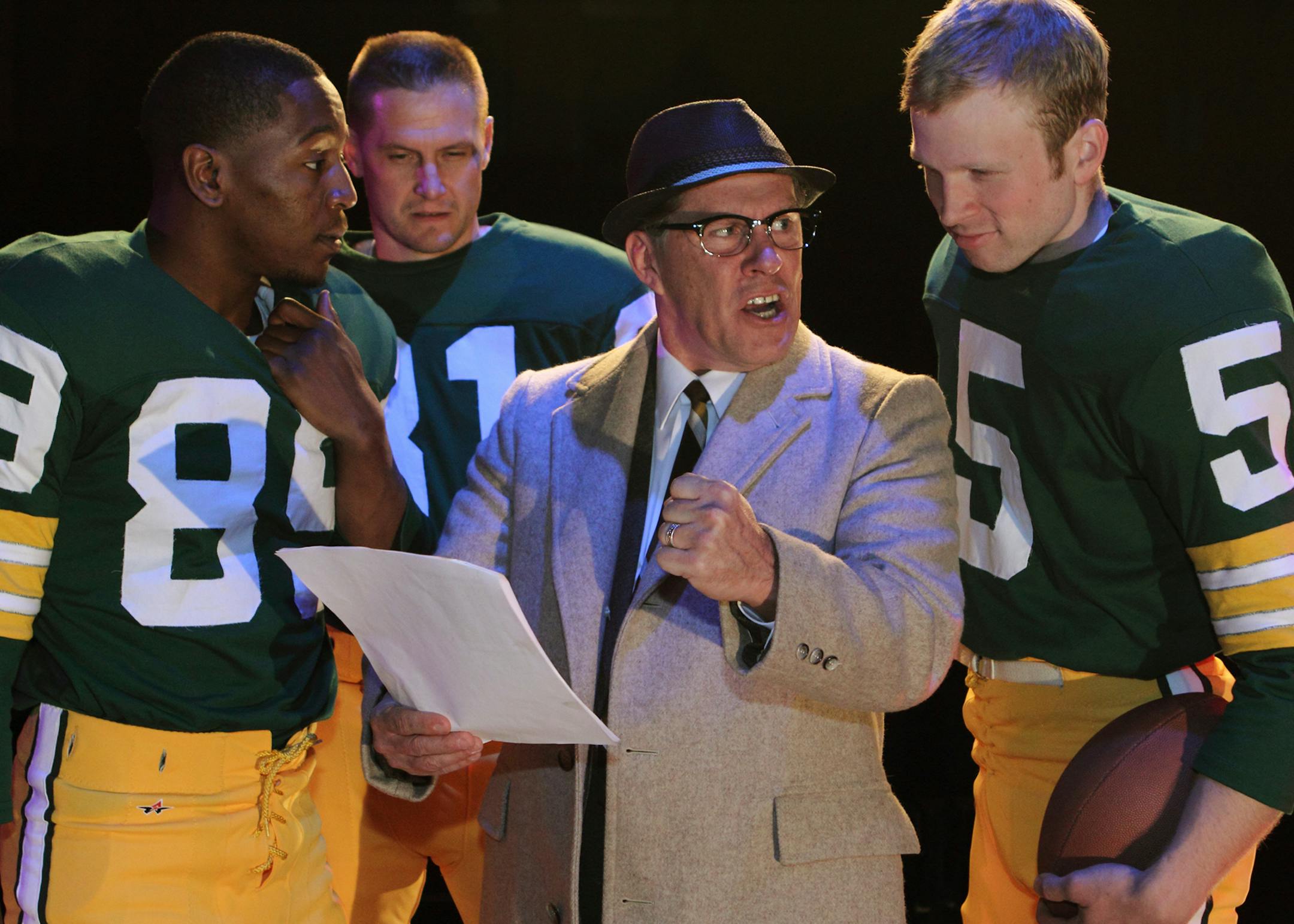
For a boy who grew up in rural Wisconsin, actor Jim Detmar could not pick a better role. Political geeks might pluck Fighting Bob LaFollette. Liberace or Harry Houdini would be fun if you're given to scenery chewing. But Detmar, a sports fan from Baldwin, Wis., gets to play Vince Lombardi when History Theatre opens its season with the Broadway play "Lombardi" on Saturday.
"Is there someone else? I don't see it," said Detmar. "Lombardi transcends sports."
Written by Milwaukee native Eric Simonson, who is best known in the Twin Cities as a stage director for Minnesota Opera ("Grapes of Wrath," "Silent Night"), "Lombardi" relates a week of the Green Bay coach's life during the 1965 NFL season. Simonson uses the device of a journalist visiting Green Bay for a profile of the coach. Three players -- Paul Hornung, David Robinson and Jim Taylor -- and the coach's wife, Marie, play key roles in the drama.
"He was in the right place at the right time," Simonson said of a coach who spent only 10 of his 57 years in Wisconsin.
But oh, what years. The 1960s were professional football's glory moment, as the game rushed past baseball to become America's favorite sport: The league was expanding, television was becoming universal and Sunday afternoon games were becoming part of the national water cooler conversation. Riding this swell of popularity, Lombardi built a team that would dominate the decade as no other franchise had before or has since. Even today, the Packers remain one of the NFL's most popular teams.
Larger than football
Success in winning football games certainly introduced the nation to Lombardi, from his cold and modest home in Green Bay. His personality -- formed in a working-class Catholic family in Brooklyn, and then steeled in the military ethos of coach Red Blaik at West Point -- touched something deeper in the national consciousness.
"He got to the core of what it is to be American, or what people think the American spirit is, in terms of trying to succeed and not accepting failure and the cost of that," Simonson said. "He paid for his drive to win -- in his health, his relationship with his family, in stress. He never seemed to be at peace with himself or the world."


