

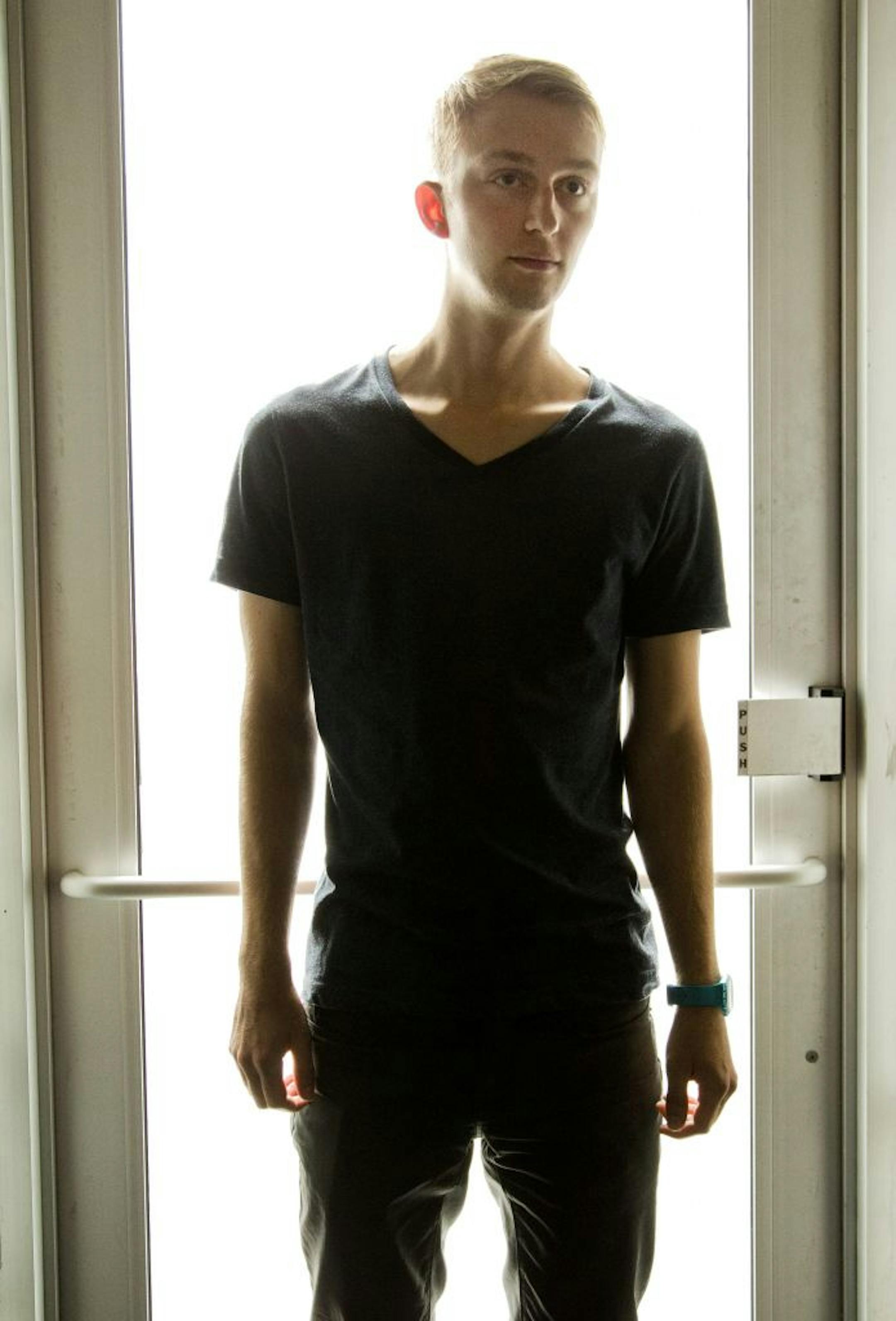
The hi-fi recording facility Waterbury Studio in northeast Minneapolis seemed like a funny place to meet Minnesota's nearest thing to a dubstep star -- you know, since he actually prefers to create his music in airports and hotels using a laptop and headphones.
"When you're a DJ, you travel alone, which I really didn't like at first," said the electronic musicmaker known as Vaski. "Now, I find it kind of peaceful. It's a great environment to be introspective and creative."
Meet the most successful young Minnesota musician you probably have never heard of. His real name is Alex Brouwer, a 22-year-old average joe from Savage who put his studies at Normandale Community College on hold two years ago when his recordings started catching on via the Internet, alongside the then-budding subgenre known as dubstep. Since then, he has signed to a prominent electronic label and performed from Europe to Australia.
Next week, Vaski will get back to performing in the Twin Cities, where he said he has been lying low to "build up a little demand." He'll test his local fan base Thursday at the Varsity Theater when he hosts the first installment in his Skyline series, to be held every other month with DJ-ing pals he has met in his travels.
"Dubstep has gotten big worldwide, but it's still more of a niche thing" in Minnesota, said Vaski, who counts Denver, Los Angeles and Houston as top markets. "It's such an Internet-based art form that it really doesn't matter where you are."
He got into making electronic music when he was 12, using an Acid Pro sequencer and the family computer. His dad, Mark, was actually a fan of the classic EDM acts of the '90s -- "but he played guitar and liked groups like Van Halen," Vaski quickly pointed out. (Not sure if he was trying to raise or lower Dad's cool value.)
With a buff 6-foot frame, pointy noise and shave-sides haircut that together make him look like he could star in a European sports-car ad, Alex was a drummer in a metal band and the Prior Lake High School marching band before becoming Vaski. He dug the syncopated rhythmic patterns of dubstep when he first heard its whirring and grinding brand of sounds in 2008.
"I liked that it wasn't a regular 4/4 dance beat, and there was more space in the music," he recalled.


