
Advertisement

Living the village life

A new trend emerges in Italy: saving undiscovered towns by filling rooms with tourists.

The New York Times
May 22, 2010 at 9:25PM
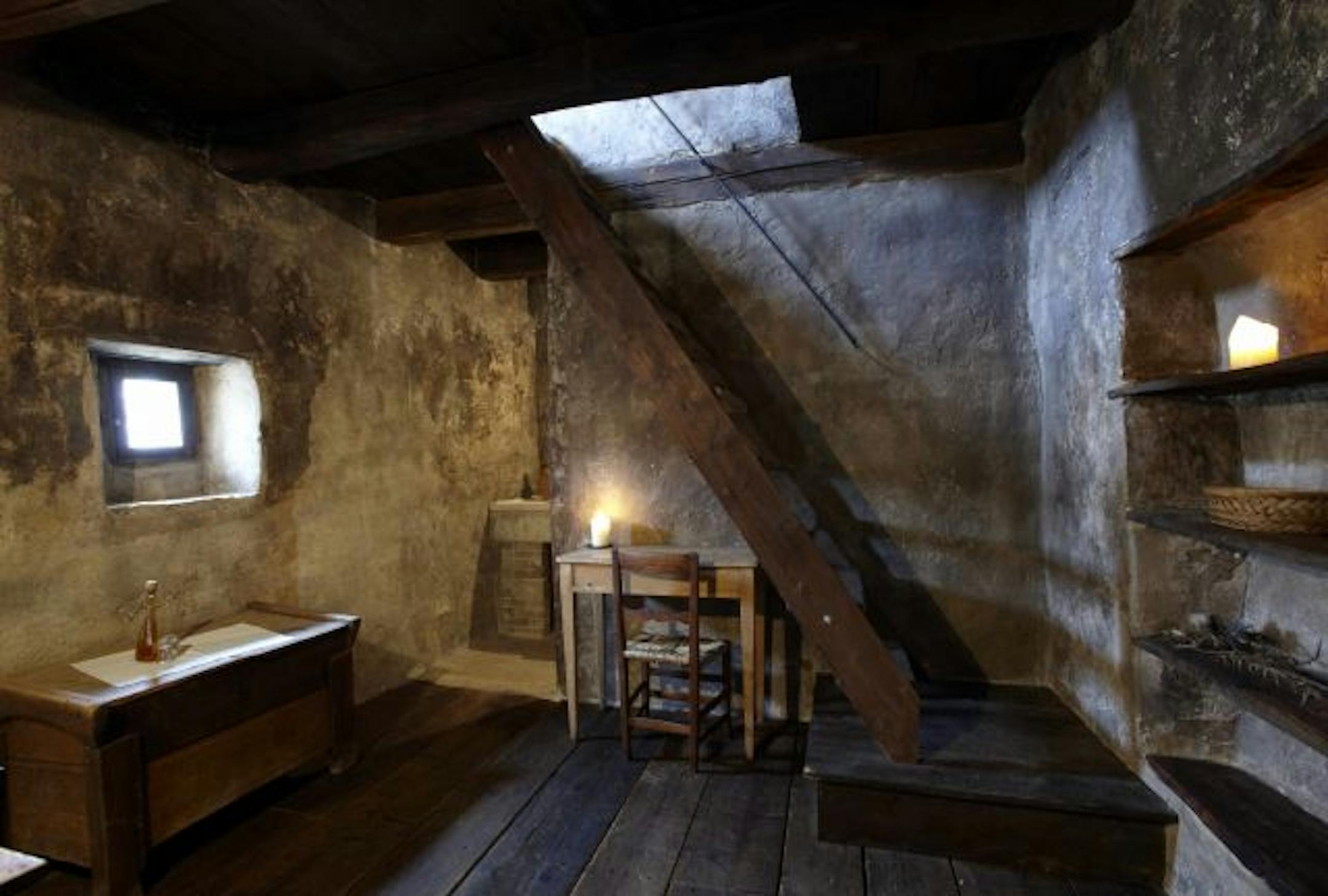
This ancient-looking apartment is among the "hotel rooms" available at Sextantio, in the Abruzzo region of Italy.
This ancient-looking apartment is among the “hotel rooms” available at Sextantio, in the Abruzzo region of Italy. (New York Times/The Minnesota Star Tribune)
Advertisement

One spring afternoon in the early 1980s Giancarlo Dall'Ara, an Italian hotel marketing consultant, was wandering the streets of a tiny village near Maranzanis, in Friuli, a rural mountainous region in the northeast corner of Italy.

There was an eerie, dreamlike feeling to the remote town. Many of its two dozen or so houses had been destroyed by a devastating earthquake that shook the region in 1976. Although a few elderly residents had remained, many of the homes were boarded up and abandoned.

Dall'Ara was in Friuli on behalf of the region, brainstorming ways to bring the local villages back to life through tourism, but the area around Maranzanis was an unlikely spot for a hotel. Though he believed that the area and its wild landscape had some potential, he left somewhat discouraged by its poverty and general sense of emptiness. Yet a seed had been planted.

This tiny town is just one of hundreds of historic villages in Italy in disrepair. Many of them have been abandoned by the younger generation moving to the cities to start careers or to live a more modern lifestyle. And while wealthy Italians and expatriates are willing to finance the renovation and revival of hamlets in Tuscany, many semi-abandoned towns are in less traveled regions like Friuli and Abruzzo.

Dall'Ara was convinced that there must be an organized and sustainable way to save some of these places through tourism. Over several years, the simple but ingenious concept of the albergo diffuso was born.

Albergo diffuso translates literally as "scattered hotel." The principle is that rooms, decorated in a consistently authentic and local style, are scattered throughout different buildings within the town but overseen by one manager. A traditional breakfast might be served at a local cafe or in the kitchen of one of the local houses, or delivered to your room. Call it a B&B village.

Immersed in village life

Like a holiday apartment, an albergo diffuso allows travelers to embed themselves in village life, but the bonus is that it offers the basic services of a hotel. There is a reception or central area to report to -- sometimes a cafe, other times a shop -- where a manager is available to help with questions, recommendations or bookings.
Advertisement

The week in 2008 that Australian Barbara Saks stayed at Trullidea, a Puglian albergo diffuso made up of traditional white limestone dwellings with conical roofs -- where nightly rates start at 66 euros, or about $83 at $1.25 to the euro -- was a revelation. "We loved living next door to locals with their dogs and their washing lines. Scenes from life," Saks wrote in an e-mail message.

And alberghi diffusi don't just provide travelers a door into a traditional way of life, but are also healthy for the host villages. "Reconverting an existing room into a hotel room is far more sustainable than building a new hotel," Hitesh Mehta, an eco-resort consultant and author of a forthcoming book, "Authentic Ecolodges," wrote in an e-mail message.

Dall'Ara, now the president of the National Association of Alberghi Diffusi, added that the projects also act as a "driver of development" in their villages, because the managers are encouraged to source all the products used in the village from local producers. And "if a local marmalade producer doesn't exist, the owner needs to organize one."

There are now more than 40 official alberghi diffusi in Italy and at least 100 more in the works, according to Dall'Ara. He added that the concept has started to pop up in other countries as well, a trend that he expects will continue.

The historic city of Porec, in the Istrian region of Croatia, is currently working on creating an albergo diffuso. And the 14th-century Alpine village of Mase (population 220) in Switzerland has opened a test house -- a charming wooden chalet called Au Bois de Lune, with rates for two from about 500 euros a week. Regional organizers hope to expand.

Preserving local traditions

Advertisement

One of the alberghi diffusi that is up and running can be found in the poetically aged hilltop town of Santo Stefano di Sessanio, in the Italian region of Abruzzo. In 1999, when the Italian entrepreneur Daniele Kihlgren visited, only about 120 residents remained. Some of the houses -- all made from stone -- had collapsed, and others had no roofs, but Kihlgren realized that the fortified medieval hamlet could be a dramatic spot for an albergo diffuso.

Kihlgren wasn't driven solely to protect the town's buildings -- the fastidious renovation took about five years and several million euros. He believed that creating an albergo diffuso, which he called Sextantio, could help preserve local traditions.

"Some of the mountain villages in Abruzzo are so remote that some of the old ways are still preserved," he said. "Television only came to some of these places in the '60s. Until World War II many people here only spoke a local dialect." That sense of isolation and tradition could be a draw for the project. "The people who remain here are the last generation to still use traditional cooking and building methods," he continued. "They remember the old folk stories and songs."

Nicholas Turner, a managing director at the Rockefeller Foundation in New York, spent a night at Sextantio with his family in early August of last year. What he most appreciated, he said, was that it "so effectively honors and makes use of all that the environment and history has to offer -- renovating existing structures, serving local cuisine, using products of the region, and employing residents."

On a cool spring morning a year after Sextantio opened, Emanuela Di Felice, the albergo's housekeeper and cook, prepared coffee while her son, Giovanni Pacifico, spoke about growing up in Abruzzo. "Only 50 years ago when a child died of sickness, people here believed it to be caused by a witch," he said. "That's why there are so many arches in Santo Stefano. A mother would take their baby under the seven arches and dance around a fire as a way to protect their child."

Di Felice, a youthful grandmother, doesn't speak more than a few words of English, but she makes superb venison ragu and her breakfasts are a spread of homemade bread, jams and local cakes laid out on hand-crocheted lace placemats on a well-worn wood table. And though rooms at Sextantio feature Philippe Starck-designed sinks and modern beds, there's usually a fire going in the old stone hearth of the small breakfast room.

Advertisement

"Sometimes the stone is talking," said Antonella Guido, the owner of Trullidea in Puglia. "Just imagine how many people have walked inside these rooms before you."

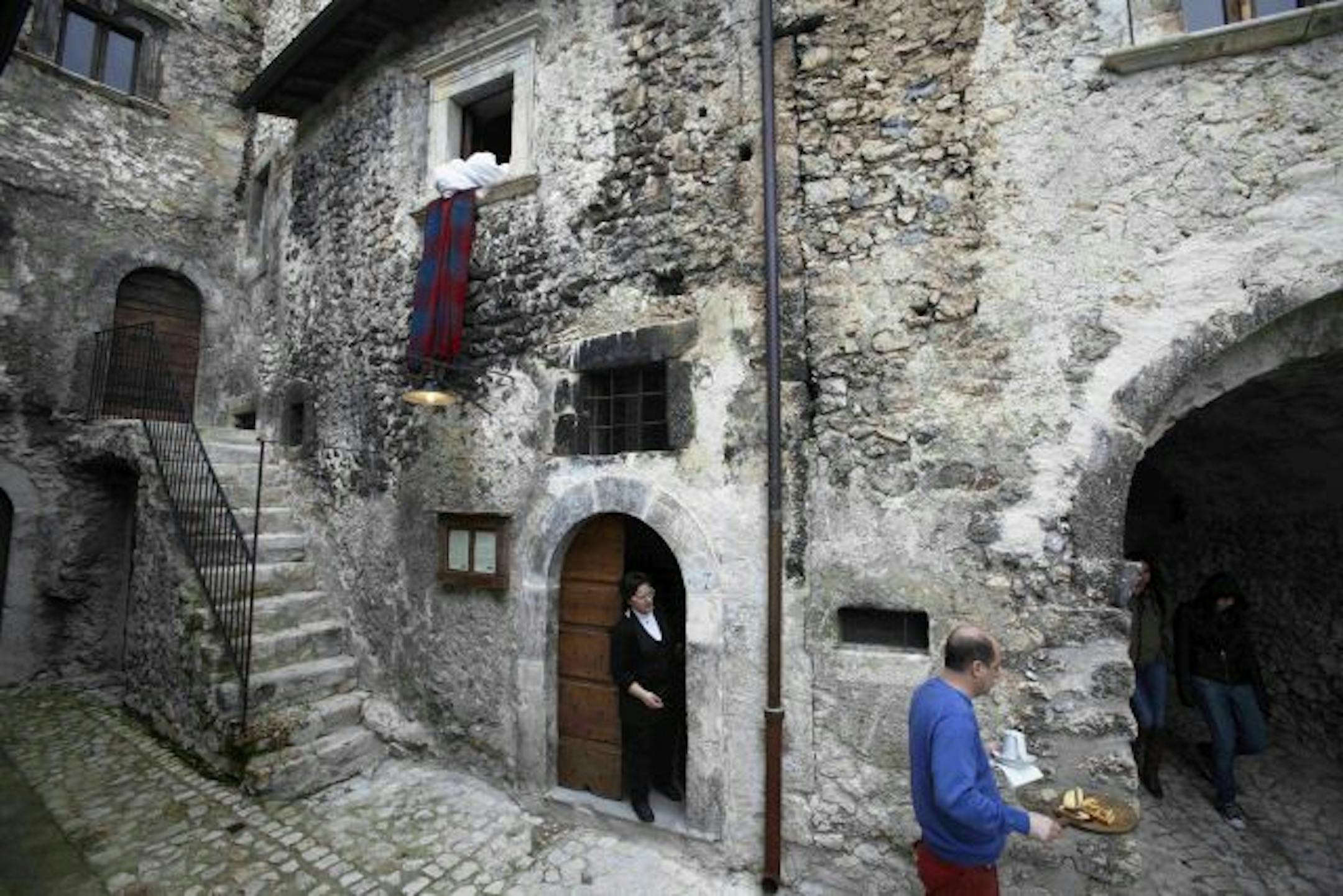
Linens are changed and snacks are brought to a room at the albergo diffuso Sextantio, in Santo Stefano di Sessanio, Italy, April 5, 2010. The albergo diffuso, an inn with rooms scattered around a town, is an attempt to bring tourism to distressed villages in Europe while sustaining their traditions.
Linens are changed and snacks are brought to a room at the albergo diffuso Sextantio, in Santo Stefano di Sessanio, Italy, April 5, 2010. The albergo diffuso, an inn with rooms scattered around a town, is an attempt to bring tourism to distressed villages in Europe while sustaining their traditions. (New York Times/The Minnesota Star Tribune)
about the writer

about the writer

GISELA WILLIAMS

More from Minnesota Star Tribune

See More
card image
Provided/Sahan Journal

Family members and a lawyer say they have been blocked from access to the bedside of Bonfilia Sanchez Dominguez, while her husband was detained and shipped to Texas within 24 hours.

card image
Advertisement