

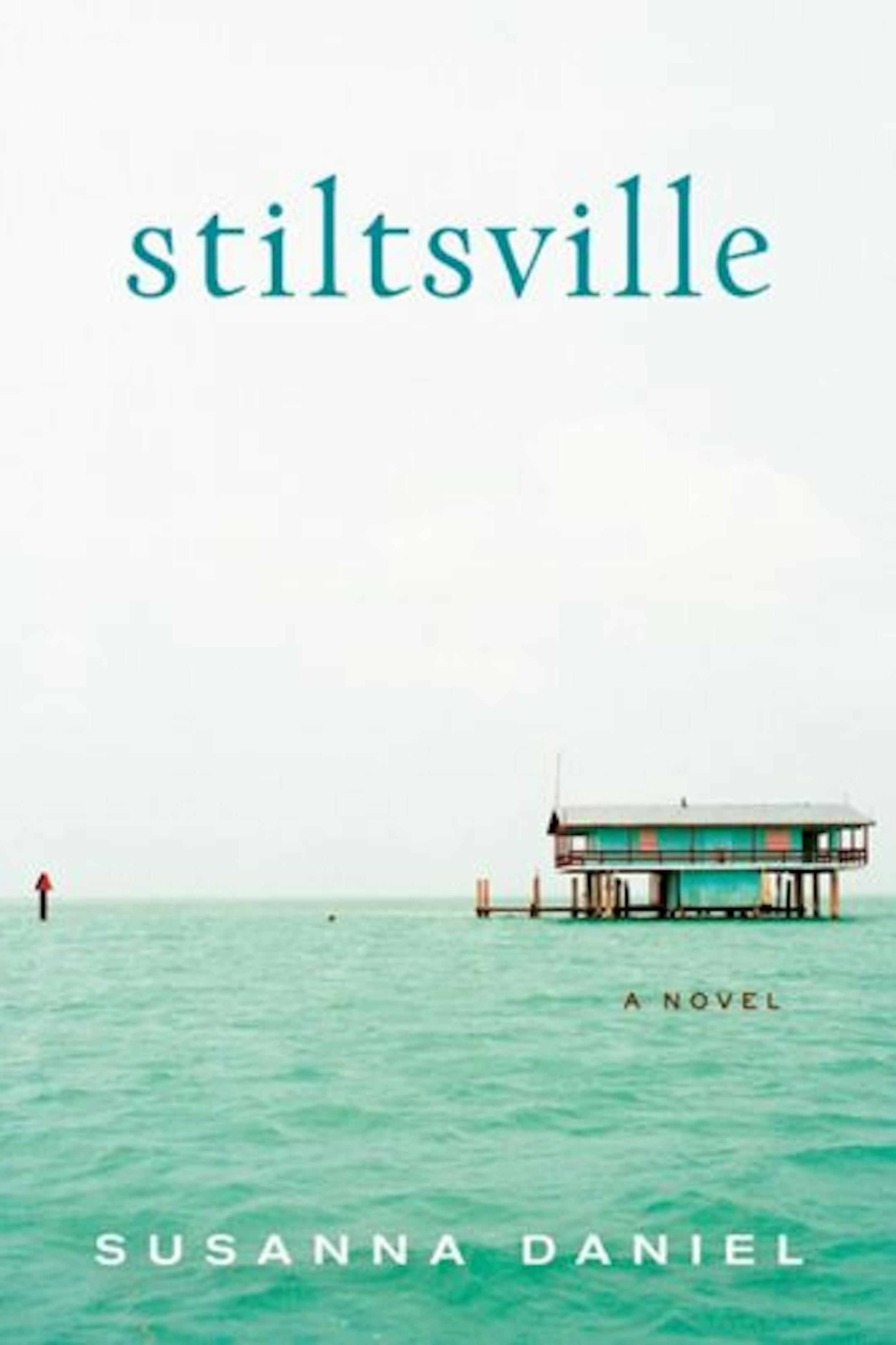
"Stiltsville," Susanna Daniel's debut novel, is structured into long chapters, each titled by a year. We start with "1969" and end with "2004." We follow our first-person narrator, Frances, who arrives in Miami for a visit and essentially never leaves. She falls in love with a man, but also with Florida and the titular Stiltsville, a community of cabins out in Biscayne Bay: "Propped above the water on pilings ... they stood on cement pillars, flanking a dark channel along the rim of the bay."
Each chapter of "Stiltsville" has a complex arc, as Frances negotiates Miami with her husband and, eventually, her daughter. Moments in each chapter refer to the past or anticipate the future, but each chapter could be read on its own. Both structurally and in tone, the book recalls linked short-story collections such as Alice Munro's "The Beggar Maid," following one character chronologically through a long period. Each piece can stand alone, but the whole is enriched when they are read together.
Daniel, in a recent article for Slate, writes wryly about the 10 years it took to complete "Stiltsville," the "ongoing, daily failure with no end in sight." In a way, this kind of compassionate insight into the nature of failure would have enriched "Stiltsville." The novel is suffused with the sights, sounds, tastes and smells of Miami; it is peopled by characters you grow to love. But there is little to no failure.
Frances falls for her husband and attracts him -- permanently -- almost right away. She has no career ambitions. She is loyal to her marriage. Even when serious illness enters the picture, Frances copes splendidly.
We encounter failure more vividly through Frances' daughter, Margo. Margo's character and the relationship between parents and only child are the most engaging parts of the book because they are fraught with the most insecurity and fear. "1982," for instance, deals with Margo being bullied in school. This chapter acutely captures the painful growth of the middle-school years, filtered through an adult's perspective.
Ultimately, all is resolved, however; Frances serenely accepts the inevitable changes in her husband, daughter and the Stiltsville house. In that sense, the book evokes the feeling of returning to your summer cabin, year after year; the changes happen so gradually that they are not dramatic; the experience is lovely and relaxing. "Stiltsville" is like sipping a cold drink on a hot day, sitting out on your porch: The world is for a moment serene, the dangers faint and in the distance.
Laura C.J. Owen is a Minneapolis writer. You can read more of her work at www.lauracjowen.com.


