
Lileks: The truth as told by one tough cookie

You've been living a lie.

February 6, 2022 at 8:00PM
(Richard Tsong-Taatarii, Star Tribune/The Minnesota Star Tribune)

I have caught a major cookie company in a devastating lie, and it's going to make me unpopular. But, as the saying goes, that's the way the cookie crumbles.

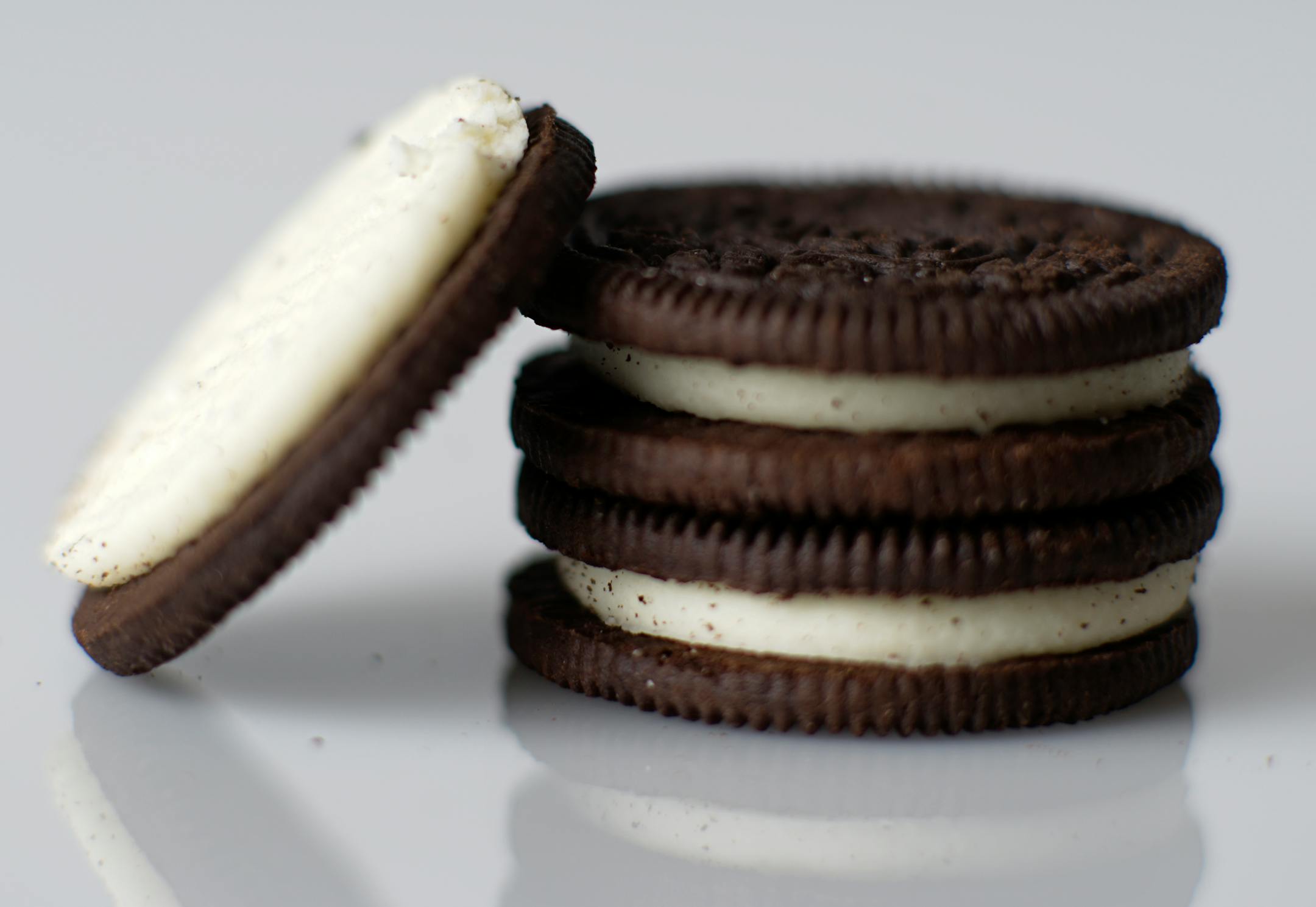
Oreo is celebrating its 110th anniversary with a contest. You can choose one of several cookie-related prizes, each with a tenuous connection to the actual product. But one of the prizes is "Free Oreos for life."

I have some questions before I enter this contest.

"Free Oreos for life" does not sound like it's that big of a deal, to be honest. For one thing, no one totes up the budget at the end of the month, crumples the paper in frustration and shouts, "From now on we have to cut down on Oreos. We spend less on heating."

Two: How does it work? Do you get a laminated Perpetual Gratis Oreo card that you can beep at the grocery store? Or do you phone someone when you're running low and a courier runs over with a fresh pack? And do you tip?

Three: If you had access to virtually infinite no-cost Oreos, how would it change your consumption patterns? I once heard a rumor about a famous local musician who used a product only once. He'd open a toothpaste tube, use it one time and discard it. You could do that with Oreos — just take one at the peak of freshness and let the rest grow stale.

Which reminds me: Do you know how to make Hydrox cookies at home? Open a pack of Oreos and leave it on the counter for a week.

Sorry, I might have insulted the three surviving Hydrox fans out there. As a kid I never understood the need for Hydrox when Oreos existed. The name sounds like something you add to laundry to get out stains. My grandparents always had Hydrox cookies, but they lived on a farm, so maybe it was an attribute of the agrarian life. Or they wanted to cling to the confections of their youth.

Hydroxes came first, you know. They debuted in 1908. The name comes from two elements, hydrogen and oxygen. Could've been Uraplut if they'd known about plutonium, I guess. Glows with goodness!

Hydrox cookies disappeared for a while, but were revived in 2015 by Leaf Brands. Recently they've been embroiled in a fight with Mondelez, the owner of Oreos, accusing the company of using its vast power to hide Hydrox on the shelves of grocery stores. If they were Uraplut, you could find them with a Geiger counter, and ...

Oh, right. The contest. Free Oreos. Turns out there are terms and conditions. The fine print explains the "lifetime" clause: "Up to 65 years. Awarded as cookies and a check for $3,072."

I love that: "Here. One pack of Oreos and a check. You figure out the rest."

Seems like a small amount, doesn't it? A pack of Oreos now is $4. (It's actually $3.98, but I wrote this last Thursday, and am accounting for inflation.) Three grand and change will get you about 771 packs of Oreos. There are 48 Oreos per pack, which works out to 37,000 Oreos. Sixty-five years means 23,725 days.

This means that they expect you to eat 1.5595 Oreos per day. But the label says a single serving is three cookies.

Got it? When you're paying, three cookies are a serving. When they're paying, that's cut in half.

What if I don't want a life of Oreos? There are other options, such as a four-day vacation anywhere in the United States. "Like the town where they make Hydrox?"

(Sigh) "Fine."

Once you enter the contest, they give you the chance to create a custom wish. But there are exclusions:

"Contest wishes that the Sponsor doesn't have the ability to fulfill include, but are not limited to, access/entrance to any specific college or university, curing cancer or diseases, trip to the moon, becoming famous, getting your dream job."

The lawyers made them say this. They have to state in advance that they cannot take you to another planet. You know what that means? There was a contest like this where they didn't have such a disclaimer, and someone took them to court and forced them to live up to their obligations. Right now another famous candy-bar company is spending billions to meet its obligations, and wondering if they can recoup the cost with publicity.

I'm not saying this explains Elon Musk wanting to go to Mars, but it's possible.

james.lileks@startribune.com • 612-673-7858 • Twitter: @Lileks • facebook.com/james.lileks

about the writer

about the writer

James Lileks

Columnist

James Lileks is a Star Tribune columnist.

See Moreicon

More from Minnesota Star Tribune

See More
card image
J. SCOTT APPLEWHITE, ASSOCIATED PRESS/The Minnesota Star Tribune

The "winners" have all been Turkeys, no matter the honor's name.

In this photo taken Monday, March 6, 2017, in San Francisco, released confidential files by The University of California of a sexual misconduct case, like this one against UC Santa Cruz Latin Studies professor Hector Perla is shown. Perla was accused of raping a student during a wine-tasting outing in June 2015. Some of the files are so heavily redacted that on many pages no words are visible. Perla is one of 113 UC employees found to have violated the system's sexual misconduct policies in rece