

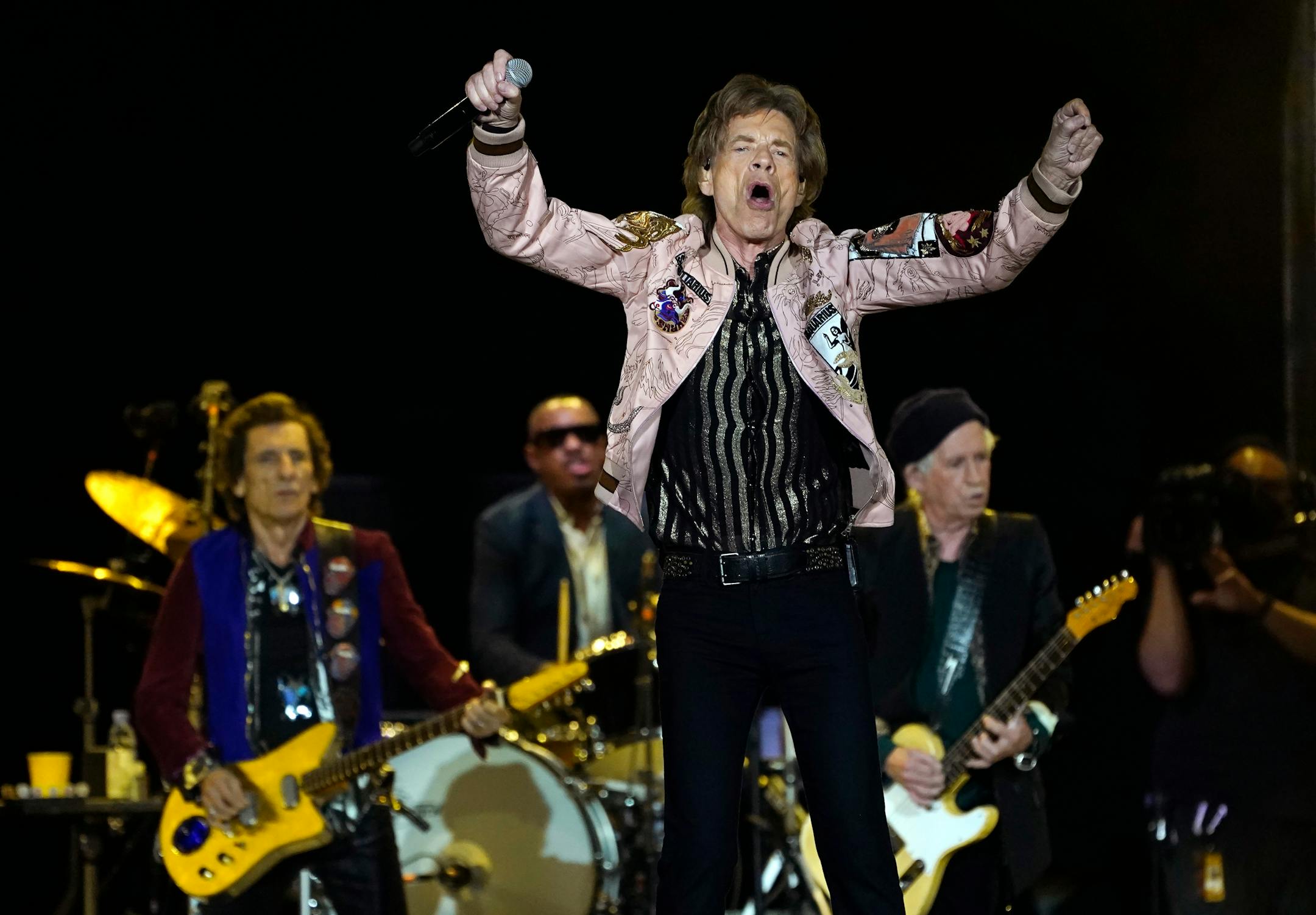
The Who did it. ZZ Top did it. Now the Rolling Stones are doing it.
The so-called world's greatest rock 'n' roll band resumed its latest tour four weeks after the death of their forever drummer Charlie Watts.
It's one thing to continue with replacements. It's another thing to do so after the sudden death of a key longtime member, as ZZ Top did this summer following the passing of founding bassist Dusty Hill.
"I don't really fault them for keeping keeping on," said longtime Stones fan Mike Elias, co-owner of Barely Brothers Records in St. Paul, pointing out that Sunday's concert at U.S. Bank Stadium is a makeup for last year's COVID-postponed date. "Mick [Jagger] is a businessman as much as he is a rocker. I'm a huge Stones fan. I'd like to see them again."
Not surprisingly, their No Filter Tour — the Stones' latest "this could be the last time" trek — grossed a hefty $415 million in 45 concerts from 2017 to 2019 before a pandemic hiatus.
Well traveled drummer Steve Jordan was already slated to fill in for Watts, who had undergone an undisclosed medical procedure, for 13 makeup concerts in the United States. Three weeks after that announcement, Watts died.
"I'd rather not have this be the case," Jordan told Vanity Fair. "But the Rolling Stones have really, really done everything in their power to make the transition smooth and sympathetic and empathetic."
This is not the first change for the Stones. In 1969, they fired founding guitarist Brian Jones, who drowned less than a month later. His replacement, Mick Taylor, quit after six-plus years to be succeeded by Ronnie Wood. Original bassist Bill Wyman left in 1993, with Darryl Jones taking over.


