

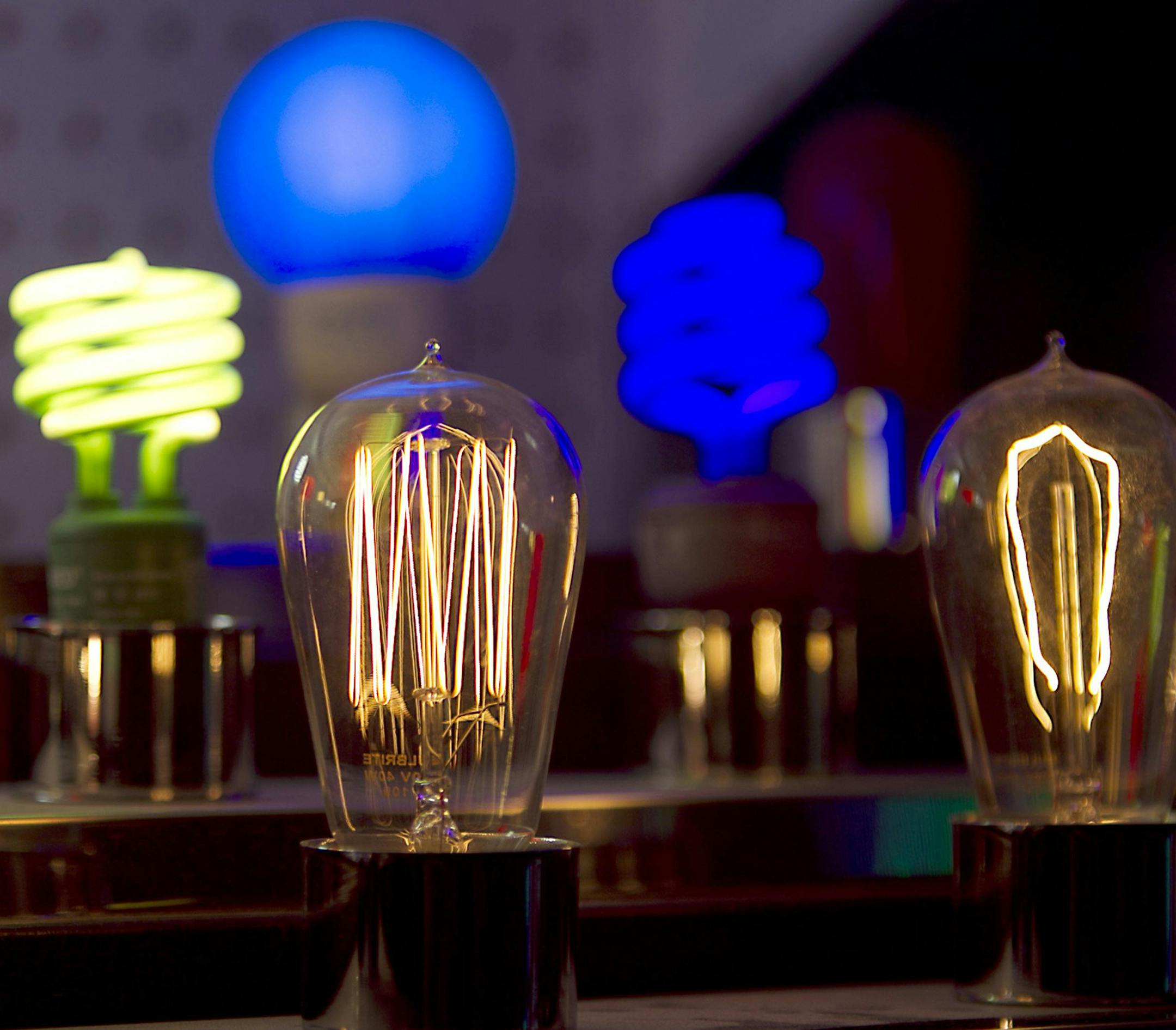
Still confused about the phaseout of incandescent bulbs? Let's shed some light.
Jan. 1 marked the beginning of a new era: Inefficient 40- and 60-watt incandescent bulbs — which represent more than half of all bulbs sold — can no longer be manufactured in the United States or imported.
But that doesn't mean all incandescent bulbs will disappear. New, more energy-efficient incandescent bulbs (such as halogen) will still be available in addition to CFL (compact fluorescent lamp) and LED (light-emitting diodes) bulbs.
The new bulbs all use less power than traditional bulbs to provide the same amount of light. But because of varying needs, wattage will no longer be the bottom line for bulb shoppers. For example, a 13-watt CFL or a 43-watt new incandescent both provide the same amount of light as the old 60-watt bulb.
Instead, look for lumens, a standard measurement of visible light; the more lumens, the brighter the light. That 60-watt equivalent offers 800 lumens. A 100-watt bulb would be 1,600 lumens.
According to the just-released sixth-annual Sylvania Socket Survey, 65 percent of Americans plan to switch to more efficient bulbs. But nearly six out of 10 consumers are still unaware that 40- and 60-watt bulbs faced a Jan. 1 deadline. That same survey found that 30 percent of shoppers plan to hoard some old bulbs, buying up what's available for continued use after the phaseout.
Which of the new bulbs is most popular? Overwhelmingly, CFLs; some 46 percent of those surveyed said they plan to switch to the compact fluorescents, while 24 said they would opt for LEDs and 13 percent picked halogen.
Here are more tips for bulb shoppers from the Natural Resources Defense Council:


