

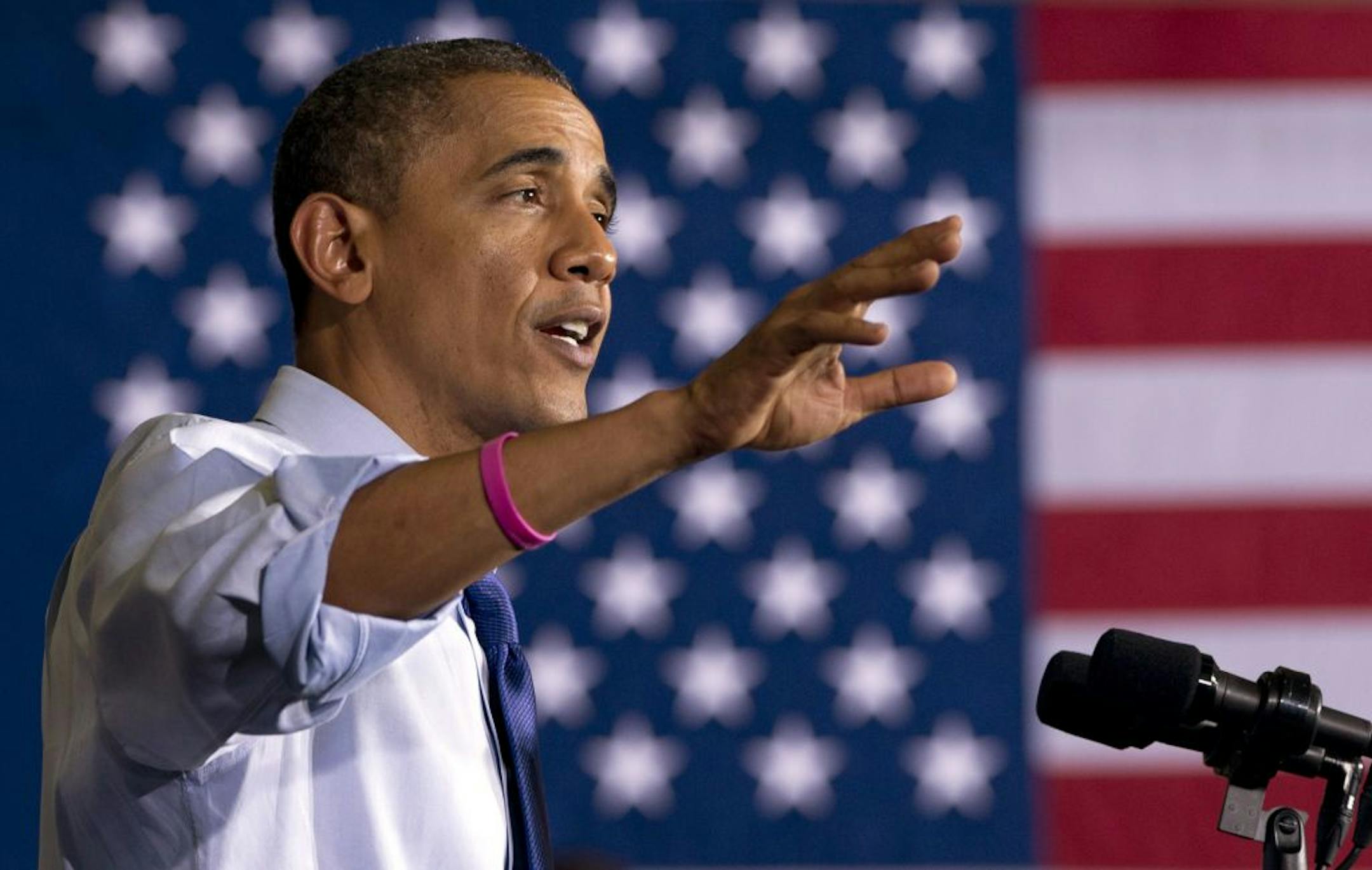
President Obama was more assertive and combative in the second presidential debate Tuesday, but the inspiring orator of 2008 still had trouble painting a vivid picture of what his second term will look like. He wants to strengthen manufacturing and promote energy independence, but it's hard to find a grand theme or a sweeping vision.
What a relief. When politicians get colossal ideas, I get nervous. A lack of audacity is not a huge defect in my book.
As a rule, I'm allergic to the legendary Chicago architect Daniel Burnham's exhortation: "Make no little plans. They have no magic to stir men's blood." Big plans generally stir my anxiety. There are worse things -- much worse things -- than a president who chooses not to aim for the stars.
Not everyone feels the way I do, of course. Republicans jeer that Obama is a spent force, depleted of ideas and energy. Voters, said GOP strategist Karl Rove, think "President Obama does not seem to have an idea of what he wants to do." Mitt Romney accuses him of being "intellectually exhausted."
Plenty of others share the complaint. "Obama has had no vision," laments liberal economist and New York Times columnist Paul Krugman. "What is Obama's philosophy of government?" Politico said his presidency "has undergone a dramatic downsizing -- in power, popularity, prestige and ambition."
Democratic strategists James Carville and Stanley Greenberg insist that voters want "bold change" and blamed the president's weak performance in the first debate on his "very modest vision of future change."
As a matter of politics, they may have a point, though when Americans say they want major change, they want it only if it does not inconvenience or cost them in any way. Five years after the Great Recession began, what they want most is for the economy to be as good as it used to be.
They are intent less on transforming the future than on bringing back the past, when unemployment was not a threat, home values were rising and the national debt was irrelevant.


