

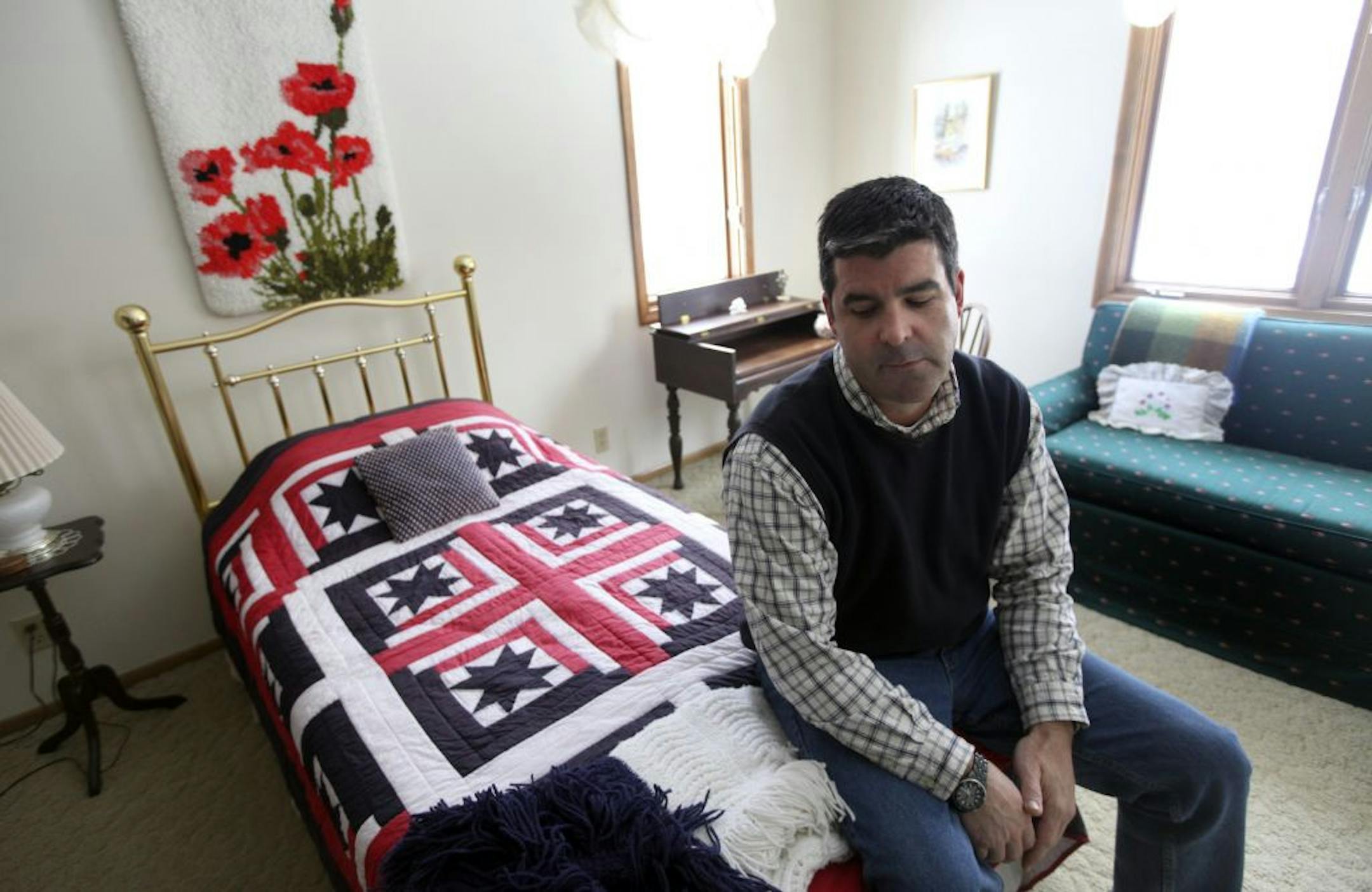
Chris Smith grimaced as he surveyed the faded floral carpet in his parents' upstairs hall, then sidled past the small cross and family photos and into a corner bedroom. He waved both arms, semaphore-style, toward the back window.
"Right across the roof and down over the porch, an easy exit," he said, recalling frequent, furtive late-night forays from his high school years. "And out there was where my dad built a sweet tree fort. That's where I broke my arm when I was 5 years old."
Smith, who at 45 looks fit enough to bound across that roof again, is in a particularly nostalgic mood these days. Like many folks whose elderly parents no longer can take care of themselves, he's faced with selling the house he grew up in.
"That house is the only context I really know my parents in," he said of the Edina home his folks built. "It's tough to think of somebody else living there and you can't go to the yard anymore."
Smith's task is bittersweet because he's trying to sell a house that's been in his family since he was born, a house permeated with memories. He's not alone.
The quarter-century after World War II saw an unprecedented housing boom. Many young couples who bought homes in the 1940s and '50s raised their families there, and didn't move out until they passed away or moved into assisted-living facilities.
Mary Thorpe-Mease's 95-year-old mother died in September. Her south Minneapolis home had been a gathering place for friends and extended family members for 68 years.
"At one point during World War II, we had 13 people living in the house, and only one bathroom," said Thorpe-Mease, 72. "One of my cousins called and said, 'I can't believe people are going to look at our house,' and it was never her house, but she lived there for a while.


